Special Infectious Agents Unit, King Fahd Medical Research Center, King Abdulaziz University, Jeddah, Saudi Arabia.
Biology Department, Faculty of Science, King Abdulaziz University, Jeddah, 21589, Saudi Arabia.
Sci Rep. 2018 Oct 4;8(1):14847. doi: 10.1038/s41598-018-33093-8.
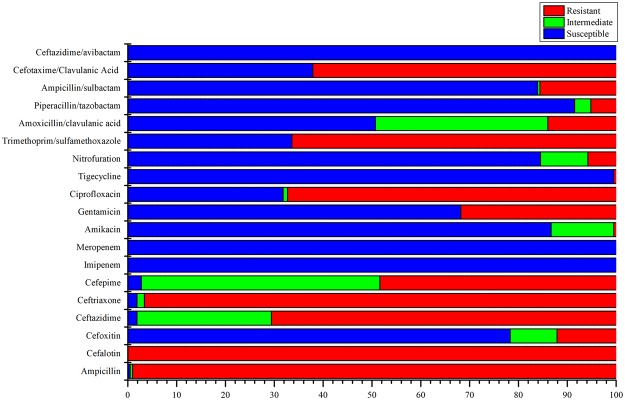
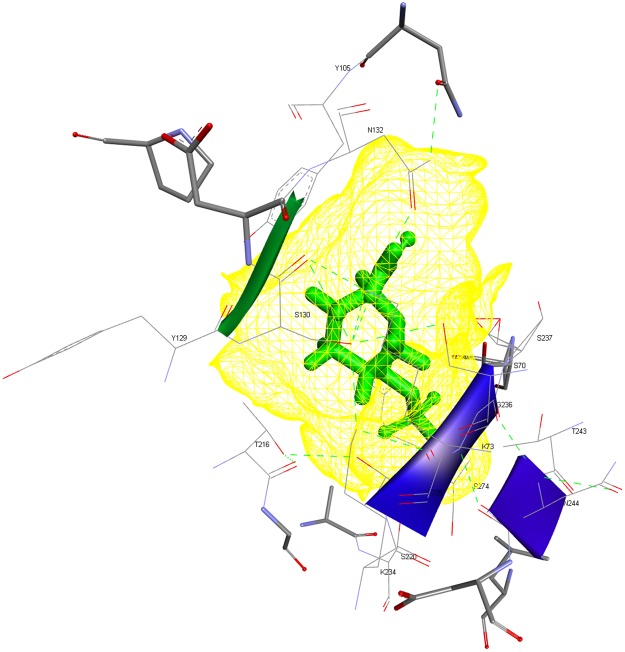
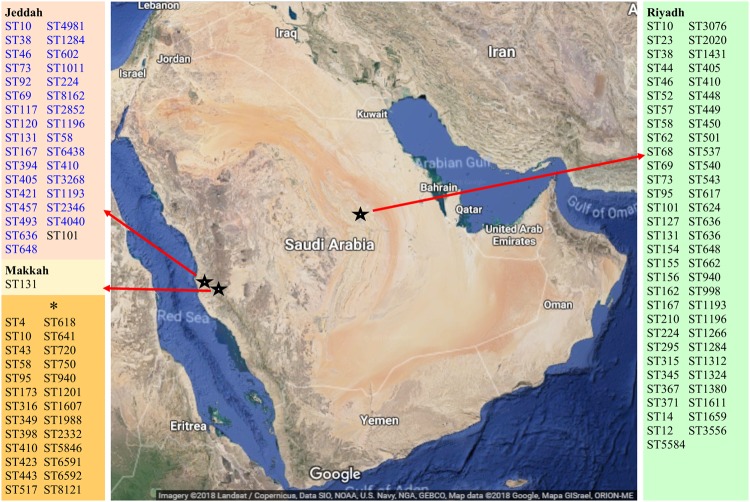
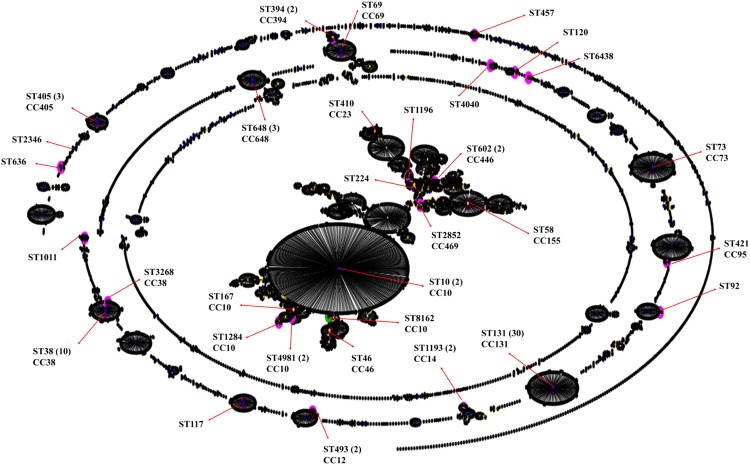
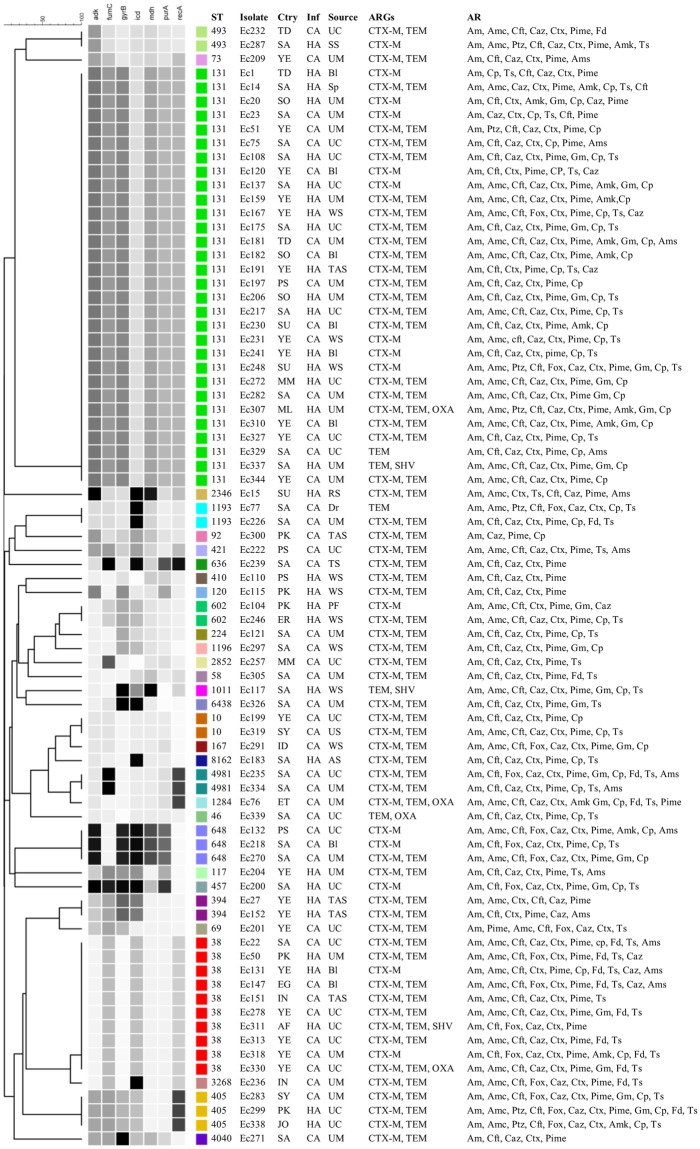
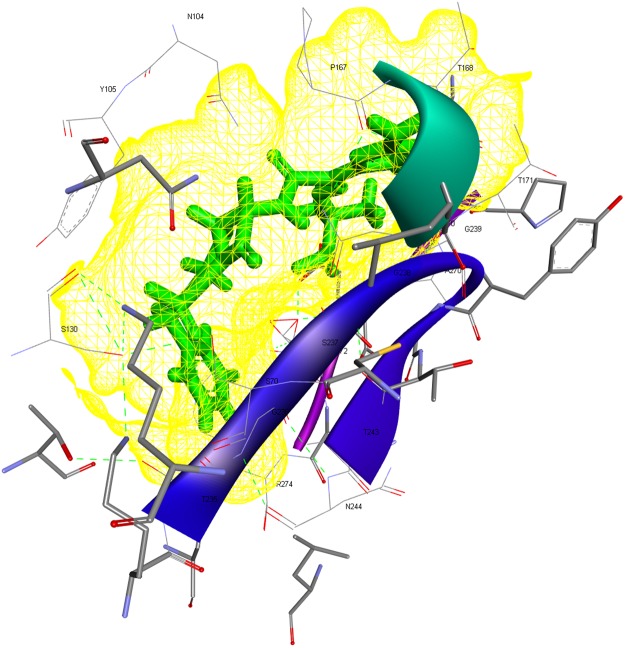
The goal of this study was to genotypically characterize extended-spectrum β-lactamase-producing Escherichia coli isolates from the western region of Saudi Arabia and to identify active antibiotics against these isolates using phenotypic and molecular modeling. In total, 211 ESBL-producing E. coli isolates recovered from heterogeneous clinical specimens were identified by MALDI-TOF. Thirty-two sequence types (STs) were identified from a multilocus sequence typing (MLST) analysis of ESBL-producing E. coli, including a novel ST (ST8162). The most common ST in the Saudi and expatriate population was ST131, followed by ST38. All the isolates were multidrug resistant (MDR), and >95% of the isolates were resistant to third-generation (ceftriaxone and ceftazidime) and fourth-generation (cefepime) cephalosporins. The ESBL-positive E. coli isolates primarily harbored the bla and bla genes. No resistance was observed against the carbapenem antibiotic group. All the ESBL-producing E. coli isolates were observed to be susceptible to a ceftazidime/avibactam combination. Molecular interaction analyses of the docked complexes revealed the amino acid residues crucial for the binding of antibiotics and inhibitors to the modeled CTX-M-15 enzyme. Importantly, avibactam displayed the most robust interaction with CTX-M-15 among the tested inhibitors in the docked state (∆G = -6.6 kcal/mol). The binding free energy values for clavulanate, tazobactam and sulbactam were determined to be -5.7, -5.9 and -5.2 kcal/mol, respectively. Overall, the study concludes that 'ceftazidime along with avibactam' should be carefully used as a treatment option against only carbapenem-resistant MDR ESBL-producing E. coli in this region.
本研究的目的是对沙特阿拉伯西部地区产超广谱β-内酰胺酶的大肠杆菌进行基因分型,并通过表型和分子建模鉴定对这些分离株有效的抗生素。共从211 种不同临床标本中分离出的产 ESBL 大肠杆菌用 MALDI-TOF 鉴定。对产 ESBL 大肠杆菌的多位点序列分型(MLST)分析发现了 32 种序列型(STs),包括一种新型 ST(ST8162)。在沙特人和侨民中最常见的 ST 是 ST131,其次是 ST38。所有分离株均为多药耐药(MDR),>95%的分离株对第三代(头孢曲松和头孢他啶)和第四代(头孢吡肟)头孢菌素耐药。ESBL 阳性大肠杆菌分离株主要携带 bla 和 bla 基因。未观察到对碳青霉烯类抗生素组的耐药性。所有产 ESBL 的大肠杆菌分离株对头孢他啶/阿维巴坦组合均敏感。对接复合物的分子相互作用分析显示,氨基酸残基对结合抗生素和抑制剂到模型 CTX-M-15 酶至关重要。重要的是,在对接状态下,阿维巴坦与测试抑制剂中对 CTX-M-15 的结合作用最强(∆G=-6.6 kcal/mol)。克拉维酸、他唑巴坦和舒巴坦的结合自由能值分别为-5.7、-5.9 和-5.2 kcal/mol。总的来说,该研究得出结论,在该地区,“头孢他啶联合阿维巴坦”应谨慎用作仅对碳青霉烯类耐药的多药耐药产 ESBL 大肠杆菌的治疗选择。