Mousset Charlotte M, Hobo Willemijn, Ji Yun, Fredrix Hanny, De Giorgi Valeria, Allison Robert D, Kester Michel G D, Falkenburg J H Frederik, Schaap Nicolaas P M, Jansen Joop H, Gattinoni Luca, Dolstra Harry, van der Waart Anniek B
Department of Laboratory Medicine - Laboratory of Hematology; Radboud Institute of Molecular Life Sciences, Radboud University Medical Center, Nijmegen, The Netherlands.
Experimental Transplantation and Immunology, National Cancer Institute, National Institutes of Health, Bethesda, MD, USA.
Oncoimmunology. 2018 Aug 6;7(10):e1488565. doi: 10.1080/2162402X.2018.1488565. eCollection 2018.
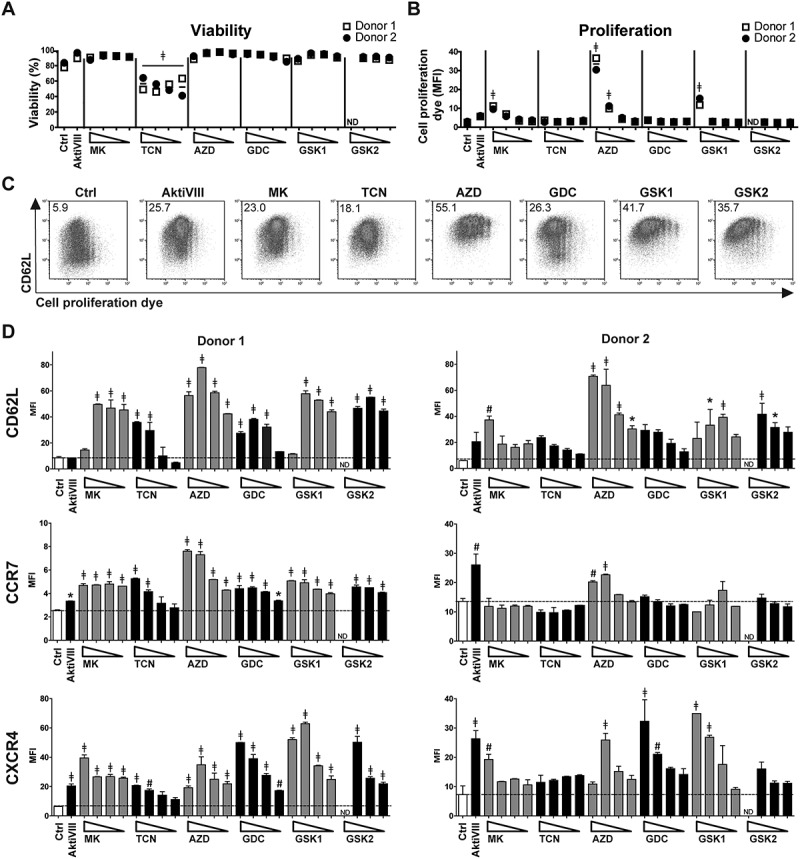
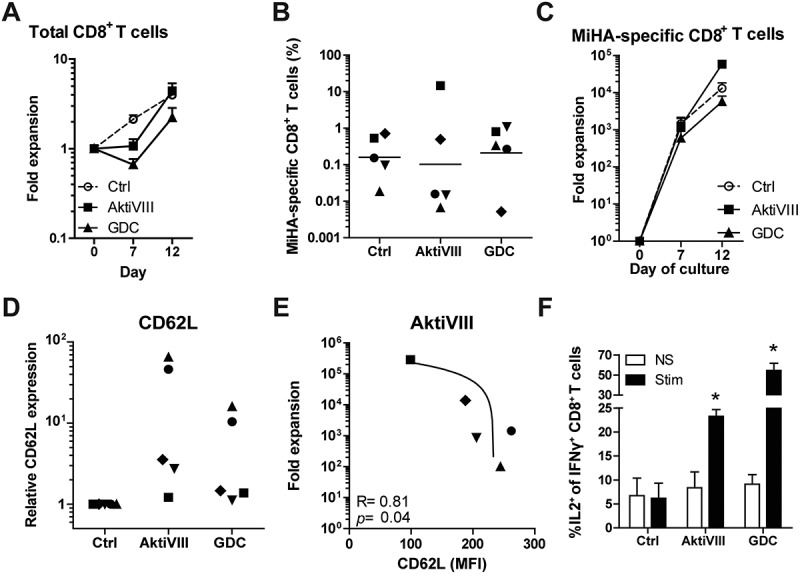
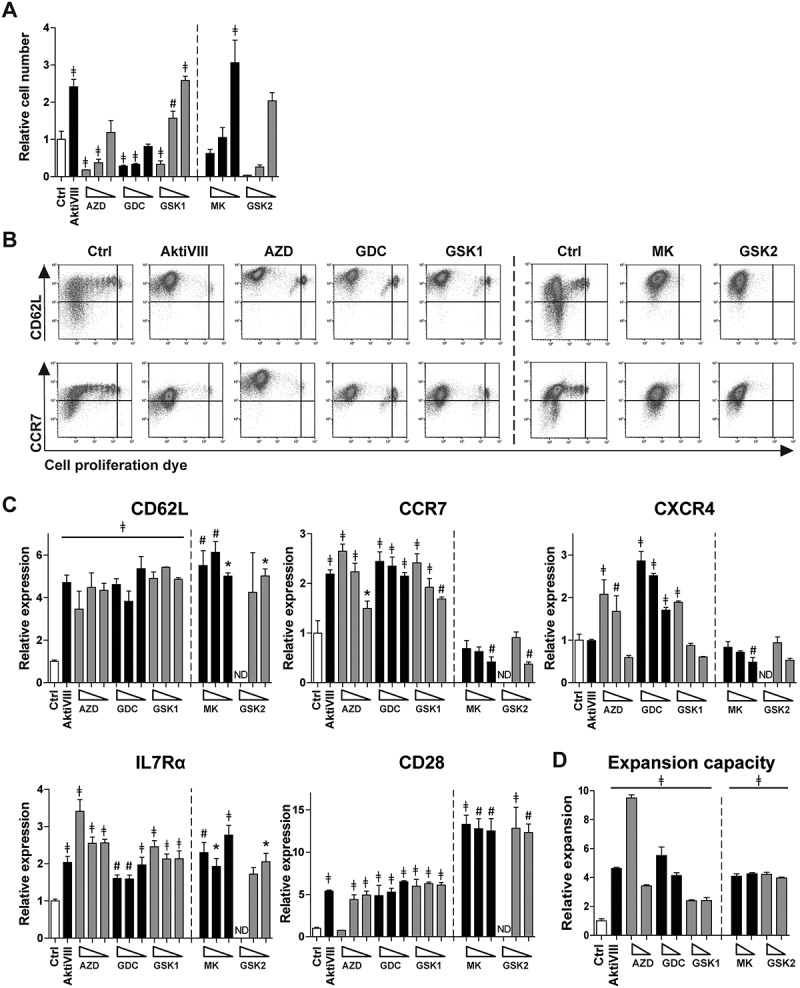
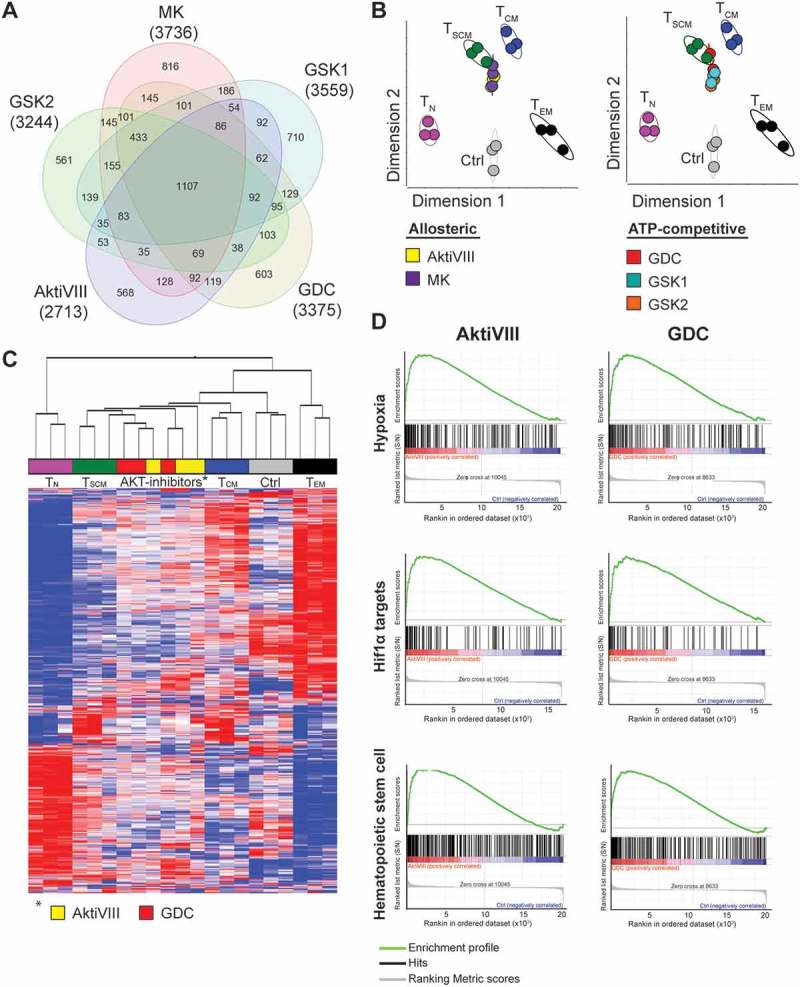
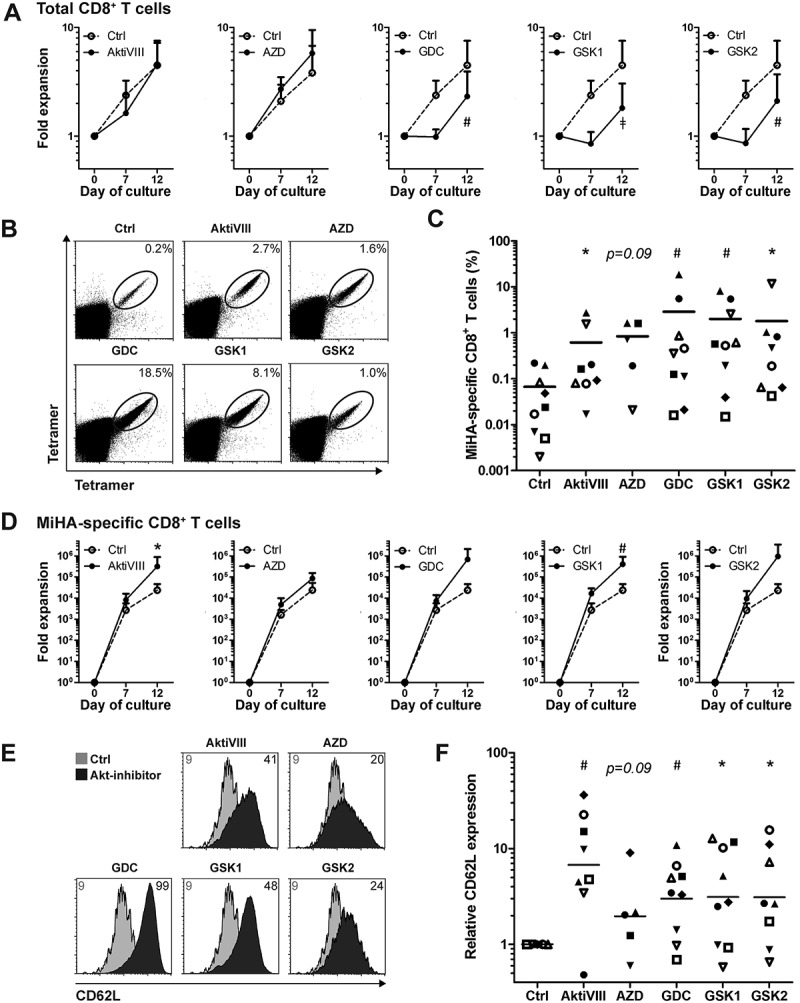
Adoptive T cell therapy has shown clinical potential for patients with cancer, though effective treatment is dependent on longevity and potency of the exploited tumor-reactive T cells. Previously, we showed that inhibition of AKT using the research compound Akt-inhibitor VIII retained differentiation and improved functionality of minor histocompatibility antigen (MiHA)-specific CD8 T cells. Here, we compared a panel of clinically applicable AKT-inhibitors with an allosteric or adenosine triphosphate-competitive mode of action. We analyzed phenotype, functionality, metabolism and transcriptome of AKT-inhibited CD8 T cells using different T cell activation models. Most inhibitors facilitated T cell expansion while preserving an early memory phenotype, reflected by maintenance of CD62L, CCR7 and CXCR4 expression. Moreover, transcriptome profiling revealed that AKT-inhibited CD8 T cells clustered closely to naturally occurring stem cell-memory CD8 T cells, while control T cells resembled effector-memory T cells. Interestingly, AKT-inhibited CD8 T cells showed enrichment of hypoxia-associated genes, which was consistent with enhanced glycolytic function. Notably, AKT-inhibition during MiHA-specific CD8 T cell priming uncoupled preservation of early memory differentiation from expansion. Furthermore, AKT-inhibited MiHA-specific CD8 T cells showed increased polyfunctionality with co-secretion of IFN-γ and IL-2 upon antigen recall. Together, these data demonstrate that AKT-inhibitors with different modality of action promote the generation of stem cell memory-like CD8 T cells with a unique metabolic profile and retained polyfunctionality. Akt-inhibitor VIII and GDC-0068 outperformed other inhibitors, and are therefore promising candidates for generation of superior tumor-reactive T cells for adoptive immunotherapy in cancer patients.
过继性T细胞疗法已显示出对癌症患者的临床治疗潜力,不过有效的治疗取决于所利用的肿瘤反应性T细胞的寿命和效力。此前,我们发现使用研究化合物Akt抑制剂VIII抑制AKT可保留分化能力,并改善次要组织相容性抗原(MiHA)特异性CD8 T细胞的功能。在此,我们比较了一组具有变构或三磷酸腺苷竞争性作用模式的临床适用的AKT抑制剂。我们使用不同的T细胞激活模型分析了AKT抑制的CD8 T细胞的表型、功能、代谢和转录组。大多数抑制剂促进T细胞扩增,同时保留早期记忆表型,这通过CD62L、CCR7和CXCR4表达的维持得以体现。此外,转录组分析显示,AKT抑制的CD8 T细胞与天然存在的干细胞记忆性CD8 T细胞紧密聚集,而对照T细胞则类似于效应记忆性T细胞。有趣的是,AKT抑制的CD8 T细胞显示缺氧相关基因富集,这与增强的糖酵解功能一致。值得注意的是,在MiHA特异性CD8 T细胞启动过程中抑制AKT可将早期记忆分化的保留与扩增解偶联。此外,AKT抑制的MiHA特异性CD8 T细胞在抗原再次刺激时显示出多功能性增加,同时分泌IFN-γ和IL-2。总之,这些数据表明,具有不同作用方式的AKT抑制剂可促进具有独特代谢特征和保留多功能性的干细胞记忆样CD8 T细胞的生成。Akt抑制剂VIII和GDC-0068优于其他抑制剂,因此有望成为为癌症患者生成用于过继性免疫治疗的优质肿瘤反应性T细胞的候选药物。