Olomu Adesuwa, Khan Nazia Naz S, Todem David, Huang Qinhua, Bottu Shireesha, Qadri Syeda, Holmes-Rovner Margaret
College of Human Medicine (AO, NNK, SB, SQ), Michigan State University, East Lansing, MI, USA.
Department of Epidemiology and Biostatistics (DT, QH), Michigan State University, East Lansing, MI, USA.
MDM Policy Pract. 2016 Jul 7;1(1):2381468316656010. doi: 10.1177/2381468316656010. eCollection 2016 Jul-Dec.
Hypertension (HTN) in people with diabetes doubles the risk of cardiovascular disease. Prior patient activation studies largely show improved communication but little impact on behavior or health outcomes. We sought to 1) assess the impact of Office-Based Guidelines Applied to Practice (Office-GAP) Program on blood pressure (BP) control; 2) determine the rate and predictors of BP control in patients with HTN and/or diabetes mellitus (DM) in federally qualified health centers. Sample: Patients with coronary heart disease (CHD) and/or DM with history of HTN; analyzed patients with DM and HTN compared to HTN without DM.
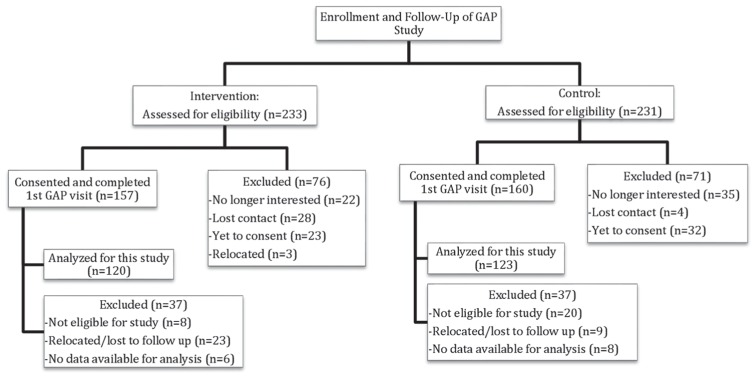
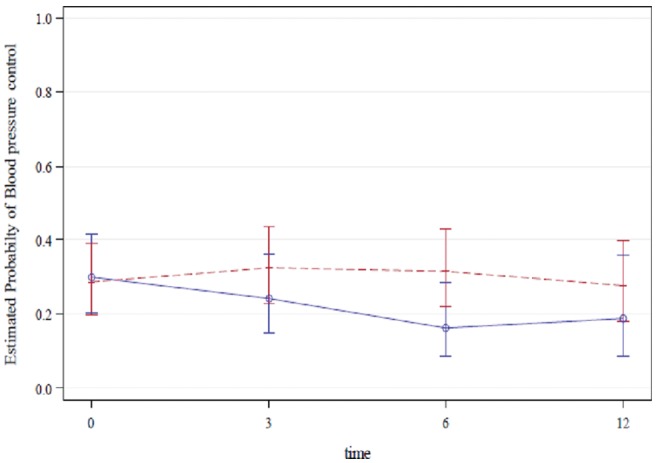
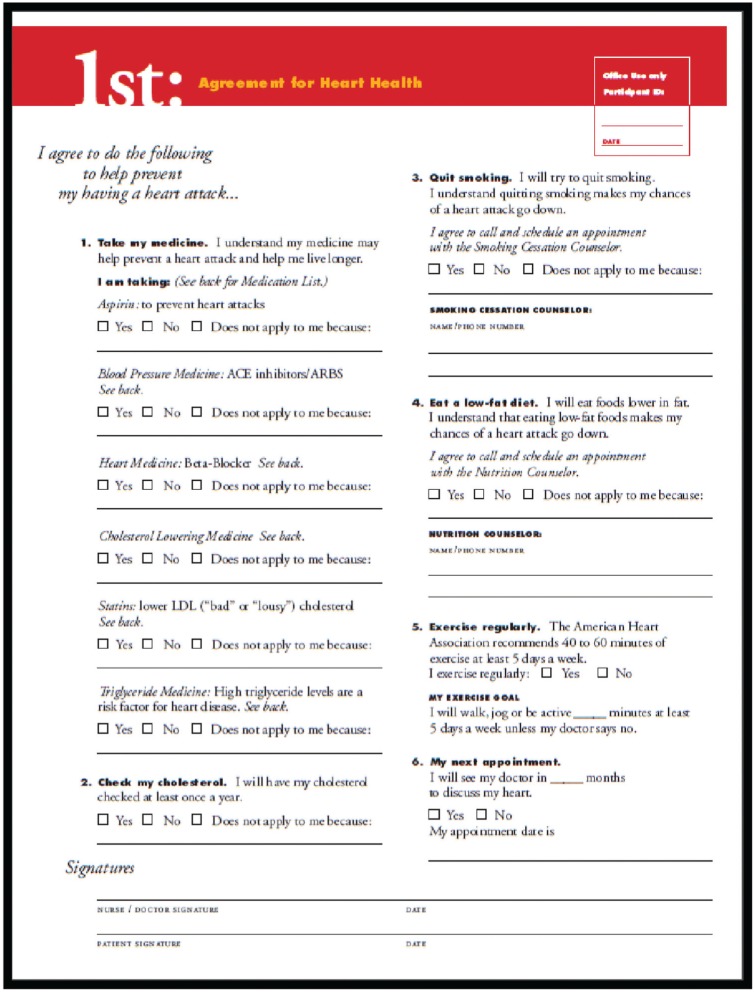
Office-GAP included physician training, patient activation, and an Office-GAP decision checklist. Two-site intervention/control design; data collection at baseline and after 3, 6, and 12 months. Logistic regression with propensity scoring assessed impact on BP control over time. Of 243 patients, HTN was present in 75% at baseline; 32% had BP controlled. Consistent trend showed Office-GAP slightly improved the rate of BP control across time, while the control arm showed a nonsignificant decrease in the rate of BP control across time, compared to baseline. BP improved at 6 months at the intervention site compared to control site (odds ratio = 2.92; 95% confidence interval = 1.11-7.69). BP control was better at the intervention site compared to the control site at 6 months. Office-GAP shows promise to implement guidelines-based patient-centered care that improves BP.
糖尿病患者的高血压会使心血管疾病风险加倍。先前的患者激活研究大多显示沟通有所改善,但对行为或健康结果影响甚微。我们旨在:1)评估基于办公室的实践指南应用项目(Office-GAP)对血压控制的影响;2)确定联邦合格健康中心中高血压和/或糖尿病患者的血压控制率及预测因素。样本:有冠心病和/或糖尿病且有高血压病史的患者;分析糖尿病合并高血压患者与无糖尿病的高血压患者。
Office-GAP包括医生培训、患者激活以及一份Office-GAP决策清单。采用双地点干预/对照设计;在基线以及3个月、6个月和12个月后收集数据。使用倾向评分的逻辑回归评估随时间推移对血压控制的影响。在243名患者中,75%在基线时患有高血压;32%的患者血压得到控制。一致的趋势表明,与基线相比,Office-GAP随时间推移略微提高了血压控制率,而对照组的血压控制率随时间呈非显著下降。与对照部位相比,干预部位在6个月时血压有所改善(优势比 = 2.92;95%置信区间 = 1.11 - 7.69)。在6个月时,干预部位的血压控制优于对照部位。Office-GAP有望实施以患者为中心的基于指南的护理,从而改善血压。