Elbel Erin E, Lavine Joel E, Downes Michael, Van Natta Mark, Yu Ruth, Schwimmer Jeffrey B, Behling Cynthia, Brunt Elizabeth M, Tonascia James, Evans Ronald
Department of Pediatrics Columbia University New York NY.
Gene Expression Laboratory The Salk Institute La Jolla CA.
Hepatol Commun. 2018 Sep 27;2(10):1213-1226. doi: 10.1002/hep4.1232. eCollection 2018 Oct.
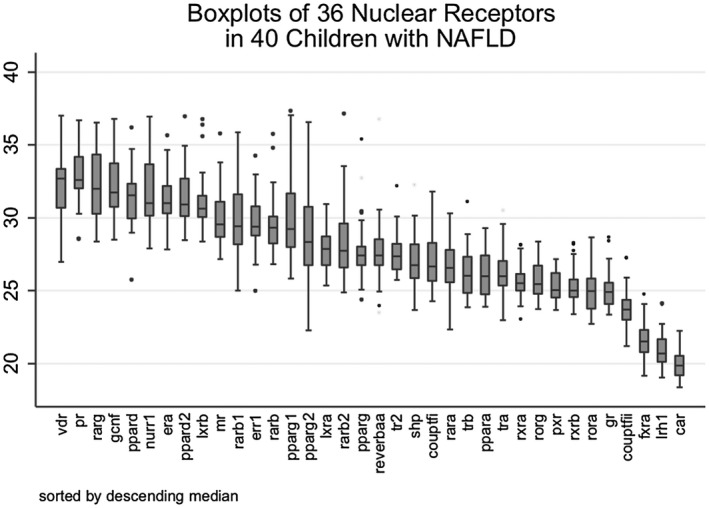
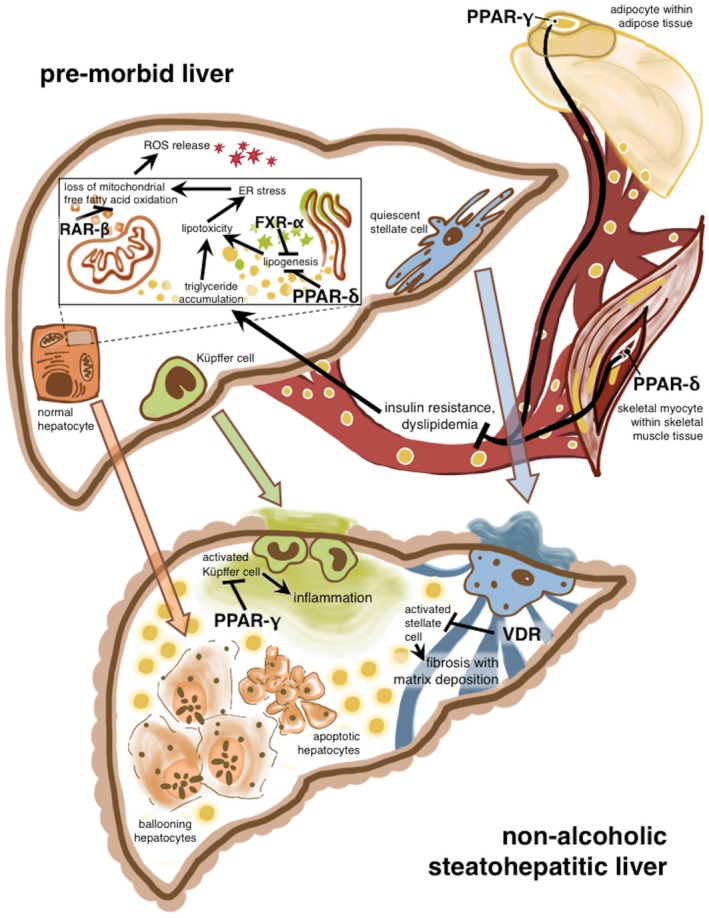
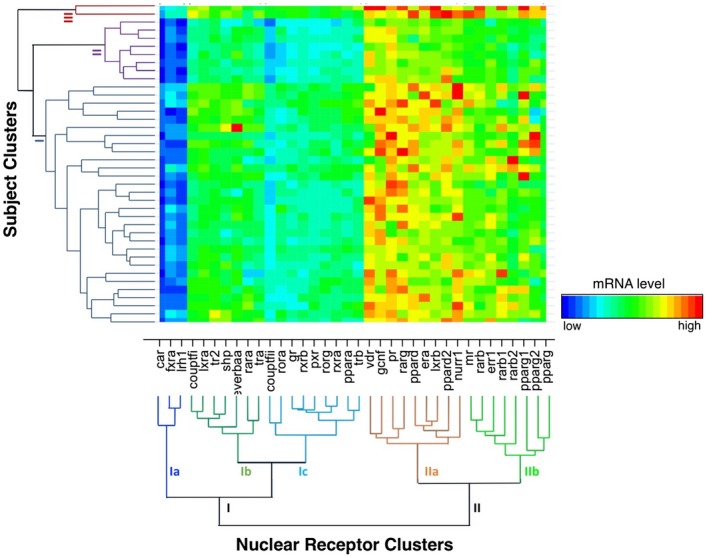
Nonalcoholic fatty liver disease (NAFLD) is the most common cause of chronic liver disease in children and adults. This study examined the relationship between hepatic nuclear receptor (NR) expression and histologic features of NAFLD. Drugs targeting a variety of NRs for nonalcoholic steatohepatitis (NASH) are in clinical trials. Liver messenger RNA was isolated from 40 children (10-19 years) undergoing end-of-treatment biopsy in the Treatment of NAFLD in Children (TONIC) trial. High-throughput quantitative polymerase chain reaction assayed NR messenger RNA. Cluster analysis was used to group 36 NRs, and NR levels were related to histologic measures of specific NAFLD features. Cluster analysis determined five groupings of NRs. Significant ( 0.05) differential expressions of specific NRs associated with histologic measures include farnesoid X receptor alpha and retinoic acid receptor (RARβ and RARβ) for steatosis; estrogen receptor alpha (ERα) and peroxisome proliferator-activated receptor gamma 3 (PPARγ3) for hepatocellular ballooning; ER and PPARγ2 for lobular inflammation; PPARα/δ/γ1/γ2, ERα, constitutive androstane receptor, chicken ovalbumin upstream promoter transcription factor 1, RARα, RARβ1, retinoid X receptor, pregnane X receptor, thyroid hormone receptors α and β, and nuclear receptor related-1 for fibrosis; and ERα and RARβ/β1/α for diagnosis of NASH. : Differential expression of specific NRs correlates with histologic severity of specific NAFLD features. These NRs are pleiotropic transactivators regulating basal metabolic functions and inflammatory responses. Derangement of activity of these receptors in NAFLD provides a rationale for exploiting their ability with receptor-specific ligands to ameliorate NASH and its consequences.
非酒精性脂肪性肝病(NAFLD)是儿童和成人慢性肝病最常见的病因。本研究探讨了肝细胞核受体(NR)表达与NAFLD组织学特征之间的关系。针对非酒精性脂肪性肝炎(NASH)的多种NR的靶向药物正在进行临床试验。从儿童非酒精性脂肪性肝病治疗(TONIC)试验中接受治疗结束活检的40名儿童(10 - 19岁)中分离肝脏信使核糖核酸(mRNA)。采用高通量定量聚合酶链反应检测NR信使核糖核酸。聚类分析用于对36种NR进行分组,NR水平与特定NAFLD特征的组织学指标相关。聚类分析确定了NR的五个分组。与组织学指标相关的特定NR的显著(P < 0.05)差异表达包括:脂肪变性方面的法尼酯X受体α和视黄酸受体(RARβ和RARβ);肝细胞气球样变方面的雌激素受体α(ERα)和过氧化物酶体增殖物激活受体γ3(PPARγ3);小叶炎症方面的ER和PPARγ2;纤维化方面的PPARα/δ/γ1/γ2、ERα、组成型雄烷受体、鸡卵清蛋白上游启动子转录因子1、RARα、RARβ1、视黄酸X受体、孕烷X受体、甲状腺激素受体α和β以及核受体相关蛋白1;以及诊断NASH方面的ERα和RARβ / β1 / α。特定NR的差异表达与特定NAFLD特征的组织学严重程度相关。这些NR是调节基础代谢功能和炎症反应的多效性反式激活因子。NAFLD中这些受体活性的紊乱为利用其与受体特异性配体的能力来改善NASH及其后果提供了理论依据。