The Bowles Center for Alcohol Studies, School of Medicine, University of North Carolina at Chapel Hill, Chapel Hill, North Carolina, United States of America.
PLoS One. 2018 Oct 8;13(10):e0204500. doi: 10.1371/journal.pone.0204500. eCollection 2018.
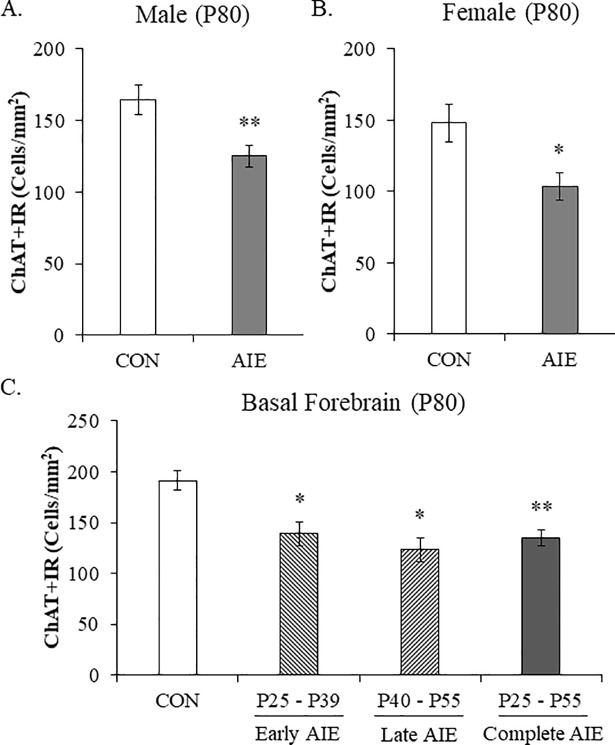
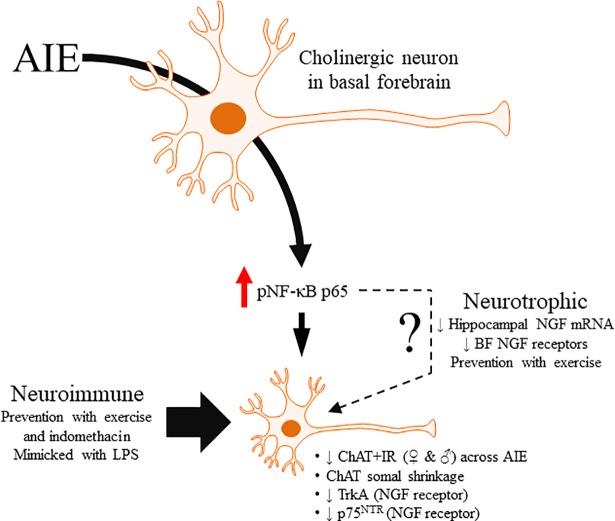
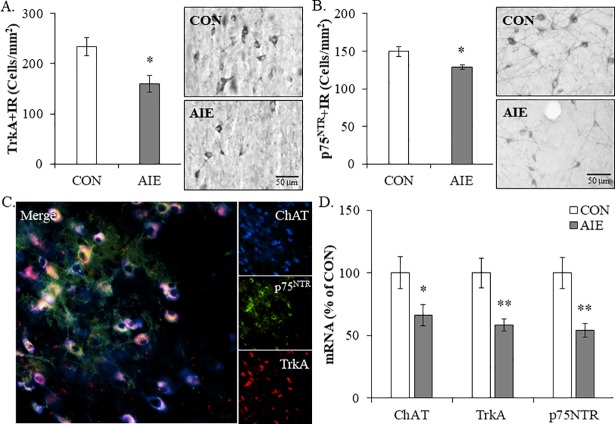
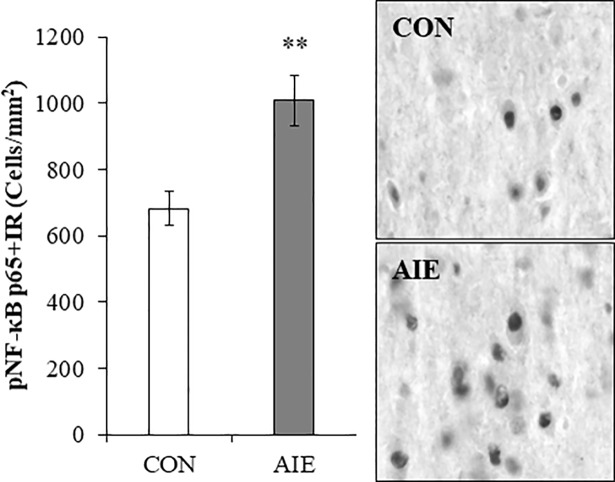
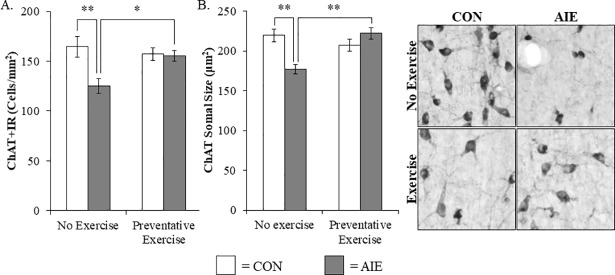
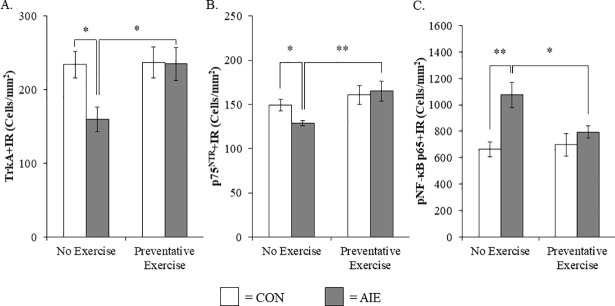
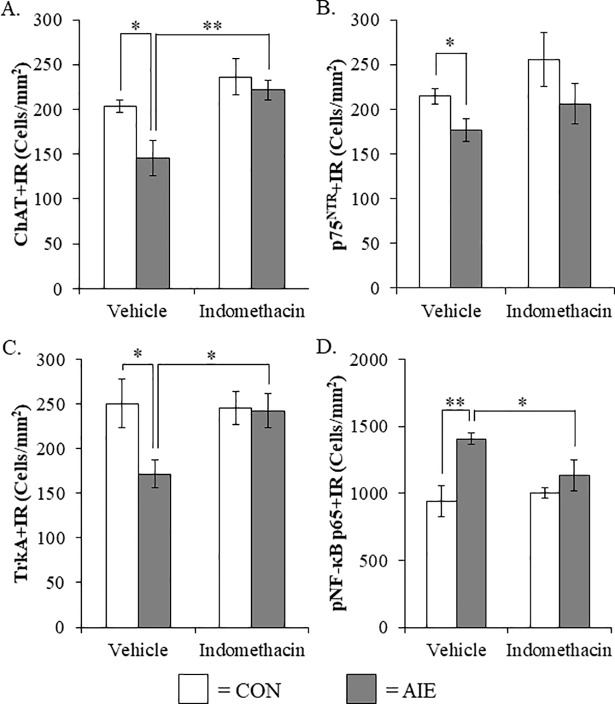
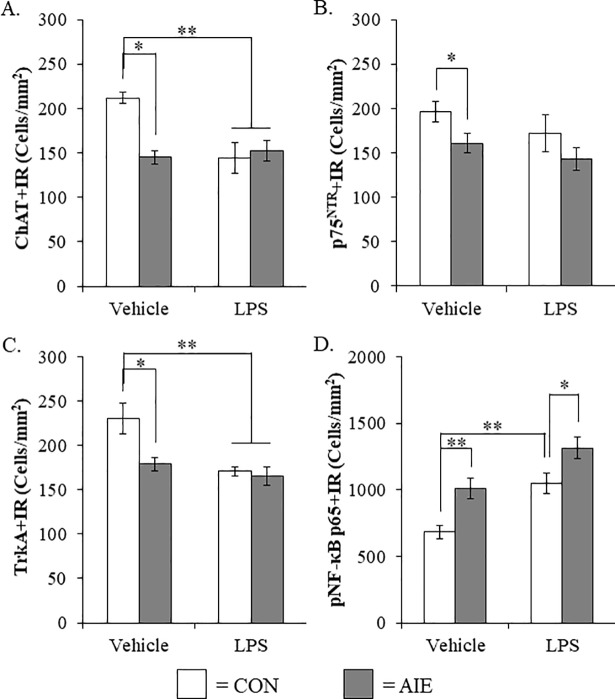
Basal forebrain cholinergic neurons mature in adolescence coinciding with development of adult cognitive function. Preclinical studies using the rodent model of adolescent intermittent ethanol (AIE; 5.0 g/kg, i.g., 2-days on/2-days off from postnatal day [P]25 to P55) reveal persistent increases of brain neuroimmune genes that are associated with cognitive dysfunction. Adolescent intermittent ethanol exposure also reduces basal forebrain expression of choline acetyltransferase (ChAT), an enzyme critical for acetylcholine synthesis in cholinergic neurons similar to findings in the post-mortem human alcoholic basal forebrain. We report here that AIE decreases basal forebrain ChAT+IR neurons in both adult female and male Wistar rats following early or late adolescent ethanol exposure. In addition, we find reductions in ChAT+IR somal size as well as the expression of the high-affinity nerve growth factor (NGF) receptor tropomyosin receptor kinase A (TrkA) and the low-affinity NGF receptor p75NTR, both of which are expressed on cholinergic neurons. The decrease in cholinergic neuron marker expression was accompanied by increased phosphorylation of NF-κB p65 (pNF-κB p65) consistent with increased neuroimmune signaling. Voluntary wheel running from P24 to P80 prevented AIE-induced cholinergic neuron shrinkage and loss of cholinergic neuron markers (i.e., ChAT, TrkA, and p75NTR) as well as the increase of pNF-κB p65 in the adult basal forebrain. Administration of the anti-inflammatory drug indomethacin (4.0 mg/kg, i.p prior to each ethanol exposure) during AIE also prevented the loss of basal forebrain cholinergic markers and the concomitant increase of pNF-κB p65. In contrast, treatment with the proinflammatory immune activator lipopolysaccharide (1.0 mg/kg, i.p. on P70) caused a loss of cholinergic neuron markers that was paralleled by increased pNF-κB p65 in the basal forebrain. These novel findings are consistent with AIE causing lasting activation of the neuroimmune system that contributes to the persistent loss of basal forebrain cholinergic neurons in adulthood.
基底前脑胆碱能神经元在青春期成熟,与成年认知功能的发展相吻合。使用青春期间歇乙醇(AIE;5.0 g/kg,腹腔注射,从出生后第 25 天到第 55 天,每隔 2 天给 1 次,2 天停 1 次)的啮齿动物模型进行的临床前研究表明,大脑神经免疫基因持续增加,这些基因与认知功能障碍有关。青春期间歇乙醇暴露还会降低基底前脑胆碱乙酰转移酶(ChAT)的表达,ChAT 是胆碱能神经元中乙酰胆碱合成的关键酶,与酒精中毒患者基底前脑的发现类似。我们在此报告,在早期或晚期青春期乙醇暴露后,AIE 会减少成年雌性和雄性 Wistar 大鼠基底前脑的 ChAT+IR 神经元。此外,我们还发现 ChAT+IR 体大小以及高亲和力神经生长因子(NGF)受体原肌球蛋白受体激酶 A(TrkA)和低亲和力 NGF 受体 p75NTR 的表达减少,这两种受体都表达在胆碱能神经元上。胆碱能神经元标志物表达的减少伴随着 NF-κB p65 的磷酸化增加(pNF-κB p65),这与神经免疫信号的增加一致。从 P24 到 P80 的自愿轮跑可防止 AIE 诱导的胆碱能神经元收缩和胆碱能神经元标志物(即 ChAT、TrkA 和 p75NTR)的丧失,以及成年基底前脑 pNF-κB p65 的增加。在 AIE 期间,给予抗炎药物吲哚美辛(4.0 mg/kg,腹腔注射,每次乙醇暴露前)也可防止基底前脑胆碱能标志物的丢失和随之而来的 pNF-κB p65 的增加。相比之下,用促炎免疫激活剂脂多糖(1.0 mg/kg,腹腔注射,P70)处理会导致胆碱能神经元标志物丢失,同时基底前脑 pNF-κB p65 增加。这些新发现与 AIE 导致神经免疫系统持续激活一致,这导致成年期基底前脑胆碱能神经元持续丢失。