Shalom Batel, Farago Marganit, Pikarsky Eli, Katzav Shulamit
Developmental Biology and Cancer Research, IMRIC, Hebrew University-Hadassah Medical School, Jerusalem, Israel.
Department of Immunology and Cancer Research, IMRIC, Hebrew University-Hadassah Medical School, Jerusalem, Israel.
Oncogenesis. 2018 Oct 8;7(10):80. doi: 10.1038/s41389-018-0091-1.
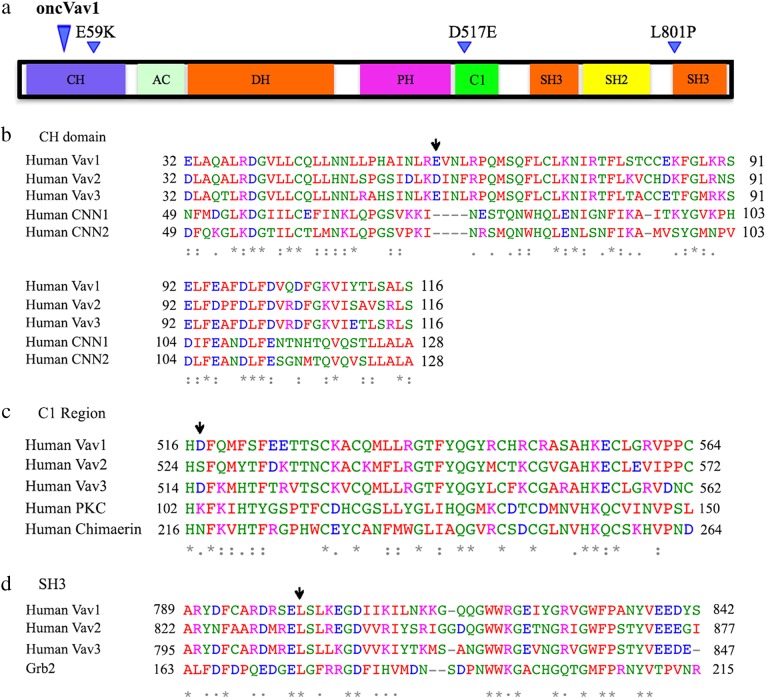
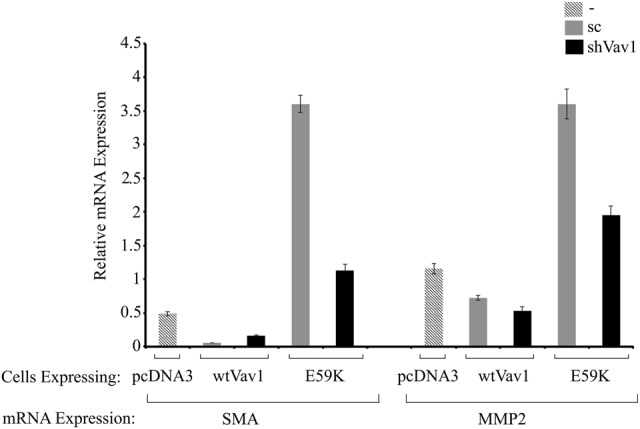
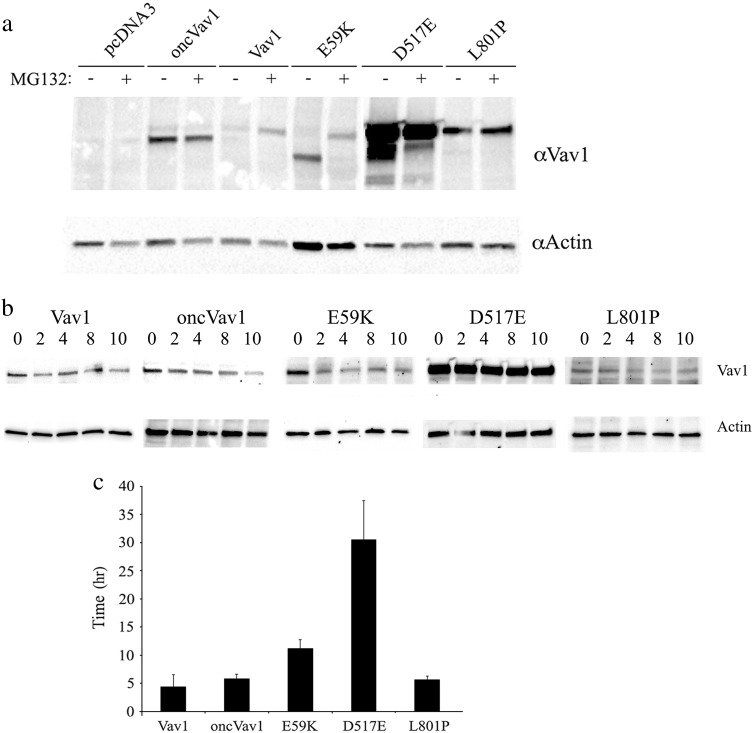
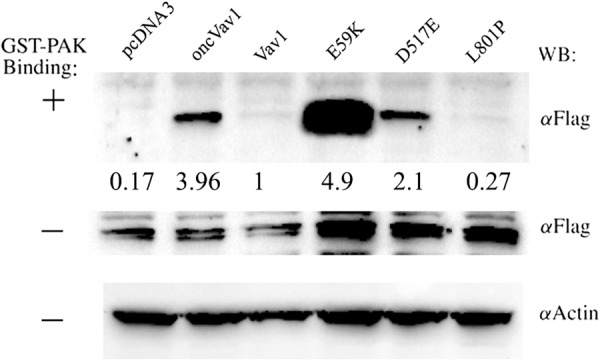
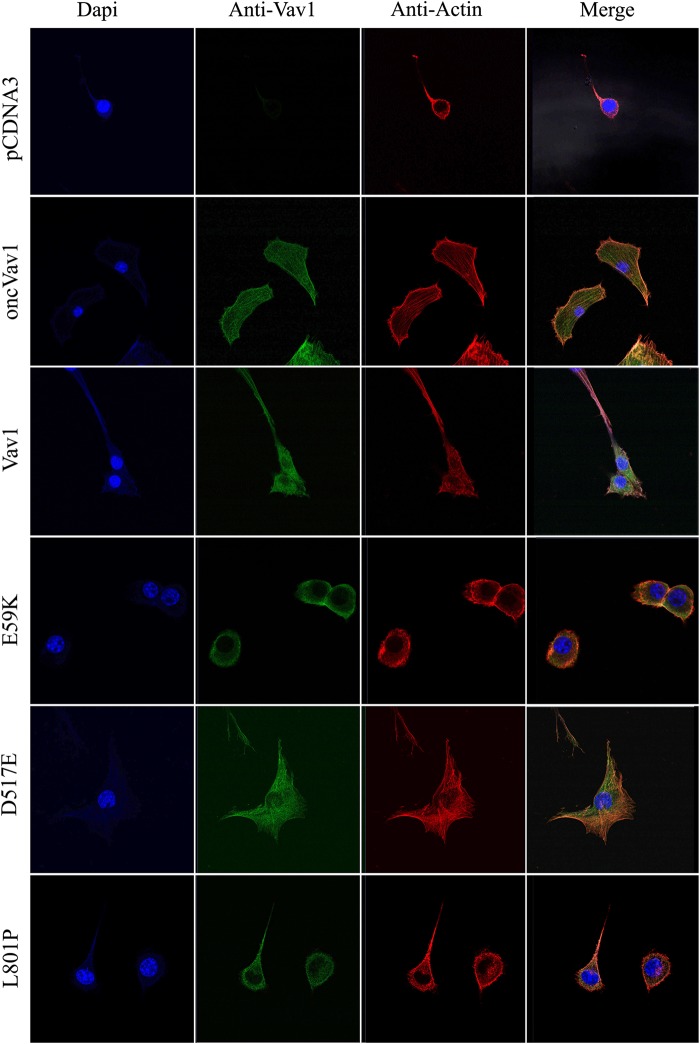
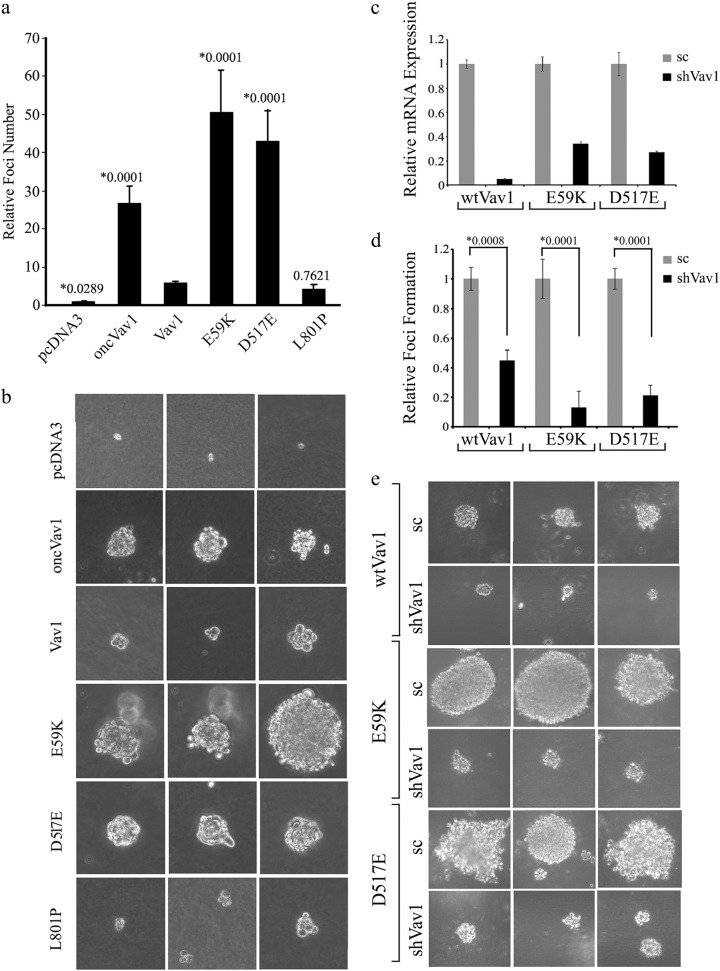
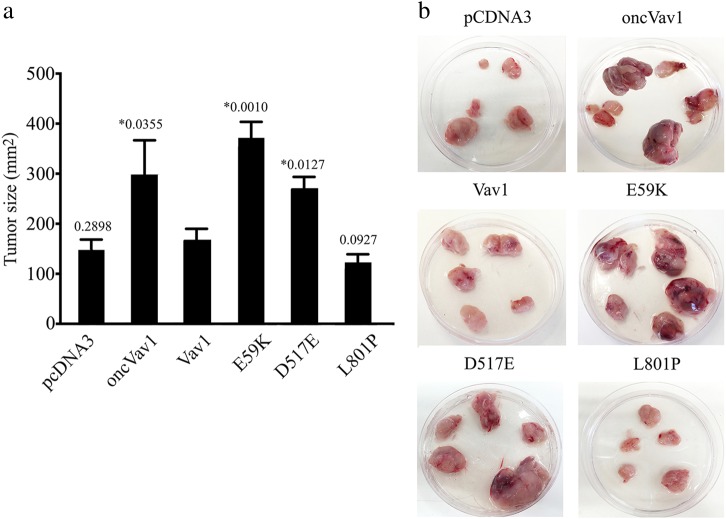
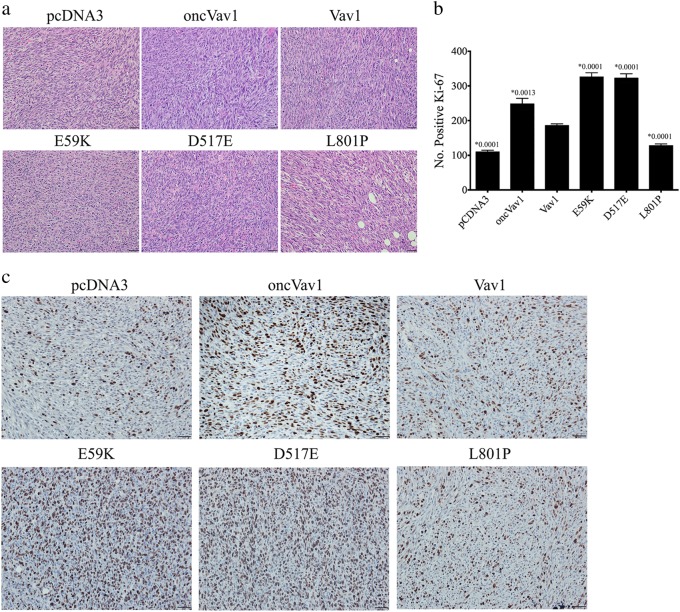
Vav1 is physiologically active as a GDP/GTP nucleotide exchange factor (GEF) in the hematopoietic system. Overexpression of Vav1 in multiple tumor types is known to enhance oncogenicity, yet whether or not Vav1 is a bona fide oncogene is still a matter of debate. Although mutations in Vav1 were recently identified in human cancers of various origins, the functional activities of these mutants are not known. We tested the transforming potential of three mutations identified in human lung adenocarcinoma: E59K, D517E, and L801P. Results from several assays indicative of transforming activities such as rate of proliferation, growth in agar, and generation of tumors in NOD/SCID mice clearly indicated that E59K and D517E are highly transforming but L801P at the SH3 domain is not. The acquired oncogenic activity of these mutants can be attributed to their enhanced activity as GEFs for Rho/Rac GTPases. Deciphering of the mechanisms leading to overactivity of the tested mutants revealed that the E59K mutation facilitates cleavage of a truncated protein that is uncontrollably active as a GEF, while D517E generates a highly stable overexpressed protein that is also more active as a GEF than wild-type Vav1. These findings support the classification of Vav1 as a bona fide oncogene in human cancer.
Vav1作为造血系统中一种GDP/GTP核苷酸交换因子(GEF)具有生理活性。已知Vav1在多种肿瘤类型中的过表达会增强致癌性,但Vav1是否为真正的癌基因仍存在争议。尽管最近在各种起源的人类癌症中发现了Vav1的突变,但这些突变体的功能活性尚不清楚。我们测试了在人肺腺癌中鉴定出的三种突变:E59K、D517E和L801P的转化潜力。来自几种指示转化活性的检测结果,如增殖速率、琼脂中生长以及在NOD/SCID小鼠中产生肿瘤,清楚地表明E59K和D517E具有高度转化能力,但位于SH3结构域的L801P没有。这些突变体获得的致癌活性可归因于它们作为Rho/Rac GTPases的GEF的活性增强。对导致测试突变体过度活跃的机制的解读表明,E59K突变促进了一种截短蛋白的切割,该截短蛋白作为GEF具有不受控制的活性,而D517E产生了一种高度稳定的过表达蛋白,其作为GEF的活性也比野生型Vav1更高。这些发现支持将Vav1归类为人类癌症中的真正癌基因。