The Center of Gerontology and Geriatrics, West China Hospital, Sichuan University, No. 37 Guoxue Lane, Chengdu, Sichuan, China.
The Center of Rehabilitation, West China Hospital, Sichuan University, No. 37 Guoxue Lane, Chengdu, Sichuan, China.
Sci Rep. 2018 Oct 8;8(1):14971. doi: 10.1038/s41598-018-33350-w.
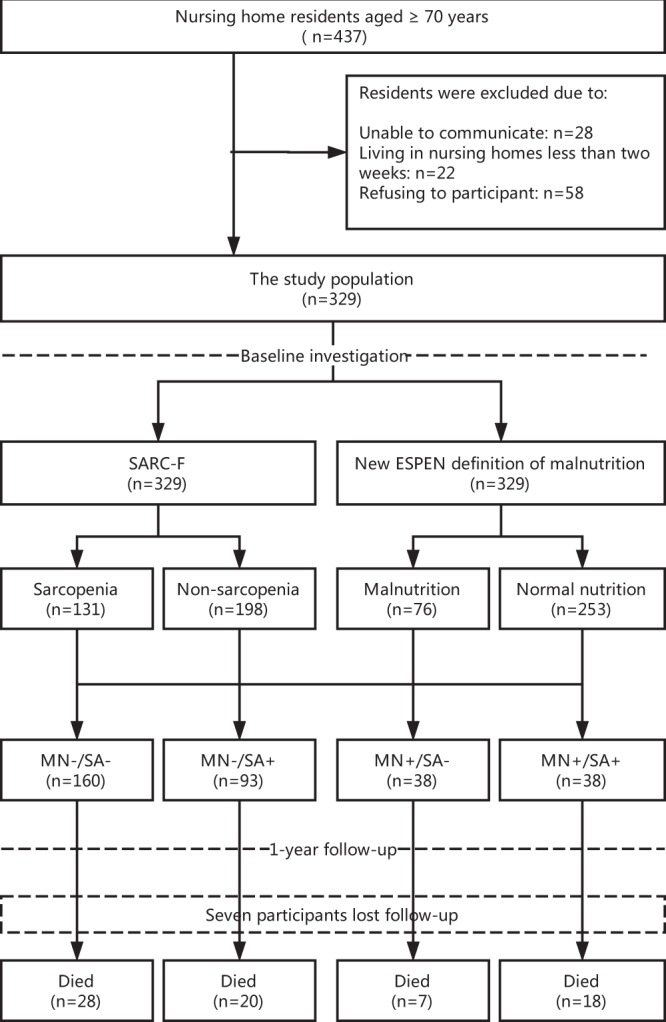
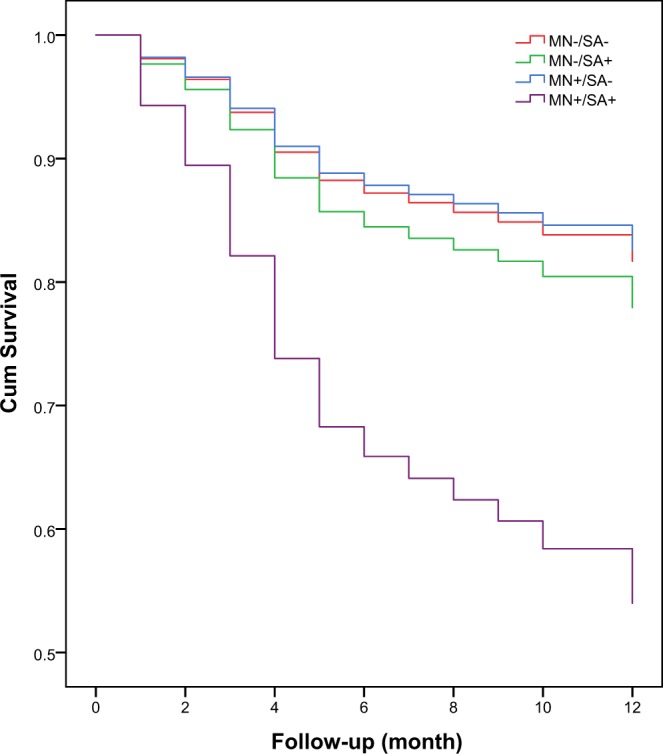
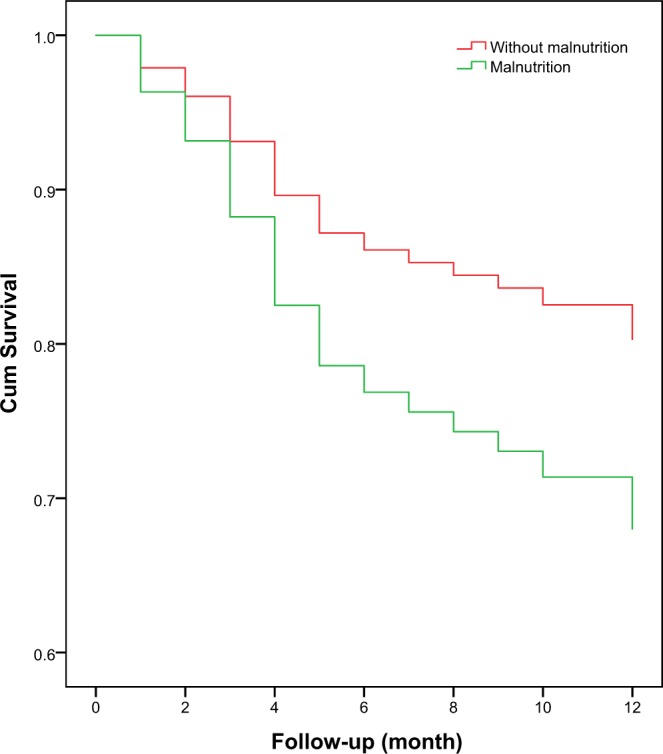
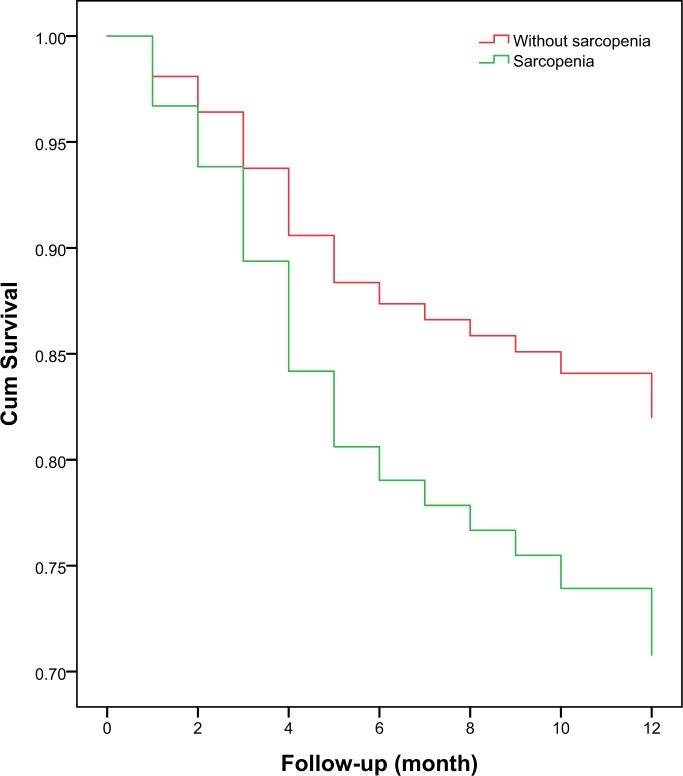
We aimed to compare the predictive capacity of malnutrition, sarcopenia, and malnutrition combined with sarcopenia for mortality in nursing home residents. We conducted a prospective study in four nursing homes in China. Nutrition status and sarcopenia were measured according to the new European Society of Clinical Nutrition and Metabolism (ESPEN) definition and SARC-F, respectively. The study population was divided into four groups: malnutrition with sarcopenia (MN+/SA+), malnutrition without sarcopenia (MN+/SA-), sarcopenia without malnutrition (MN-/SA+), and normal nutrition without sarcopenia (MN-/SA-). The participants were followed up for 12 months. We included 329 participants. Thirty-eight participants (11.6%) had MN+/SA+, 38 participants (11.6%) had MN+/SA-, and 93 participants (28.3%) had MN-/SA+. The 1-year mortality was 18.3%, 21.5%, 18.4%, and 47.4% in the MN-/SA-, MN-/SA+, MN+/SA-, and MN+/SA+ groups, respectively. Compared to participants with MN-/SA-, participants with MN+/SA+ were at a significantly higher risk of mortality (adjusted hazard ratio [HR]: 3.19, 95% confidence interval [CI] 1.71-5.95); however, MN-/SA+ (adjusted HR: 1.24, 95% CI 0.69-2.22) and MN+/SA- (adjusted HR: 0.95, 95% CI 0.41-2.19) were not predictors of mortality. In conclusion, the coexistence of malnutrition and sarcopenia is a significant predictor of mortality in a study population of Chinese nursing home residents.
我们旨在比较营养不良、肌肉减少症以及营养不良合并肌肉减少症对养老院居民死亡率的预测能力。我们在中国的四家养老院进行了一项前瞻性研究。根据新的欧洲临床营养与代谢学会(ESPEN)定义和 SARC-F,分别测量营养状况和肌肉减少症。研究人群分为四组:营养不良伴肌肉减少症(MN+/SA+)、营养不良无肌肉减少症(MN+/SA-)、肌肉减少症无营养不良(MN-/SA+)和无营养不良无肌肉减少症(MN-/SA-)。对参与者进行了 12 个月的随访。我们共纳入 329 名参与者。38 名参与者(11.6%)存在 MN+/SA+,38 名参与者(11.6%)存在 MN+/SA-,93 名参与者(28.3%)存在 MN-/SA+。在 MN-/SA-、MN-/SA+、MN+/SA-和 MN+/SA+组中,1 年死亡率分别为 18.3%、21.5%、18.4%和 47.4%。与 MN-/SA-组相比,MN+/SA+组的死亡风险显著升高(调整后的危险比 [HR]:3.19,95%置信区间 [CI] 1.71-5.95);然而,MN-/SA+(调整后的 HR:1.24,95%CI 0.69-2.22)和 MN+/SA-(调整后的 HR:0.95,95%CI 0.41-2.19)不是死亡率的预测因素。总之,在中国养老院居民研究人群中,营养不良和肌肉减少症同时存在是死亡率的显著预测因素。