Department of Biochemistry, Molecular Biology and Biophysics, Masonic Cancer Center, Institute for Molecular Virology, Center for Genome Engineering, University of Minnesota, Minneapolis, MN, 55455, USA.
Howard Hughes Medical Institute, University of Minnesota, Minneapolis, MN, 55455, USA.
Nat Commun. 2018 Oct 8;9(1):4137. doi: 10.1038/s41467-018-06594-3.
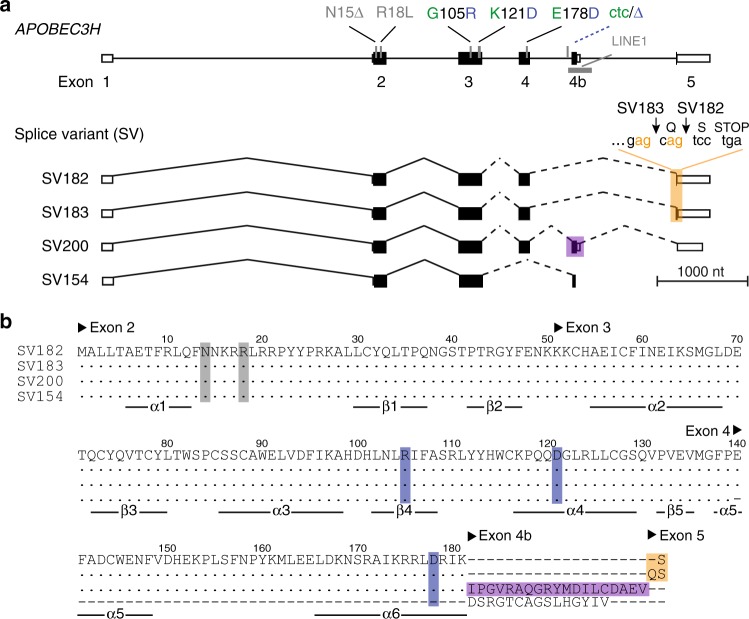
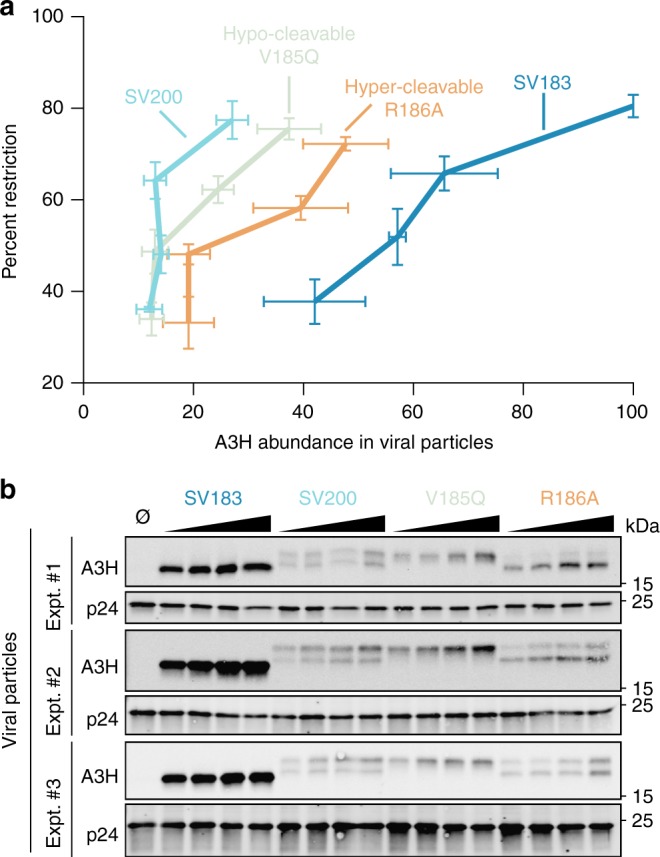
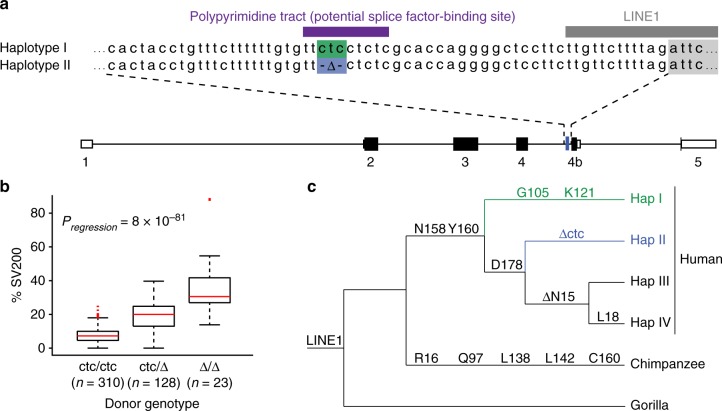
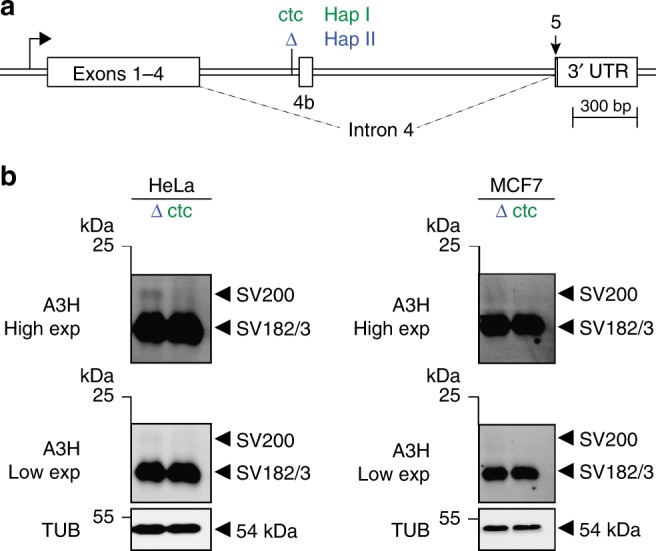
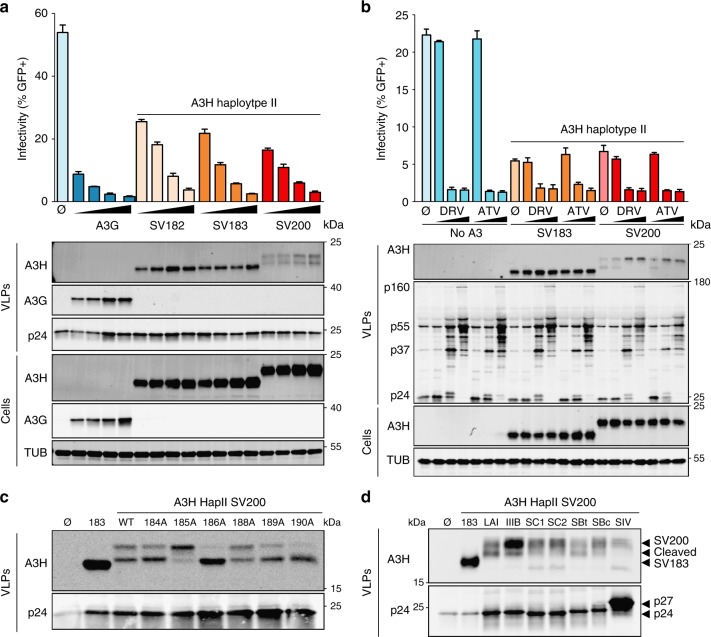
Human APOBEC3H (A3H) is a single-stranded DNA cytosine deaminase that inhibits HIV-1. Seven haplotypes (I-VII) and four splice variants (SV154/182/183/200) with differing antiviral activities and geographic distributions have been described, but the genetic and mechanistic basis for variant expression and function remains unclear. Using a combined bioinformatic/experimental analysis, we find that SV200 expression is specific to haplotype II, which is primarily found in sub-Saharan Africa. The underlying genetic mechanism for differential mRNA splicing is an ancient intronic deletion [del(ctc)] within A3H haplotype II sequence. We show that SV200 is at least fourfold more HIV-1 restrictive than other A3H splice variants. To counteract this elevated antiviral activity, HIV-1 protease cleaves SV200 into a shorter, less restrictive isoform. Our analyses indicate that, in addition to Vif-mediated degradation, HIV-1 may use protease as a counter-defense mechanism against A3H in >80% of sub-Saharan African populations.
人类 APOBEC3H(A3H)是一种单链 DNA 胞嘧啶脱氨酶,可抑制 HIV-1。已描述了七种单倍型(I-VII)和四种剪接变体(SV154/182/183/200),它们具有不同的抗病毒活性和地理分布,但变体表达和功能的遗传和机制基础仍不清楚。通过结合生物信息学/实验分析,我们发现 SV200 的表达是单倍型 II 特异性的,单倍型 II 主要存在于撒哈拉以南非洲。A3H 单倍型 II 序列中存在一个古老的内含子缺失[del(ctc)],这是造成差异 mRNA 剪接的潜在遗传机制。我们表明,SV200 对 HIV-1 的限制作用至少比其他 A3H 剪接变体高四倍。为了抵消这种升高的抗病毒活性,HIV-1 蛋白酶将 SV200 切割成较短的、限制作用较小的同工型。我们的分析表明,除了 Vif 介导的降解外,HIV-1 可能会在>80%的撒哈拉以南非洲人群中利用蛋白酶作为针对 A3H 的防御机制。