Campbell Patrick J, Patel Mira, Martin Jennifer R, Hincapie Ana L, Axon David Rhys, Warholak Terri L, Slack Marion
Department of Pharmacy Practice and Science, College of Pharmacy, University of Arizona, Tucson, Arizona, USA.
University of Arizona Health Sciences Library, University of Arizona, Tucson, Arizona, USA.
BMJ Open Qual. 2018 Oct 2;7(4):e000193. doi: 10.1136/bmjoq-2017-000193. eCollection 2018.
While much is known about hospital pharmacy error rates in the USA, comparatively little is known about community pharmacy dispensing error rates.
The aim of this study was to determine the rate of community pharmacy dispensing errors in the USA.
English language, peer-reviewed observational and interventional studies that reported community pharmacy dispensing error rates in the USA from January 1993 to December 2015 were identified in 10 bibliographic databases and topic-relevant grey literature. Studies with a denominator reflecting the total number of prescriptions in the sample were necessary for inclusion in the meta-analysis. A random effects meta-analysis was conducted to estimate an aggregate community pharmacy dispensing error rate. Heterogeneity was assessed using the I statistic prior to analysis.
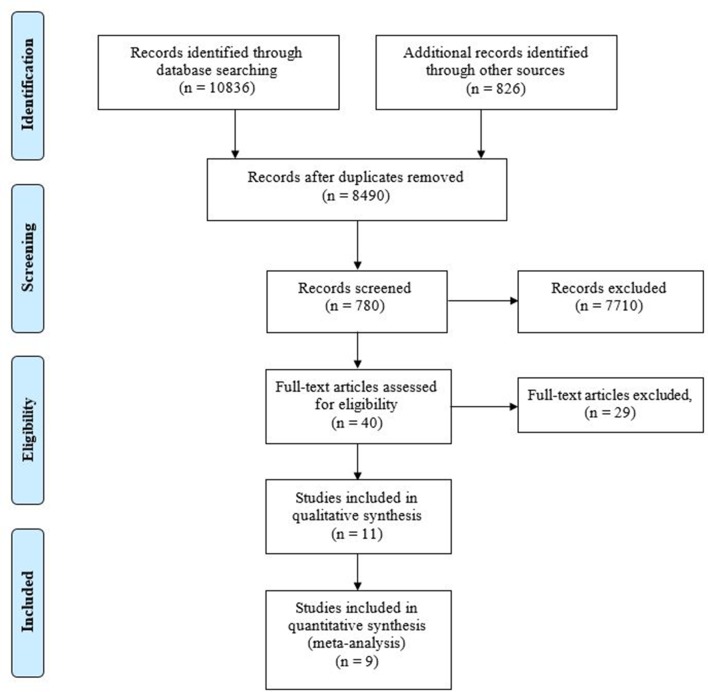
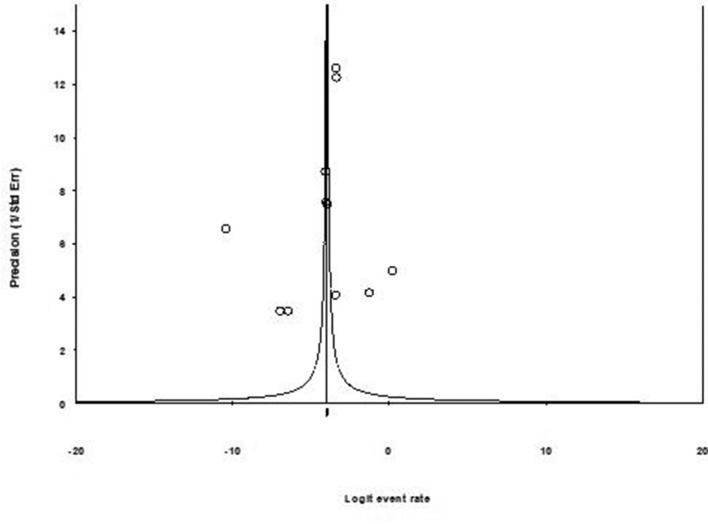
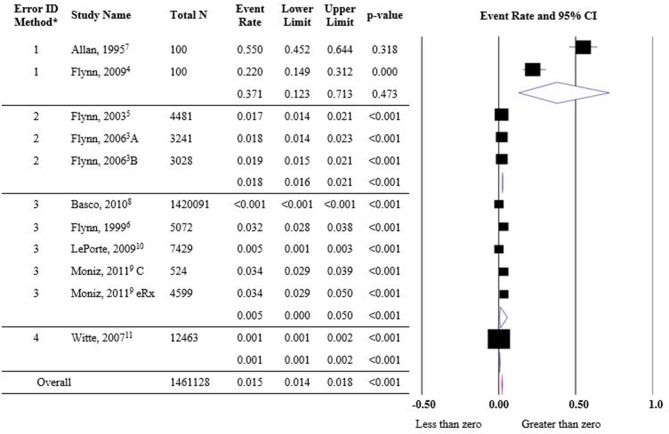
The search yielded a total of 8490 records, of which 11 articles were included in the systematic review. Two articles did not have adequate data components to be included in the meta-analysis. Dispensing error rates ranged from 0.00003% (43/1 420 091) to 55% (55/100). The meta-analysis included 1 461 128 prescriptions. The overall community pharmacy dispensing error rate was estimated to be 0.015 (95% CI 0.014 to 0.018); however, significant heterogeneity was observed across studies (I=99.6). Stratification by study error identification methodology was found to have a significant impact on dispensing error rate (p<0.001).
There are few published articles that describe community pharmacy dispensing error rates in the USA. Thus, there is limited information about the current rate of community pharmacy dispensing errors. A robust investigation is needed to assess dispensing error rates in the USA to assess the nature and magnitude of the problem and establish prevention strategies.
虽然在美国医院药房的差错率方面已有很多了解,但关于社区药房配药差错率的了解相对较少。
本研究旨在确定美国社区药房的配药差错率。
在10个文献数据库和主题相关的灰色文献中,识别出1993年1月至2015年12月期间报道美国社区药房配药差错率的英文、同行评审的观察性和干预性研究。纳入荟萃分析的研究需要有反映样本中处方总数的分母。进行随机效应荟萃分析以估计社区药房配药差错率的总体水平。在分析前使用I统计量评估异质性。
检索共获得8490条记录,其中11篇文章被纳入系统评价。两篇文章没有足够的数据成分纳入荟萃分析。配药差错率从0.00003%(43/1420091)到55%(55/100)不等。荟萃分析纳入了1461128张处方。估计社区药房总体配药差错率为0.015(95%CI为0.014至0.018);然而,各研究间观察到显著的异质性(I=99.6)。发现按研究差错识别方法分层对配药差错率有显著影响(p<0.001)。
描述美国社区药房配药差错率的已发表文章很少。因此,关于社区药房当前配药差错率的信息有限。需要进行有力的调查以评估美国的配药差错率,以评估问题的性质和严重程度并制定预防策略。