Cancer and Immunogenetics Laboratory, Weatherall Institute of Molecular Medicine, University of Oxford, Oxford, UK.
Single Cell Genomics Facility, Weatherall Institute of Molecular Medicine, University of Oxford, Oxford, UK.
J Pathol. 2019 Mar;247(3):293-304. doi: 10.1002/path.5179. Epub 2019 Jan 16.
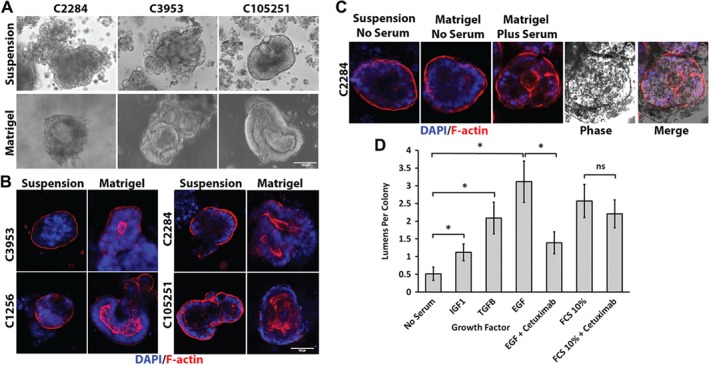
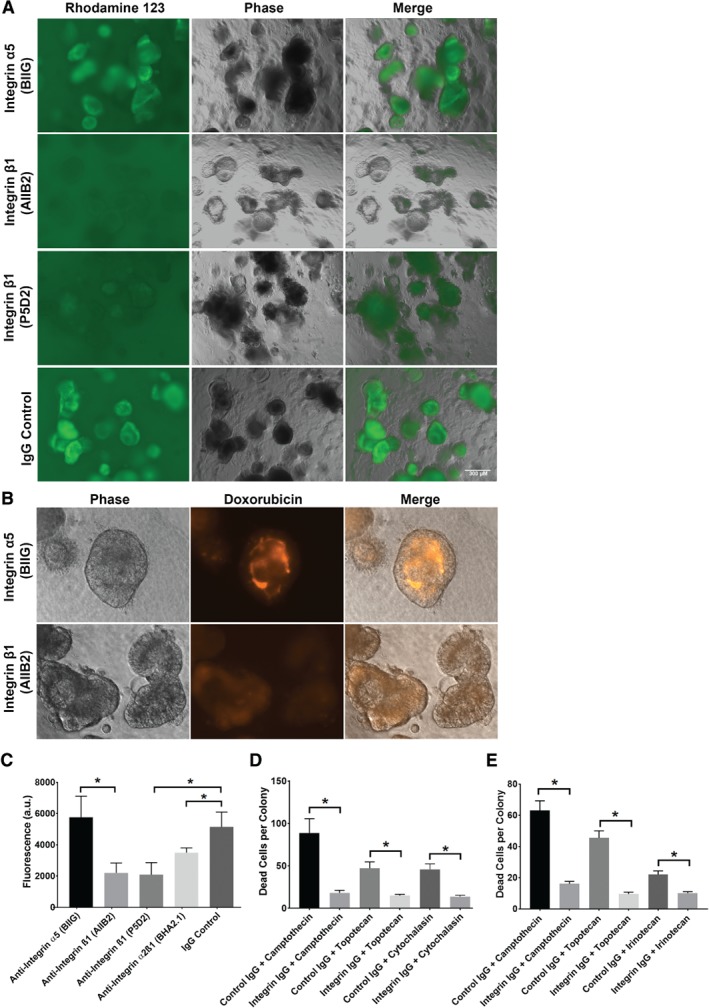
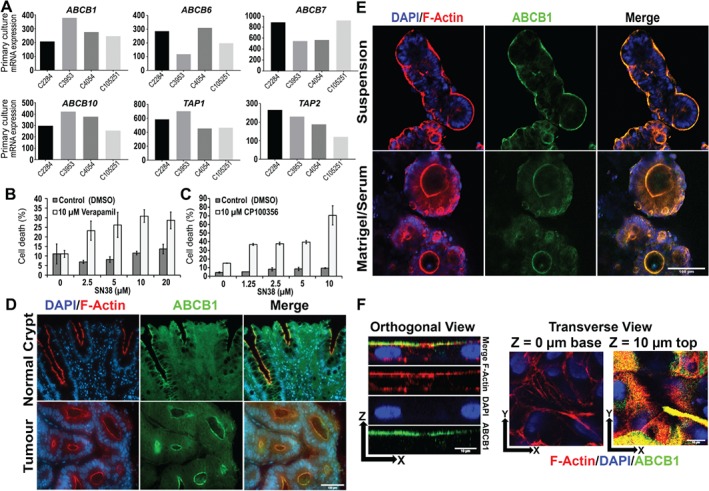
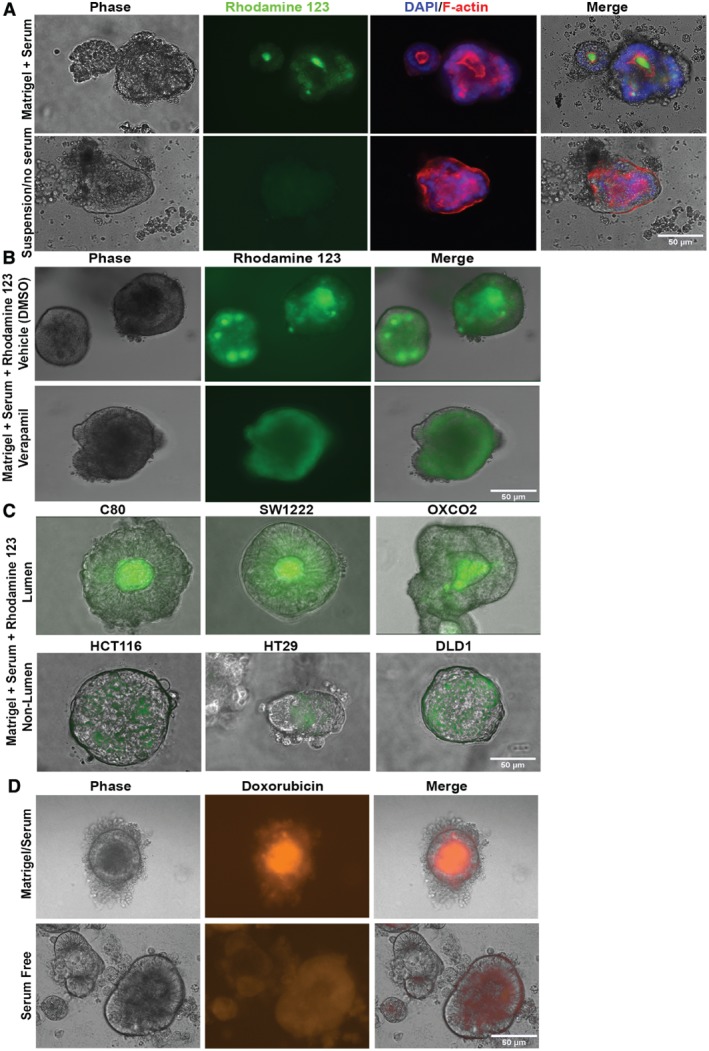
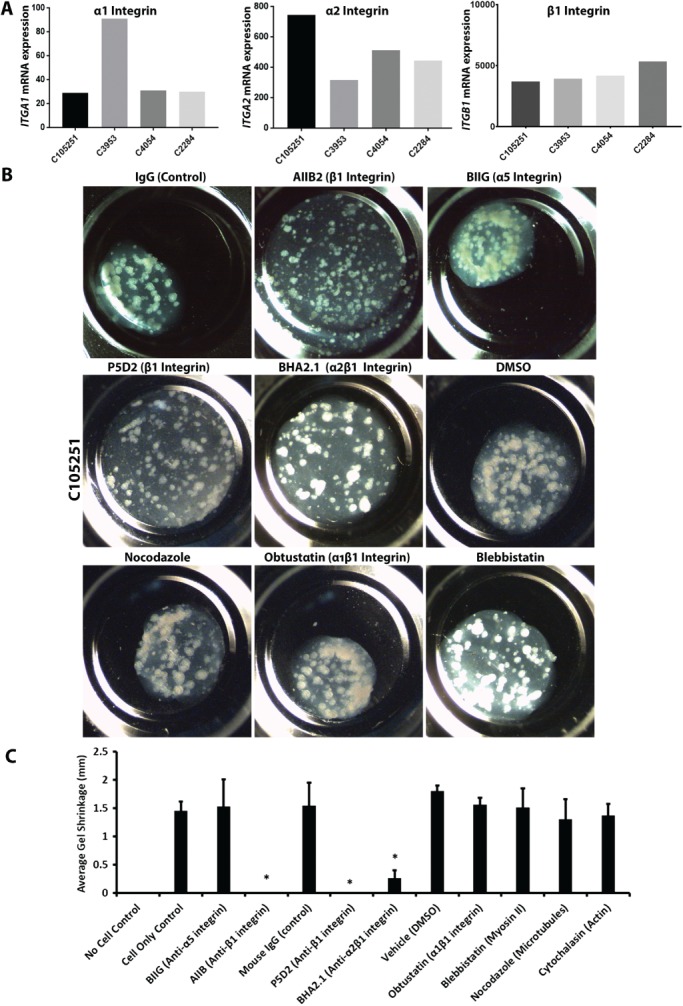
Colonic epithelial cells are highly polarised with a lumen-facing apical membrane, termed the brush border, and a basal membrane in contact with the underlying extracellular matrix (ECM). This polarity is often maintained in cancer tissue in the form of neoplastic glands and has prognostic value. We compared the cellular polarity of several ex vivo spheroid colonic cancer cultures with their parental tumours and found that those grown as non-attached colonies exhibited apical brush border proteins on their outer cellular membranes. Transfer of these cultures to an ECM, such as collagen, re-established the centralised apical polarity observed in vivo. The multidrug resistance protein ABCB1 also became aberrantly polarised to outer colony membranes in suspension cultures, unlike cultures grown in collagen, where it was polarised to central lumens. This polarity switch was dependent on the presence of serum or selected serum components, including epidermal growth factor (EGF), transforming growth factor-β1 (TGF-β1) and insulin-like growth factor-1 (IGF-1). The apical/basal orientation of primary cancer colon cultures cultured in collagen/serum was modulated by α2β1 integrin signalling. The polarisation of ABCB1 in colonies significantly altered drug uptake and sensitivity, as the outward polarisation of ABCB1 in suspension colonies effluxed substrates more effectively than ECM-grown colonies with ABCB1 polarised to central lumens. Thus, serum-free suspension colonies were more resistant to a variety of anti-cancer drugs than ECM-grown colonies. In conclusion, the local stroma, or absence thereof, can have profound effects on the sensitivity of colorectal cultures to drugs that are ABCB1 substrates. © 2018 The Authors. The Journal of Pathology published by John Wiley & Sons Ltd on behalf of Pathological Society of Great Britain and Ireland.
结肠上皮细胞具有高度极性,其腔面为顶端膜,称为刷状缘,基底膜与下方细胞外基质(ECM)接触。这种极性通常以肿瘤腺的形式在癌症组织中保持,并具有预后价值。我们比较了几种离体球体结肠癌细胞培养物与其亲本肿瘤的细胞极性,发现那些作为非附着集落生长的培养物在其外细胞膜上具有顶端刷状缘蛋白。将这些培养物转移到 ECM(如胶原)上,可重建体内观察到的中央顶端极性。多药耐药蛋白 ABCB1 在悬浮培养物中也异常向细胞外集落膜极化,而不是在胶原中生长,在胶原中它向中央腔极化。这种极性转换依赖于血清或选定的血清成分的存在,包括表皮生长因子(EGF)、转化生长因子-β1(TGF-β1)和胰岛素样生长因子-1(IGF-1)。在胶原/血清中培养的原代结肠癌培养物的顶端/基底取向通过 α2β1 整联蛋白信号进行调节。在集落中 ABCB1 的极化显著改变了药物摄取和敏感性,因为 ABCB1 在悬浮集落中的外向极化比 ECM 生长的集落中 ABCB1 向中央腔极化更有效地排出底物。因此,无血清悬浮集落比 ECM 生长的集落对各种抗癌药物的耐药性更高。总之,局部基质或其缺乏会对结直肠培养物对 ABCB1 底物的药物敏感性产生深远影响。© 2018 作者。约翰威立父子公司代表英国和爱尔兰病理学学会出版的《病理学杂志》。