The Broad Institute of MIT and Harvard, Infectious Disease and Microbiome, Cambridge, MA 02142, USA; Harvard T.H. Chan School of Public Health, Biostatistics Department, Boston, MA 02115, USA.
Cincinnati Children's Hospital Medical Center, Cincinnati, OH 45229, USA.
Cell Host Microbe. 2018 Oct 10;24(4):600-610.e4. doi: 10.1016/j.chom.2018.09.009.
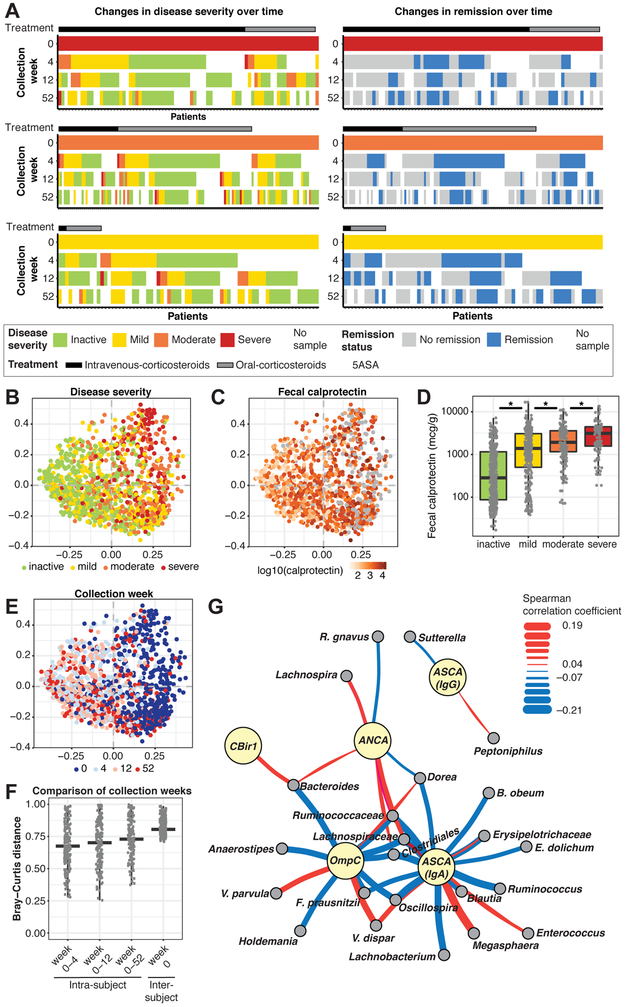
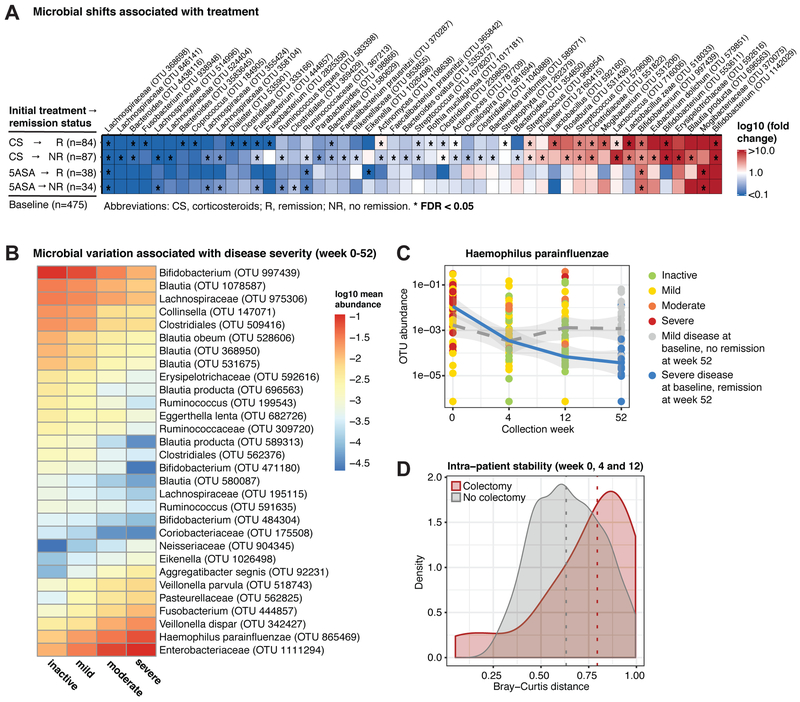
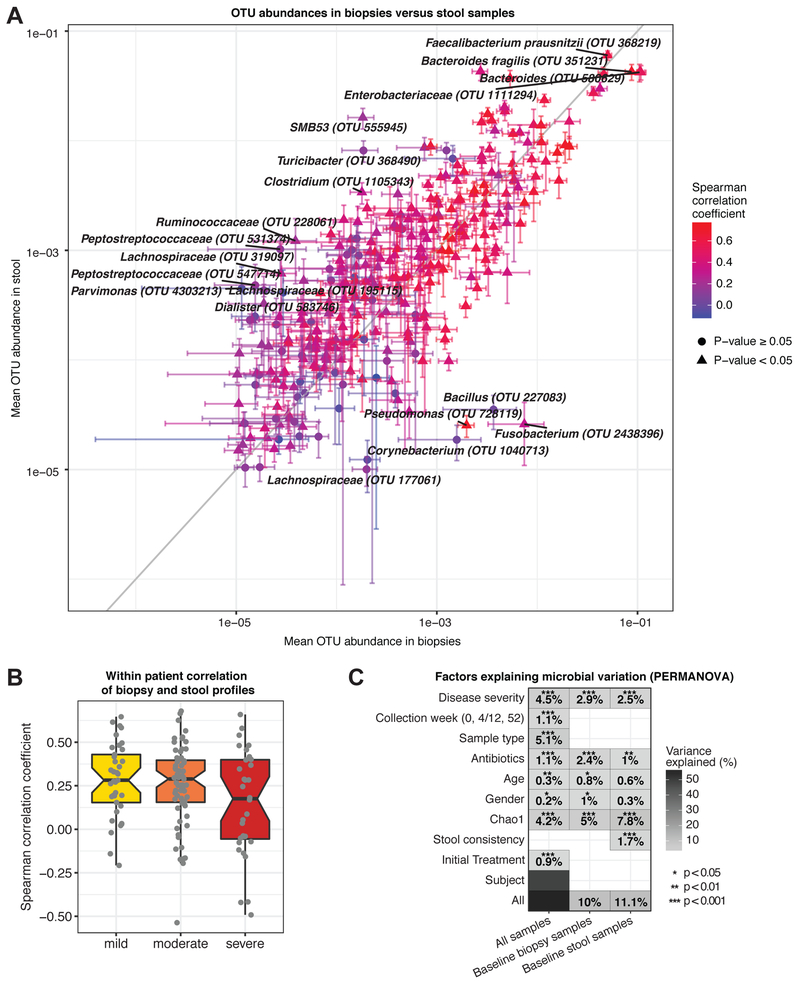
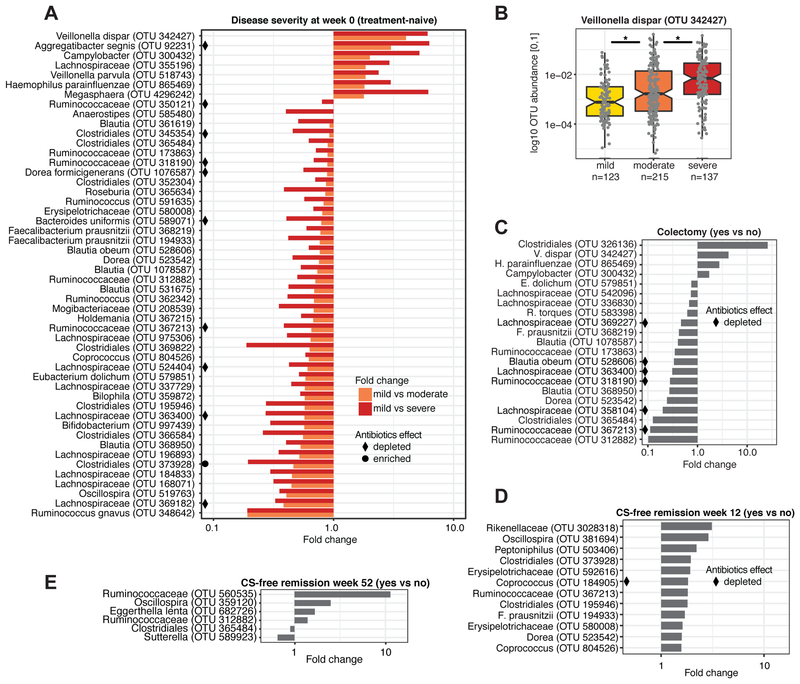
Evaluating progression risk and determining optimal therapy for ulcerative colitis (UC) is challenging as many patients exhibit incomplete responses to treatment. As part of the PROTECT (Predicting Response to Standardized Colitis Therapy) Study, we evaluated the role of the gut microbiome in disease course for 405 pediatric, new-onset, treatment-naive UC patients. Patients were monitored for 1 year upon treatment initiation, and microbial taxonomic composition was analyzed from fecal samples and rectal biopsies. Depletion of core gut microbes and expansion of bacteria typical of the oral cavity were associated with baseline disease severity. Remission and refractory disease were linked to species-specific temporal changes that may be implicative of therapy efficacy, and a pronounced increase in microbiome variability was observed prior to colectomy. Finally, microbial associations with disease-associated serological markers suggest host-microbial interactions in UC. These insights will help improve existing treatments and develop therapeutic approaches guiding optimal medical care.
评估溃疡性结肠炎(UC)的进展风险并确定最佳治疗方案具有挑战性,因为许多患者对治疗的反应并不完全。在 PROTECT(预测标准化结肠炎治疗反应)研究中,我们评估了肠道微生物组在 405 名儿科、新发病、未经治疗的 UC 患者疾病过程中的作用。患者在开始治疗后进行了为期 1 年的监测,并从粪便样本和直肠活检中分析了微生物分类组成。核心肠道微生物的消耗和口腔细菌的扩张与基线疾病严重程度相关。缓解和难治性疾病与可能提示治疗效果的特定物种的时间变化有关,并且在结肠切除术前观察到微生物组变异性明显增加。最后,与疾病相关的血清学标志物的微生物相关性表明 UC 中存在宿主-微生物相互作用。这些见解将有助于改善现有治疗方法并开发指导最佳医疗护理的治疗方法。