Zhao Mengnan, Yang Christopher C
College of Computing and Informatics, Drexel University, Philadelphia, PA, United States.
J Med Internet Res. 2018 Oct 11;20(10):e271. doi: 10.2196/jmir.9646.
Due to the high cost and low success rate in new drug development, systematic drug repositioning methods are exploited to find new indications for existing drugs.
We sought to propose a new computational drug repositioning method to identify repositioning drugs for Parkinson disease (PD).
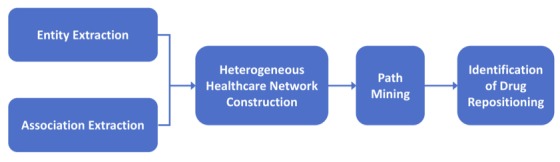
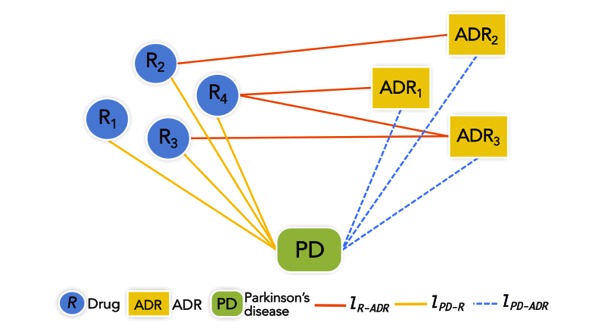
We developed a novel heterogeneous network mining repositioning method that constructed a 3-layer network of disease, drug, and adverse drug reaction and involved user-generated data from online health communities to identify potential candidate drugs for PD.
We identified 44 non-Parkinson drugs by using the proposed approach, with data collected from both pharmaceutical databases and online health communities. Based on the further literature analysis, we found literature evidence for 28 drugs.
In summary, the proposed heterogeneous network mining repositioning approach is promising for identifying repositioning candidates for PD. It shows that adverse drug reactions are potential intermediaries to reveal relationships between disease and drug.
由于新药开发成本高且成功率低,因此采用系统的药物重新定位方法来寻找现有药物的新适应症。
我们试图提出一种新的计算药物重新定位方法,以识别用于帕金森病(PD)的重新定位药物。
我们开发了一种新颖的异质网络挖掘重新定位方法,构建了疾病、药物和药物不良反应的三层网络,并纳入来自在线健康社区的用户生成数据,以识别PD的潜在候选药物。
通过使用所提出的方法,我们识别出44种非帕金森病药物,数据来自制药数据库和在线健康社区。基于进一步的文献分析,我们发现了28种药物的文献证据。
总之,所提出的异质网络挖掘重新定位方法在识别PD的重新定位候选药物方面很有前景。它表明药物不良反应是揭示疾病与药物之间关系的潜在中介。