Molecular Neurobiology Laboratory, Salk Institute for Biological Studies, 10010 North Torrey Pines Road, La Jolla, CA 92037, USA.
Centre for Discovery Brain Sciences, University of Edinburgh, 49 Little France Crescent, Edinburgh EH16 4SB, UK.
Science. 2018 Oct 12;362(6411):181-185. doi: 10.1126/science.aat0473.
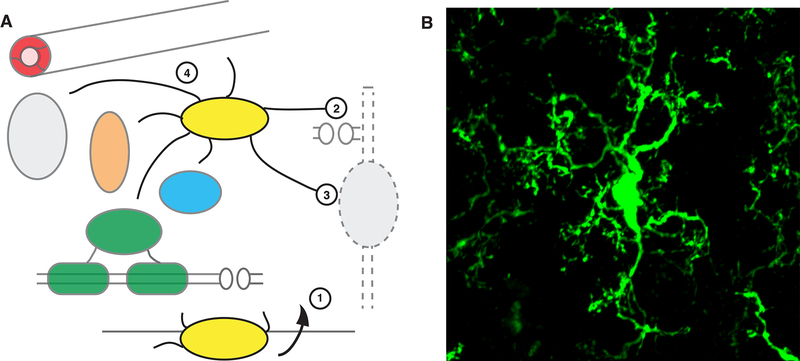
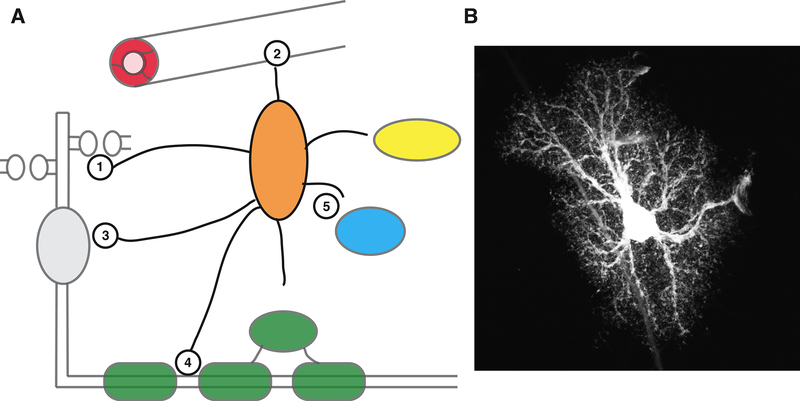
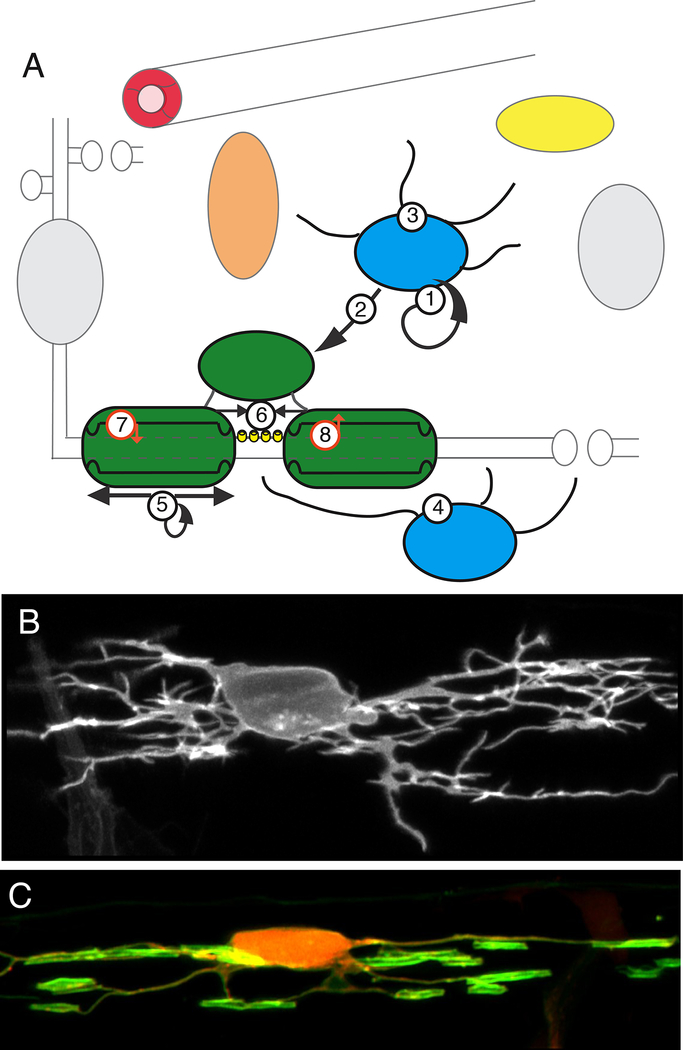
Glia constitute roughly half of the cells of the central nervous system (CNS) but were long-considered to be static bystanders to its formation and function. Here we provide an overview of how the diverse and dynamic functions of glial cells orchestrate essentially all aspects of nervous system formation and function. Radial glia, astrocytes, oligodendrocyte progenitor cells, oligodendrocytes, and microglia each influence nervous system development, from neuronal birth, migration, axon specification, and growth through circuit assembly and synaptogenesis. As neural circuits mature, distinct glia fulfill key roles in synaptic communication, plasticity, homeostasis, and network-level activity through dynamic monitoring and alteration of CNS structure and function. Continued elucidation of glial cell biology, and the dynamic interactions of neurons and glia, will enrich our understanding of nervous system formation, health, and function.
神经胶质细胞构成了中枢神经系统 (CNS) 中大约一半的细胞,但长期以来一直被认为是其形成和功能的静态旁观者。在这里,我们概述了神经胶质细胞的多种动态功能如何协调神经系统形成和功能的各个方面。放射状胶质细胞、星形胶质细胞、少突胶质细胞前体细胞、少突胶质细胞和小胶质细胞都影响神经系统的发育,从神经元的产生、迁移、轴突特化和生长,到回路的组装和突触形成。随着神经回路的成熟,不同的胶质细胞通过动态监测和改变中枢神经系统的结构和功能,在突触通讯、可塑性、内稳态和网络水平活动中发挥关键作用。对神经胶质细胞生物学以及神经元和神经胶质细胞的动态相互作用的进一步阐明,将丰富我们对神经系统形成、健康和功能的理解。