Cox Roy, Schapiro Anna C, Stickgold Robert
Department of Psychiatry, Beth Israel Deaconess Medical Center and Harvard Medical School, Boston MA, USA.
Netw Neurosci. 2018 Oct 1;2(4):481-512. doi: 10.1162/netn_a_00046. eCollection 2018.
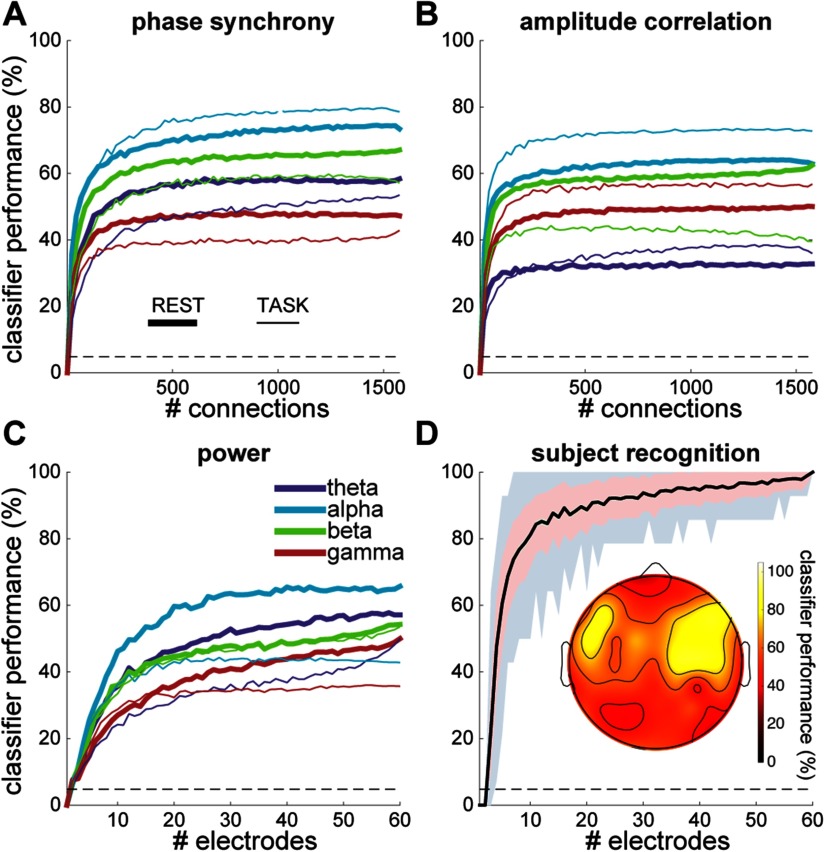
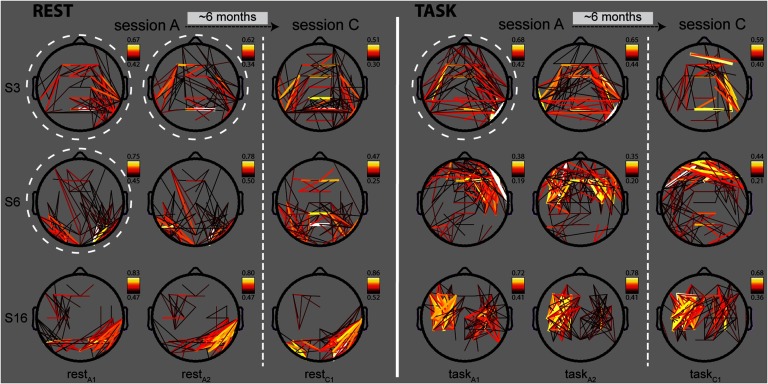
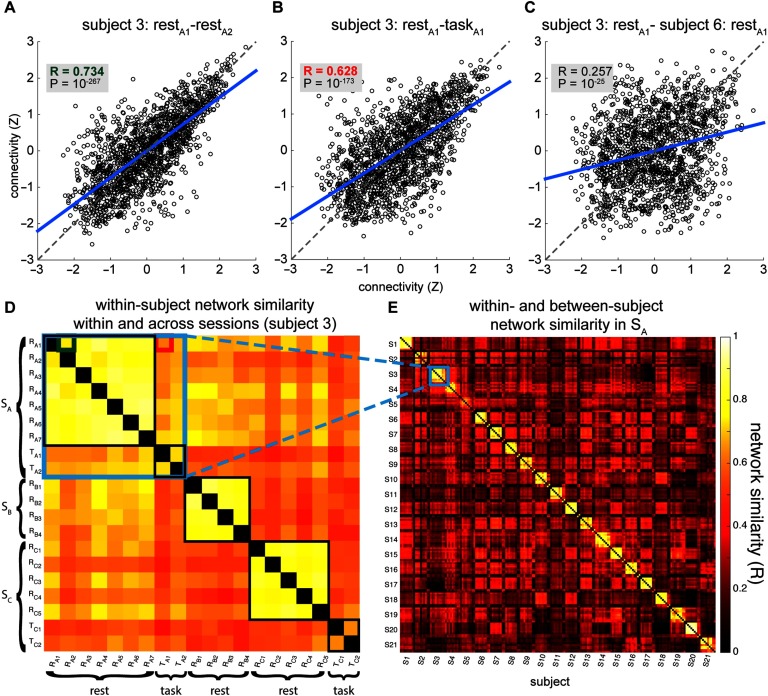
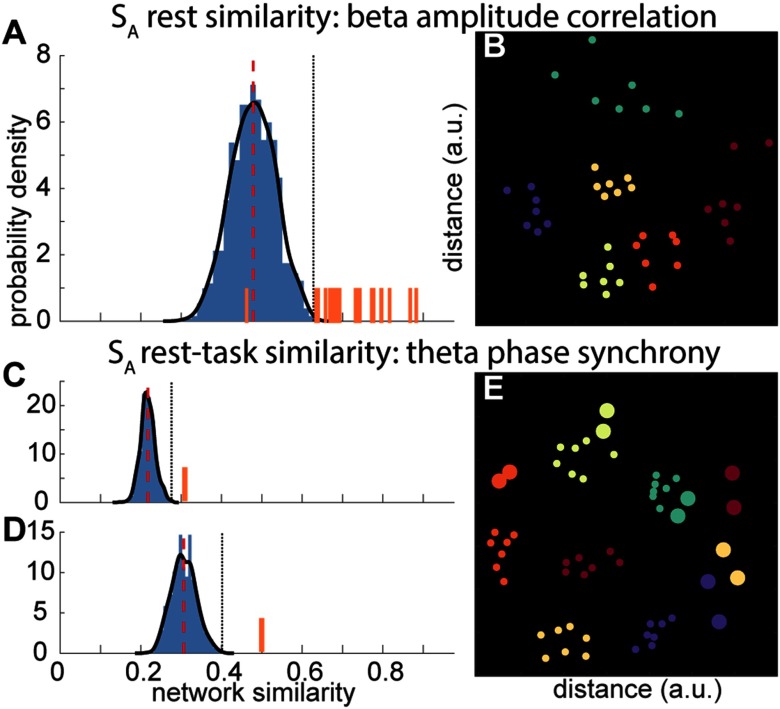
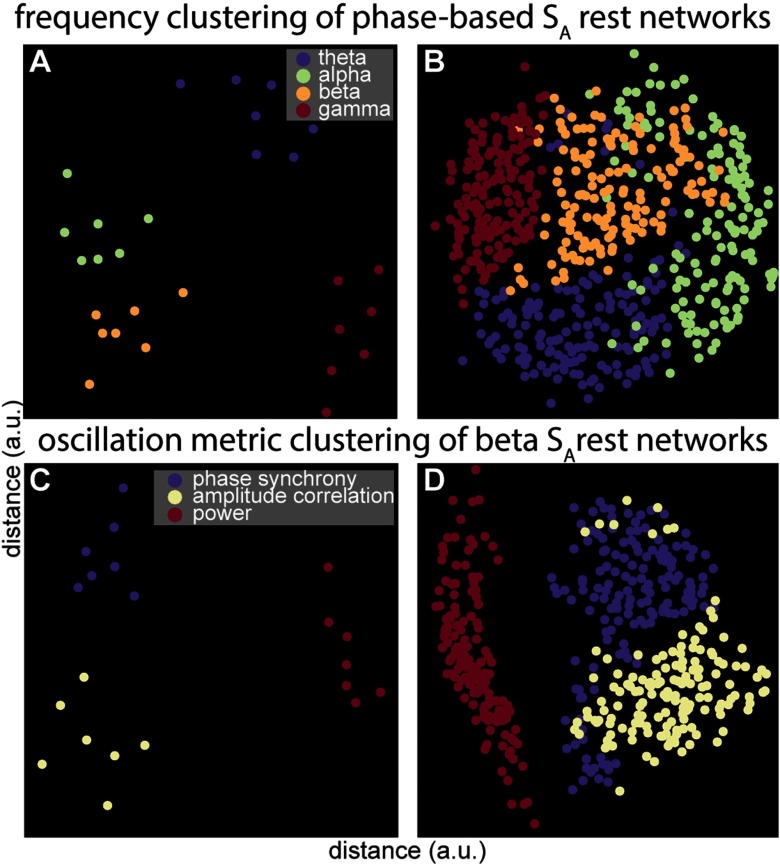
Individual differences in brain organization exist at many spatiotemporal scales and underlie the diversity of human thought and behavior. Oscillatory neural activity is crucial for these processes, but how such rhythms are expressed across the cortex within and across individuals is poorly understood. We conducted a systematic characterization of brain-wide activity across frequency bands and oscillatory features during rest and task execution. We found that oscillatory profiles exhibit sizable group-level similarities, indicating the presence of common templates of oscillatory organization. Nonetheless, well-defined subject-specific network profiles were discernible beyond the structure shared across individuals. These individualized patterns were sufficiently stable to recognize individuals several months later. Moreover, network structure of rhythmic activity varied considerably across distinct oscillatory frequencies and features, indicating the existence of several parallel information processing streams embedded in distributed electrophysiological activity. These findings suggest that network similarity analyses may be useful for understanding the role of large-scale brain oscillations in physiology and behavior.
大脑组织的个体差异存在于许多时空尺度上,并构成了人类思维和行为多样性的基础。振荡性神经活动对这些过程至关重要,但人们对这种节律在个体内部和个体之间如何在整个皮层中表达却知之甚少。我们对静息和任务执行期间全脑在不同频段和振荡特征的活动进行了系统表征。我们发现,振荡模式表现出相当大的群体水平相似性,表明存在振荡组织的共同模板。尽管如此,除了个体间共享的结构之外,还能辨别出明确的个体特异性网络模式。这些个体化模式足够稳定,几个月后仍能识别个体。此外,节律性活动的网络结构在不同的振荡频率和特征之间有很大差异,表明在分布式电生理活动中存在多个并行的信息处理流。这些发现表明,网络相似性分析可能有助于理解大规模脑振荡在生理和行为中的作用。