Lin Si-Yu, Zhang Shi-Zhong, An Jian-Xiong, Qian Xiao-Yan, Gao Xin-You, Wang Yong, Zhao Wen-Xing, Eastwood Derek, Cope Doris K, Williams John P
China Three Gorges, University School of Medicine, Yichang, China,
Department of Anesthesiology, Pain Medicine and Critical Care Medicine, Aviation General Hospital of China Medical University and Beijing Institute of Translational Medicine, Chinese Academy of Sciences, Beijing, China,
J Pain Res. 2018 Oct 4;11:2179-2188. doi: 10.2147/JPR.S163340. eCollection 2018.
This study was to evaluate the effectiveness of ultrasound-guided percutaneous ozone injections around the cervical dorsal root ganglions of zoster-associated pain (ZAP) patients.
Retrospective comparative study.
The study was conducted at a pain center of a university hospital.
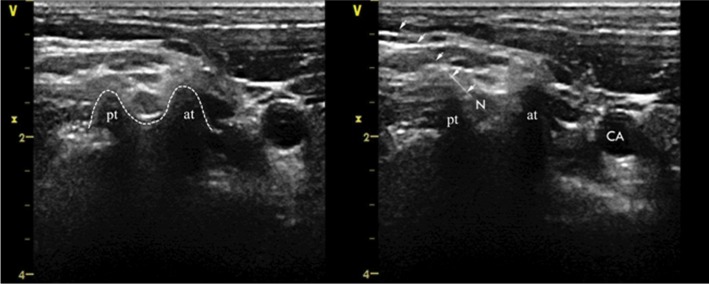
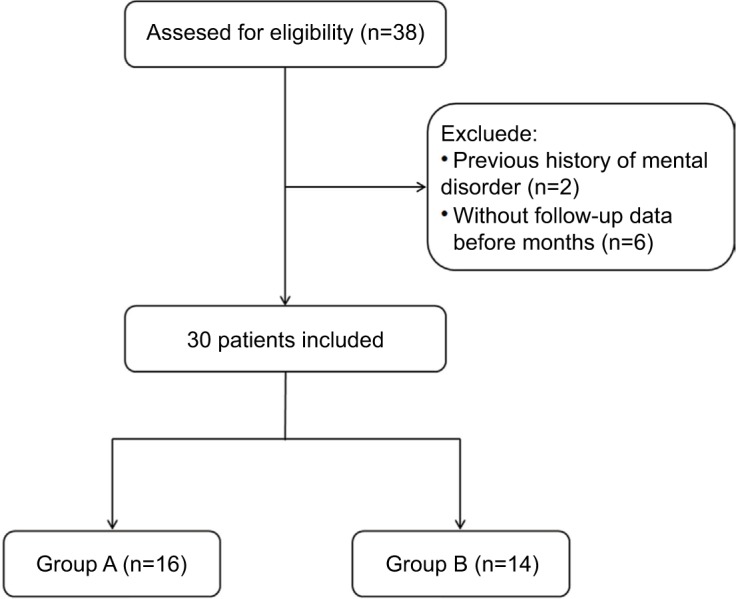
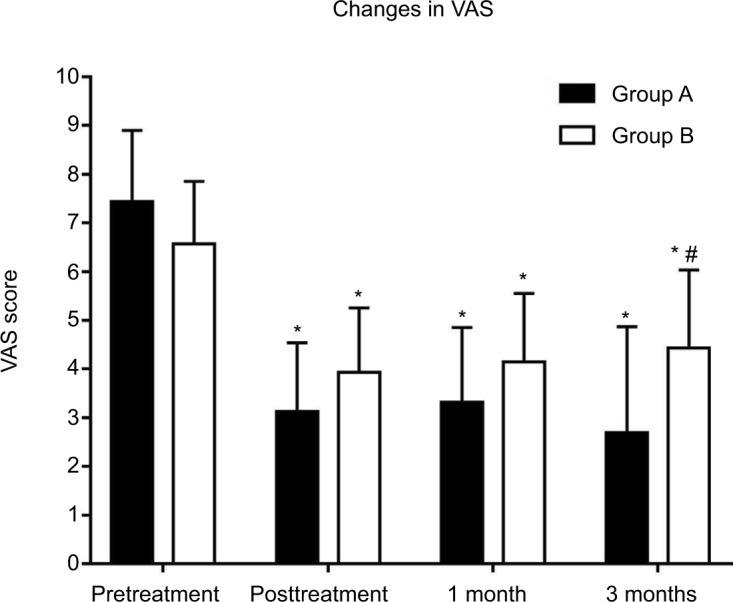
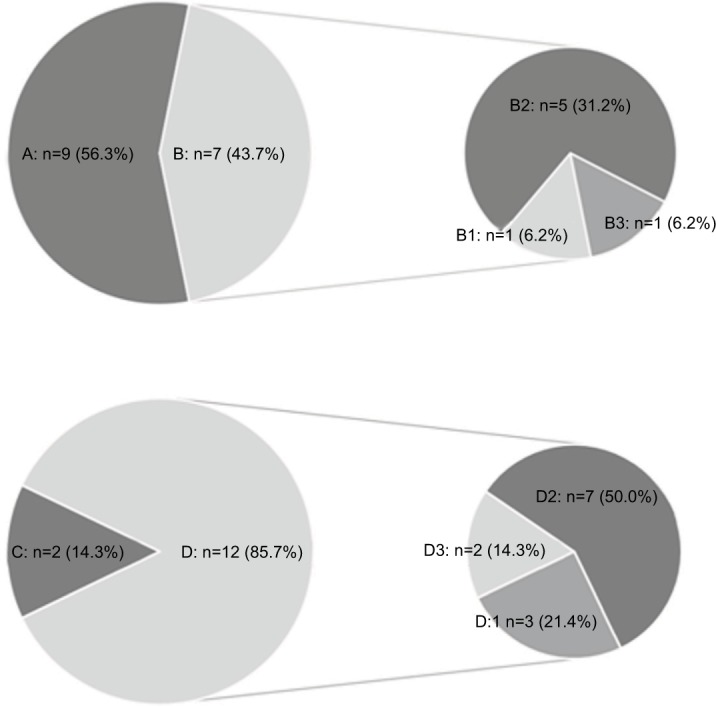
From June 2016 to July 2017, a total number of 30 patients with ZAP were treated with ultrasound-guided percutaneous ozone injection around the cervical dorsal root ganglion (DRG) at the injured nerve level (C2-C8). A volume of 3 mL ozone-oxygen mixture at a concentration of 30 µg/mL was injected into the area around the DRG. Patients were divided into two groups according to their disease duration: group A (at or <3 months) and group B (>3 months). The pain severity was assessed according to a visual analog scale, and imaging changes were evaluated by ultrasound. Patient improvements in pain and neurologic function were evaluated during a follow-up period from 1 to 3 months.
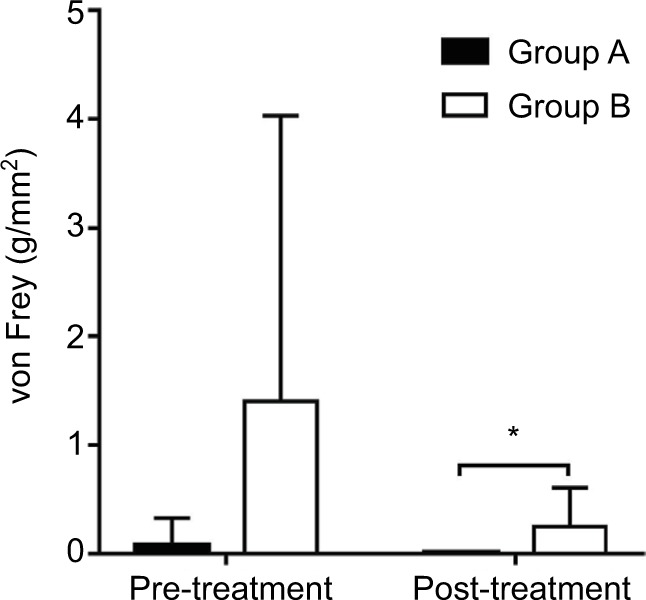
The data showed that ozone injections reduced pain in patients with ZAP. However, the success rate of group A was higher than group B. After the injection, the von Frey data demonstrated decreases in both groups, but, there were no significant differences between the groups. Moreover, univariate logistic regression analysis and multivariate regression analysis showed a history of diabetes mellitus had a significant effect on the treatment results.
Percutaneous ozone injection around the DRG might be a useful method for treatment-resistant cases of ZAP at the cervical level. Institutional Review Board (IRB) approval number: HK2017-1130.
本研究旨在评估超声引导下经皮臭氧注射治疗带状疱疹相关性疼痛(ZAP)患者颈背根神经节周围疼痛的有效性。
回顾性对照研究。
在一所大学医院的疼痛中心进行该研究。
2016年6月至2017年7月,共有30例ZAP患者在受损神经水平(C2 - C8)接受了超声引导下经皮臭氧注射至颈背根神经节(DRG)周围。将浓度为30μg/mL的3 mL臭氧 - 氧气混合气体注入DRG周围区域。根据病程将患者分为两组:A组(病程≤3个月)和B组(病程>3个月)。根据视觉模拟量表评估疼痛严重程度,并通过超声评估影像学变化。在1至3个月的随访期内评估患者疼痛和神经功能的改善情况。
数据显示臭氧注射可减轻ZAP患者的疼痛。然而,A组的成功率高于B组。注射后,两组的von Frey数据均显示下降,但两组之间无显著差异。此外,单因素逻辑回归分析和多因素回归分析显示糖尿病病史对治疗结果有显著影响。
DRG周围经皮臭氧注射可能是治疗颈段难治性ZAP病例的一种有效方法。机构审查委员会(IRB)批准号:HK2017 - 1130。