Department of Chemistry, Chung Yuan Christian University, Chung-Li 32023, Taiwan.
Department of Bioscience Technology, Chung Yuan Christian University, No. 200, Chung-Pei Rd., Chung-Li 32023, Taiwan.
Int J Mol Sci. 2018 Oct 16;19(10):3195. doi: 10.3390/ijms19103195.
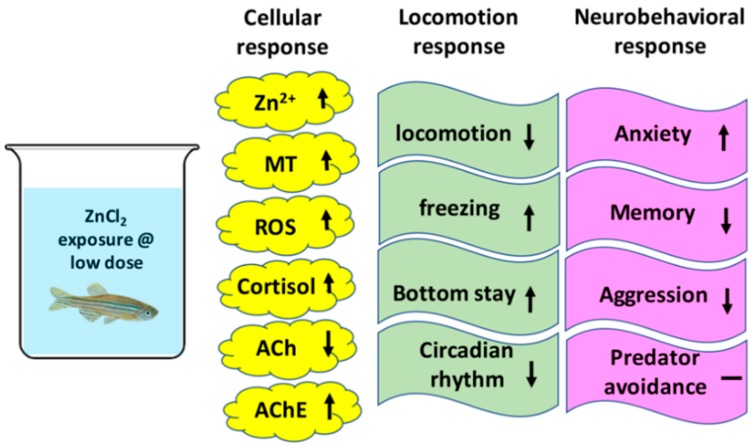
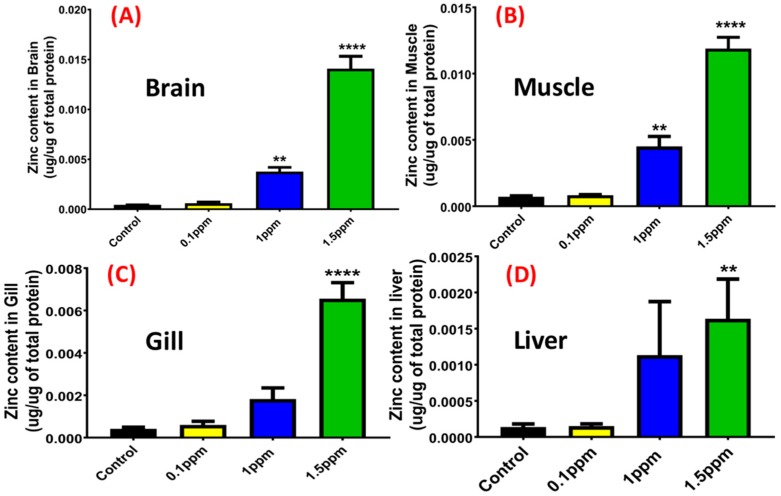
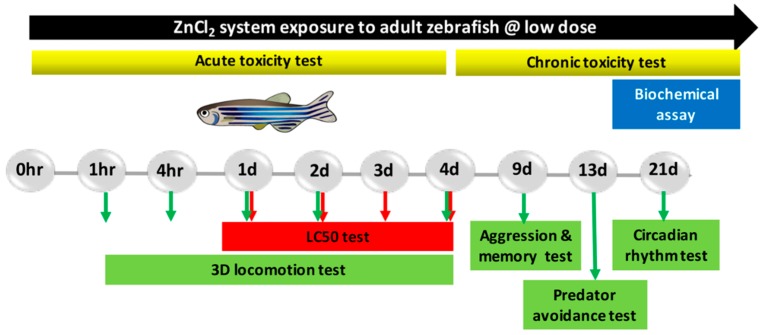
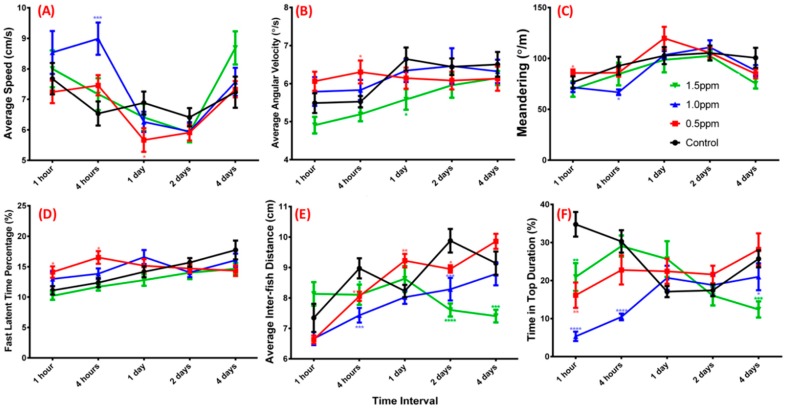
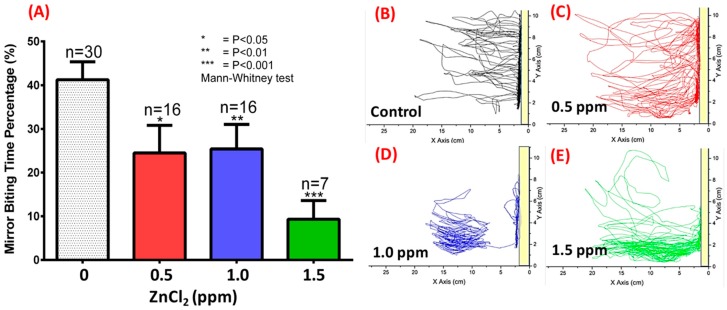
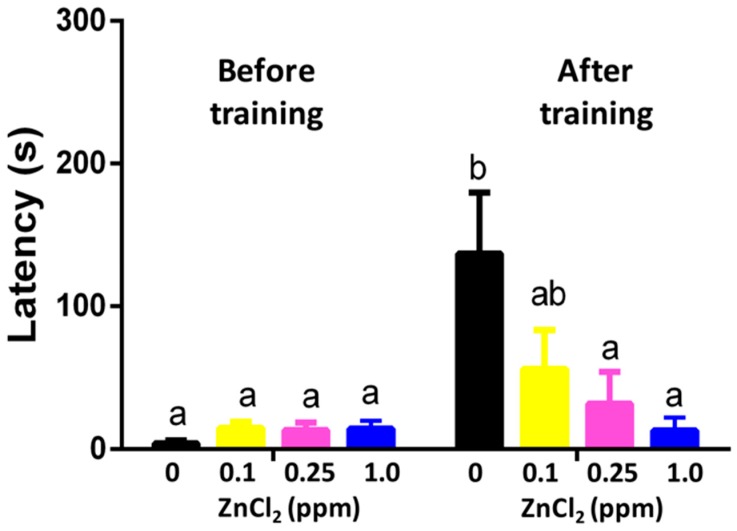
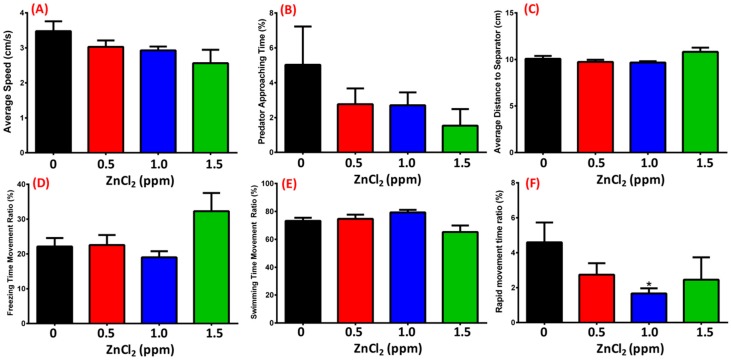
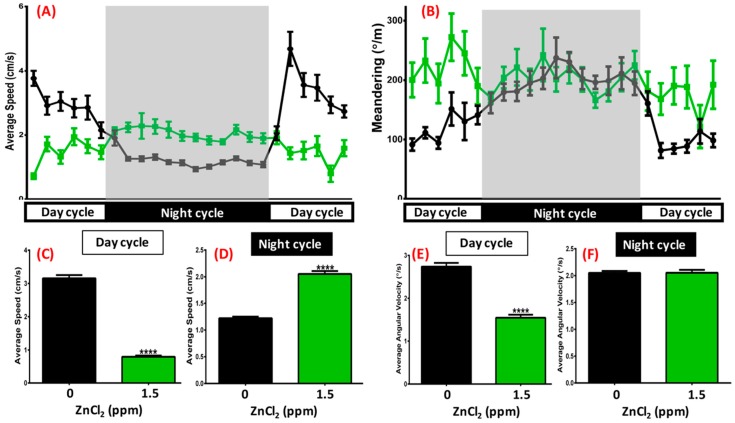
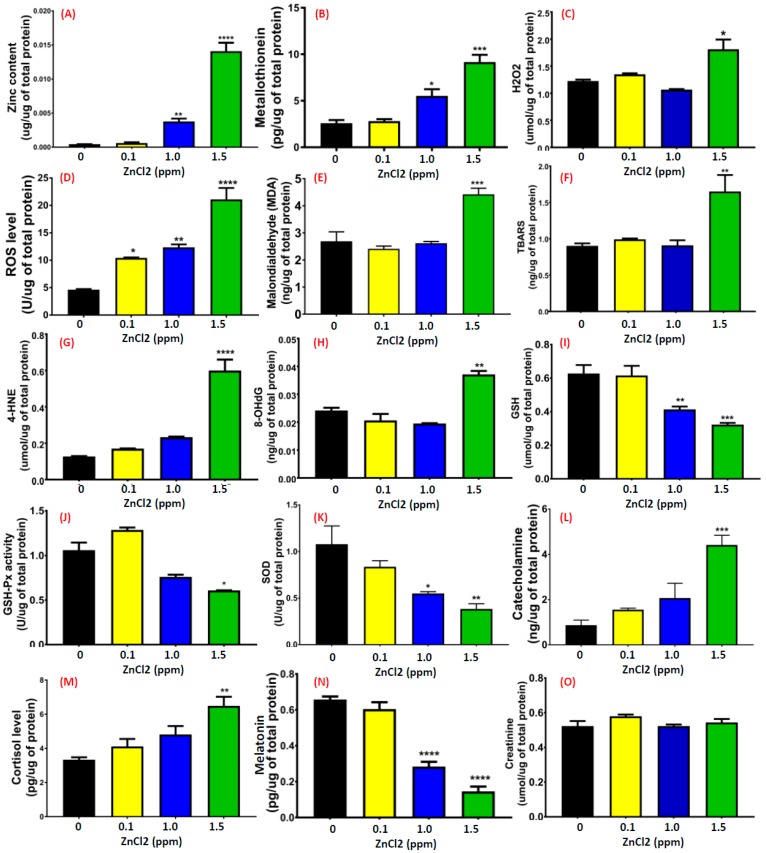
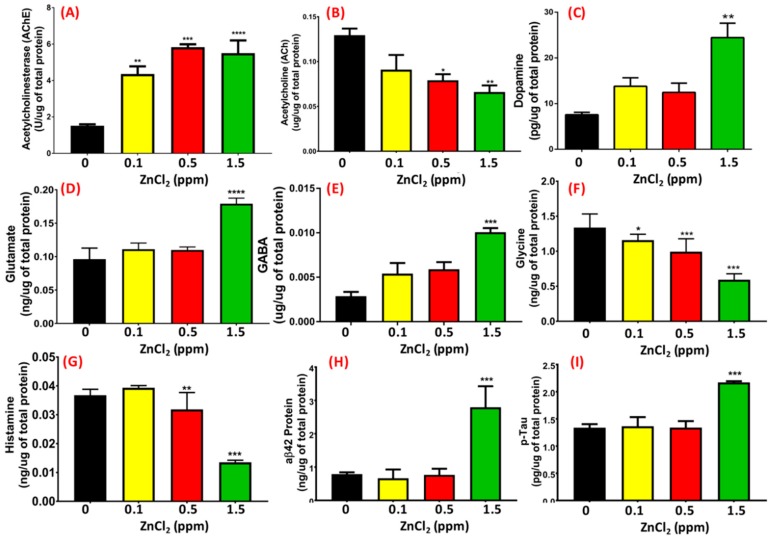
In this study, we evaluated the acute (24, 48, 72, and 96 h) and chronic (21 days) adverse effects induced by low doses (0.1, 0.5, 1, and 1.5 mg/L) of zinc chloride (ZnCl₂) exposure in adult zebrafish by using behavioral endpoints like three-dimensional (3D) locomotion, passive avoidance, aggression, circadian rhythm, and predator avoidance tests. Also, brain tissues were dissected and subjected to analysis of multiple parameters related to oxidative stress, antioxidant responses, superoxide dismutase (SOD), neurotoxicity, and neurotransmitters. The results showed that ZnCl₂-exposed fishes displayed decreased locomotor behavior and impaired short-term memory, which caused an Alzheimer's Disease (AD)-like syndrome. In addition, low concentrations of ZnCl₂ induced amyloid beta (amyloid β) and phosphorylated Tau (p-Tau) protein levels in brains. In addition, significant induction in oxidative stress indices (reactive oxygen species (ROS) and malondialdehyde (MDA)), reduction in antioxidant defense system (glutathione (GSH), GSH peroxidase (GSH-Px) and SOD) and changes in neurotransmitters were observed at low concentrations of ZnCl₂. Neurotoxic effects of ZnCl₂ were observed with significant inhibition of acetylcholine (ACh) activity when the exposure dose was higher than 1 ppm. Furthermore, we found that zinc, metallothionein (MT), and cortisol levels in brain were elevated compared to the control group. A significantly negative correlation was observed between memory and acetylcholinesterase (AChE) activity. In summary, these findings revealed that exposure to ZnCl₂ affected the behavior profile of zebrafish, and induced neurotoxicity which may be associated with damaged brain areas related to memory. Moreover, our ZnCl₂-induced zebrafish model may have potential for AD-associated research in the future.
在这项研究中,我们通过三维(3D)运动、被动回避、攻击、昼夜节律和捕食者回避测试等行为终点,评估了低剂量(0.1、0.5、1 和 1.5 mg/L)氯化锌(ZnCl₂)暴露对成年斑马鱼的急性(24、48、72 和 96 小时)和慢性(21 天)不良影响。此外,还解剖了脑组织,并分析了与氧化应激、抗氧化反应、超氧化物歧化酶(SOD)、神经毒性和神经递质相关的多个参数。结果表明,暴露于 ZnCl₂的鱼类表现出运动行为减少和短期记忆受损,这导致了类似阿尔茨海默病(AD)的综合征。此外,低浓度的 ZnCl₂诱导脑中淀粉样β(amyloid β)和磷酸化 Tau(p-Tau)蛋白水平升高。此外,在低浓度的 ZnCl₂下,观察到氧化应激指数(活性氧(ROS)和丙二醛(MDA))显著增加,抗氧化防御系统(谷胱甘肽(GSH)、谷胱甘肽过氧化物酶(GSH-Px)和 SOD)减少,以及神经递质变化。当暴露剂量高于 1 ppm 时,观察到 ZnCl₂的神经毒性作用,乙酰胆碱(ACh)活性显著抑制。此外,我们发现与对照组相比,大脑中的锌、金属硫蛋白(MT)和皮质醇水平升高。记忆与乙酰胆碱酯酶(AChE)活性之间存在显著负相关。总之,这些发现表明,暴露于 ZnCl₂会影响斑马鱼的行为特征,并引起神经毒性,这可能与与记忆相关的受损大脑区域有关。此外,我们的 ZnCl₂诱导的斑马鱼模型在未来可能具有与 AD 相关的研究潜力。