Lin J C, Raab-Traub N
J Virol. 1987 Jun;61(6):1985-91. doi: 10.1128/JVI.61.6.1985-1991.1987.
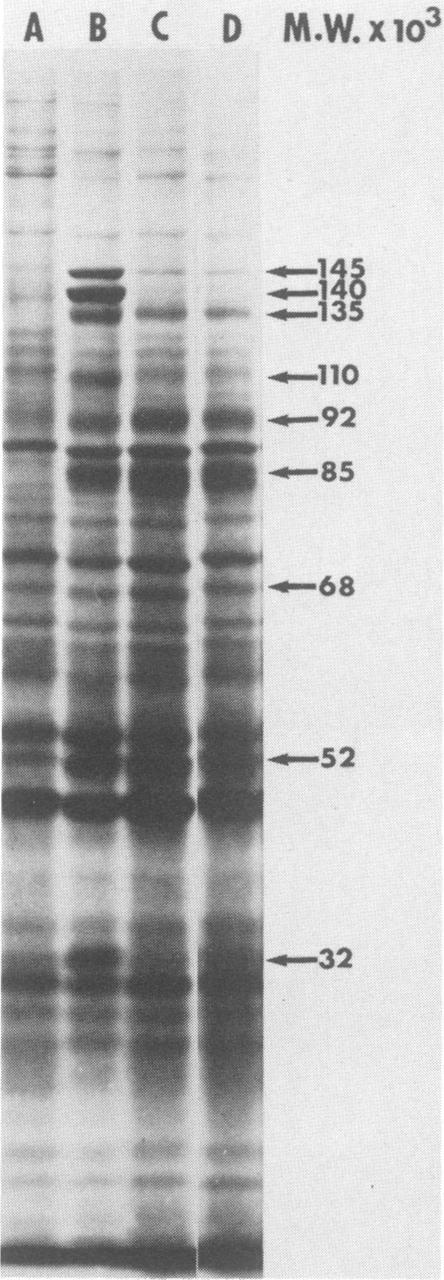
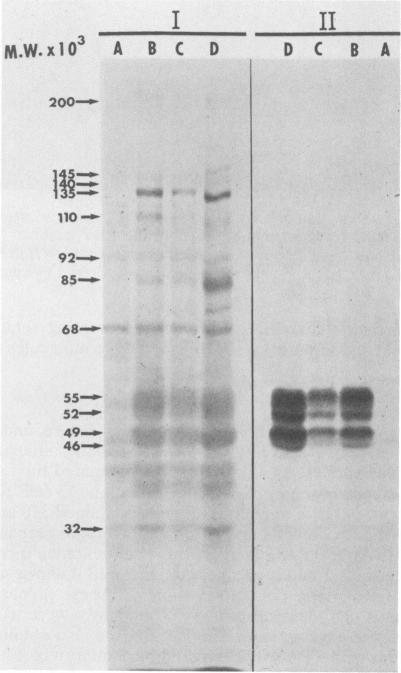
The heterogeneity of Epstein-Barr virus (EBV) obtained from P3HR-1 cells has permitted derivation of a distinct subclone of P3HR-1 (L. Heston, M. Rabson, N. Brown, and G. Miller, Nature (London) 295:160-163, 1982). We have analyzed the biologic properties and genomic structure of this subclonal virus (clone 13) compared with those of parental P3HR-1 and B95-8 viruses. Synthesis of EBV compared with those of parental P3HR-1 and B95-8 viruses. Synthesis of EBV proteins in Raji cells superinfected with virus derived from P3HR-1, clone 13, and B95-8 was analyzed both by fluorography of radiolabeled proteins and by immunoblotting. Highly concentrated preparations of clone 13 and B95-8 virus induced most of the spectrum of EBV proteins in Raji cells with the exception of the 145,000-, 140,000-, and 110,000-molecular-weight proteins, which were either undetectable or reduced. Moreover, both clone 13 and B95-8 viruses also induced the same patterns of early antigen diffuse components as the parental P3HR-1 virus did. However, only P3HR-1 virus could induce EBV DNA synthesis in superinfected Raji cells, as determined both by buoyant density centrifugation and by in situ cytohybridization with biotinylated recombinant EBV DNA probes. Defective heterogeneous molecules present in P3HR-1 virus have been implicated in early antigen induction after superinfection of Raji cells. Therefore, Southern blots of clone 13, P3HR-1, and B95-8 viruses were hybridized to recombinant EBV fragments representing the sequences contained within the defective molecules in P3HR-1. The parental P3HR-1 contained the previously described defective molecules. No evidence for defective molecules was found in clone 13 or B95-8 viruses. These data indicate that concentrated preparations of both clone 13 and B95-8 viruses can induce abortive infection in Raji cells, but while the defective molecules are not needed for induction of early antigen diffuse components, they may be required for the induction of viral DNA synthesis.
从P3HR - 1细胞中获得的爱泼斯坦 - 巴尔病毒(EBV)的异质性使得能够衍生出P3HR - 1的一个独特亚克隆(L. 赫斯顿、M. 拉布森、N. 布朗和G. 米勒,《自然》(伦敦)295:160 - 163,1982年)。我们已经分析了这种亚克隆病毒(克隆13)与亲本P3HR - 1和B95 - 8病毒相比的生物学特性和基因组结构。将用源自P3HR - 1、克隆13和B95 - 8的病毒超感染的Raji细胞中EBV蛋白的合成情况,通过放射性标记蛋白的荧光自显影和免疫印迹法进行了分析。高度浓缩的克隆13和B95 - 8病毒制剂在Raji细胞中诱导了大部分EBV蛋白谱,但分子量为145,000、140,000和110,000的蛋白除外,这些蛋白要么检测不到,要么含量减少。此外,克隆13和B95 - 8病毒诱导的早期抗原弥散成分模式也与亲本P3HR - 1病毒相同。然而,只有P3HR - 1病毒能够在超感染的Raji细胞中诱导EBV DNA合成,这通过浮力密度离心法以及用生物素化重组EBV DNA探针进行原位细胞杂交法得以确定。P3HR - 1病毒中存在的缺陷异质分子与Raji细胞超感染后的早期抗原诱导有关。因此,将克隆13、P3HR - 1和B95 - 8病毒的Southern印迹与代表P3HR - 1中缺陷分子所含序列的重组EBV片段进行杂交。亲本P3HR - 1含有先前描述的缺陷分子。在克隆13或B95 - 8病毒中未发现缺陷分子的证据。这些数据表明,克隆13和B95 - 8病毒的浓缩制剂均可在Raji细胞中诱导流产感染,但虽然诱导早期抗原弥散成分不需要缺陷分子,但诱导病毒DNA合成可能需要它们。