Aging Research Center (ARC), Karolinska Institute and Stockholm University, Tomtebodavägen 18A, 171 65, Solna, Sweden.
Department of Psychology, Stockholm University, 106 91, Stockholm, Sweden.
Sci Rep. 2018 Oct 17;8(1):15308. doi: 10.1038/s41598-018-33616-3.
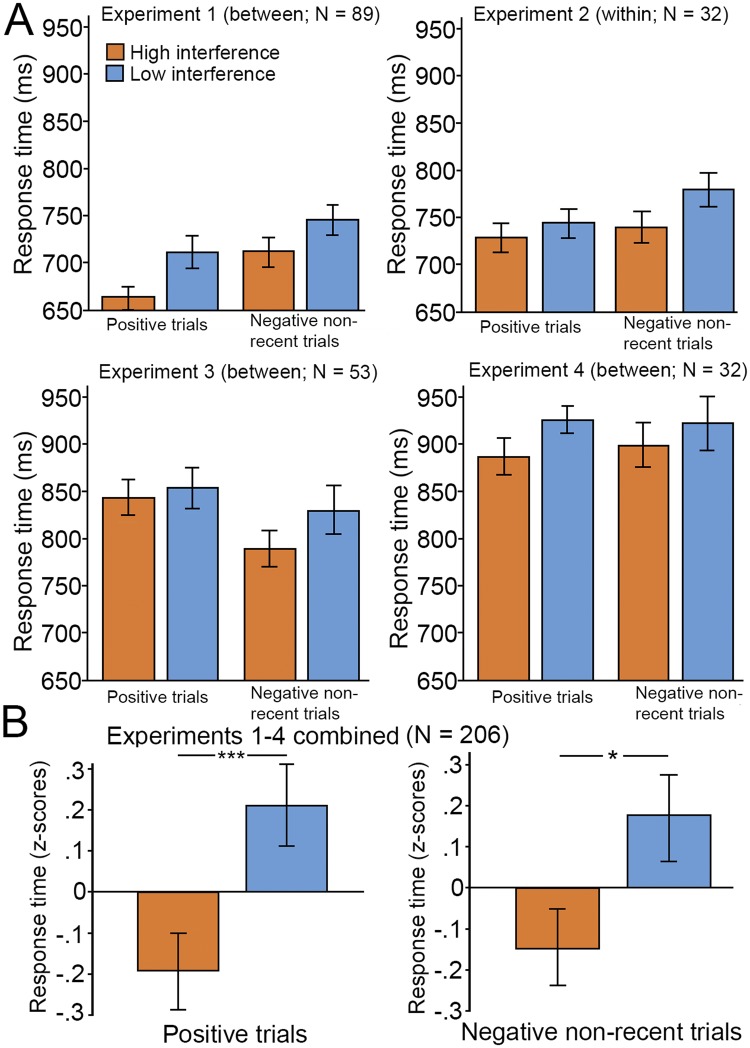
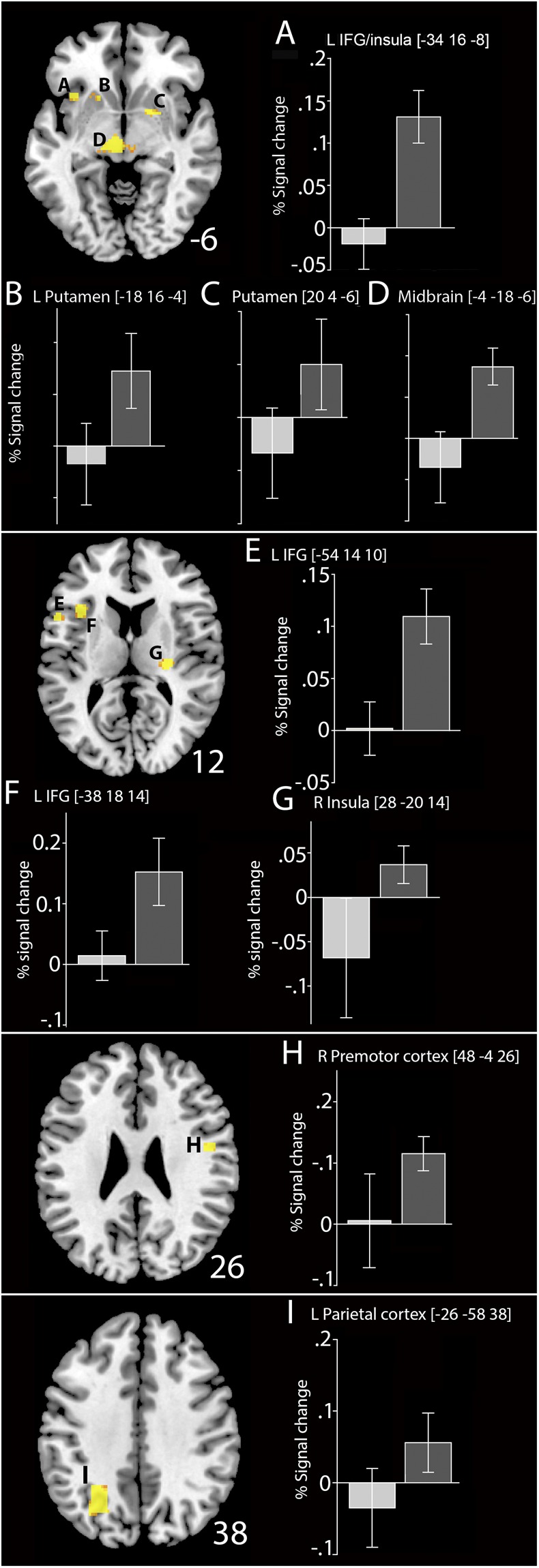
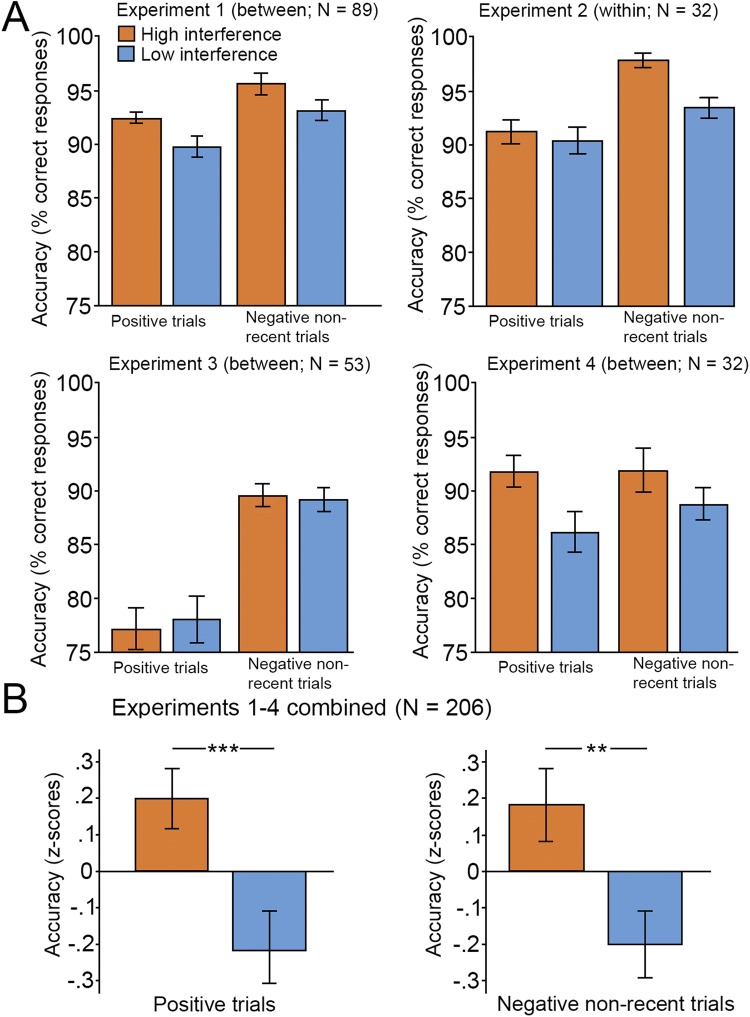
Many real-life situations require flexible behavior in changing environments. Evidence suggests that anticipation of conflict or task difficulty results in behavioral and neural allocation of task-relevant resources. Here we used a high- and low-interference version of an item-recognition task to examine the neurobehavioral underpinnings of context-sensitive adjustment in working memory (WM). We hypothesized that task environments that included high-interference trials would require participants to allocate neurocognitive resources to adjust to the more demanding task context. The results of two independent behavioral experiments showed enhanced WM performance in the high-interference context, which indicated that a high-interference context improves performance on non-interference trials. A third behavioral experiment showed that when WM load was increased, this effect was no longer significant. Neuroimaging results further showed greater engagement of inferior frontal gyrus, striatum, parietal cortex, hippocampus, and midbrain in participants performing the task in the high- than in the low-interference context. This effect could arise from an active or dormant mode of anticipation that seems to engage fronto-striatal and midbrain regions to flexibly adjust resources to task demands. Our results extend the model of conflict adaptation beyond trial-to-trial adjustments by showing that a high interference context affects both behavioral and biological aspects of cognition.
许多现实生活中的情况都需要在不断变化的环境中灵活应对。有证据表明,对冲突或任务难度的预期会导致与任务相关的资源在行为和神经层面上的分配。在这里,我们使用了一种项目识别任务的高低干扰版本,来检验工作记忆(WM)中上下文敏感调整的神经行为基础。我们假设,包含高干扰试验的任务环境将要求参与者分配神经认知资源以适应更具挑战性的任务环境。两个独立的行为实验的结果表明,在高干扰环境下 WM 表现得到增强,这表明高干扰环境可以提高非干扰试验的表现。第三个行为实验表明,当 WM 负载增加时,这种影响不再显著。神经影像学结果进一步表明,参与者在高干扰环境下比在低干扰环境下更积极地参与了额下回、纹状体、顶叶皮层、海马体和中脑的活动。这种影响可能来自于主动或休眠的预期模式,它似乎利用额纹状体和中脑区域来灵活地调整资源以适应任务需求。我们的结果扩展了冲突适应模型,不仅包括试验间的调整,还包括高干扰环境对认知的行为和生物学方面的影响。