Chen Jie-Hua, Lin Xu, Bu Cuihong, Zhang Xuguang
Science and Technology Centre, By-Health Co. Ltd, No. 3 Kehui 3rd Street, No. 99 Kexue Avenue Central, Science City, Luogang District, Guangzhou, 510000 China.
2CAS Key Laboratory of Nutrition, Metabolism and Food Safety, Shanghai Institute of Nutrition and Health, Shanghai Institutes for Biological Sciences, University of Chinese Academy of Sciences, Chinese Academy of Sciences, Shanghai, 200031 China.
Nutr Metab (Lond). 2018 Oct 10;15:72. doi: 10.1186/s12986-018-0306-7. eCollection 2018.
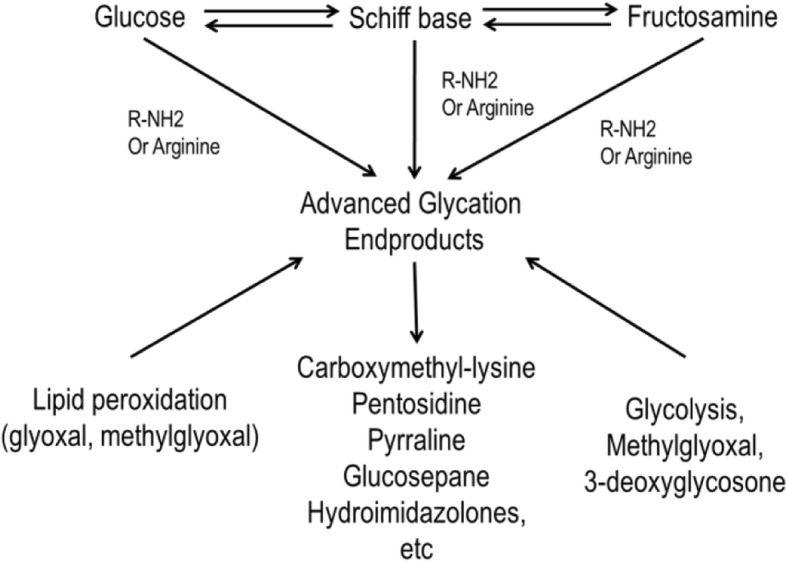
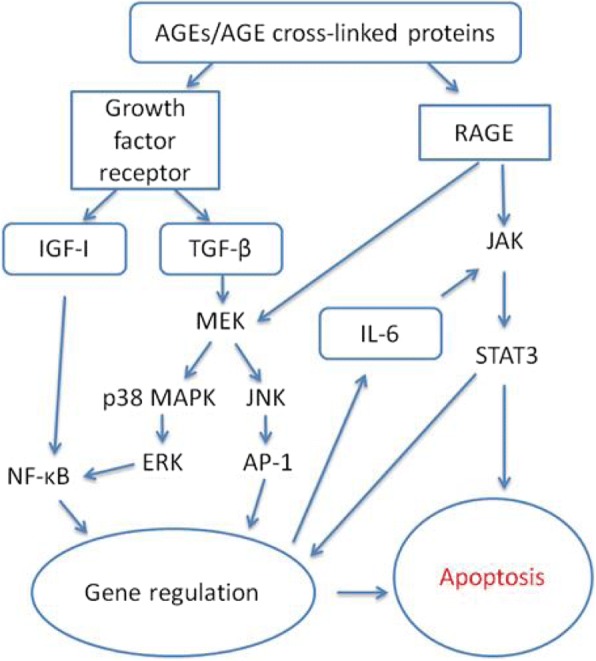
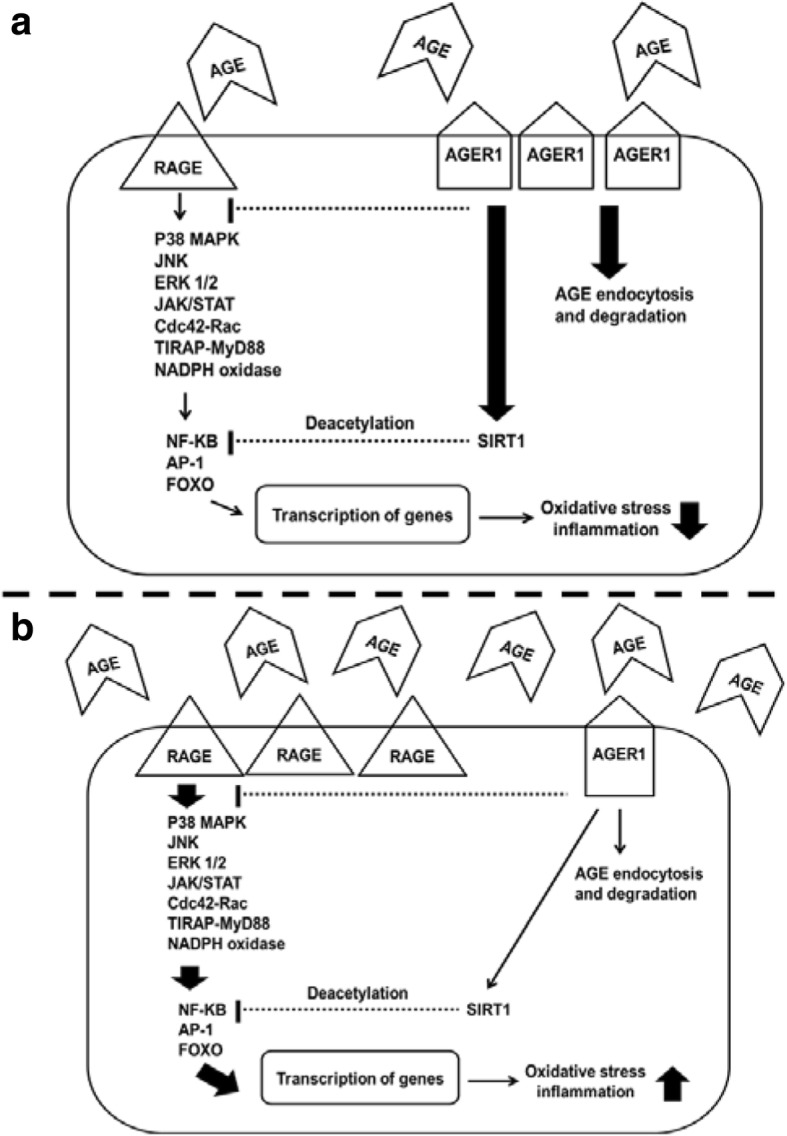
Advanced glycation end products (AGEs), a group of compounds that are formed by non-enzymatic reactions between carbonyl groups of reducing sugars and free amino groups of proteins, lipids or nucleic acids, can be obtained exogenously from diet or formed endogenously within the body. AGEs accumulate intracellularly and extracellularly in all tissues and body fluids and can cross-link with other proteins and thus affect their normal functions. Furthermore, AGEs can interact with specific cell surface receptors and hence alter cell intracellular signaling, gene expression, the production of reactive oxygen species and the activation of several inflammatory pathways. High levels of AGEs in diet as well as in tissues and the circulation are pathogenic to a wide range of diseases. With respect to mobility, AGEs accumulate in bones, joints and skeletal muscles, playing important roles in the development of osteoporosis, osteoarthritis, and sarcopenia with aging. This report covered the related pathological mechanisms and the potential pharmaceutical and dietary intervention strategies in reducing systemic AGEs. More prospective studies are needed to determine whether elevated serum AGEs and/or skin autofluorescence predict a decline in measures of mobility. In addition, human intervention studies are required to investigate the beneficial effects of exogenous AGEs inhibitors on mobility outcomes.
晚期糖基化终末产物(AGEs)是一组由还原糖的羰基与蛋白质、脂质或核酸的游离氨基之间的非酶促反应形成的化合物,可从饮食中外源性获取,也可在体内内源性形成。AGEs在所有组织和体液的细胞内和细胞外积累,并可与其他蛋白质交联,从而影响其正常功能。此外,AGEs可与特定的细胞表面受体相互作用,进而改变细胞内信号传导、基因表达、活性氧的产生以及多种炎症途径的激活。饮食以及组织和循环中高水平的AGEs对多种疾病具有致病性。在流动性方面,AGEs在骨骼、关节和骨骼肌中积累,在衰老相关的骨质疏松症、骨关节炎和肌肉减少症的发展中起重要作用。本报告涵盖了相关的病理机制以及降低全身AGEs的潜在药物和饮食干预策略。需要更多的前瞻性研究来确定血清AGEs升高和/或皮肤自发荧光是否预示着流动性指标的下降。此外,需要进行人体干预研究,以调查外源性AGEs抑制剂对流动性结果的有益影响。