Department of Chemistry, University of Kentucky, 505 Rose St., Lexington, KY 40506, USA.
Chem Commun (Camb). 2018 Nov 1;54(88):12487-12490. doi: 10.1039/c8cc05809a.
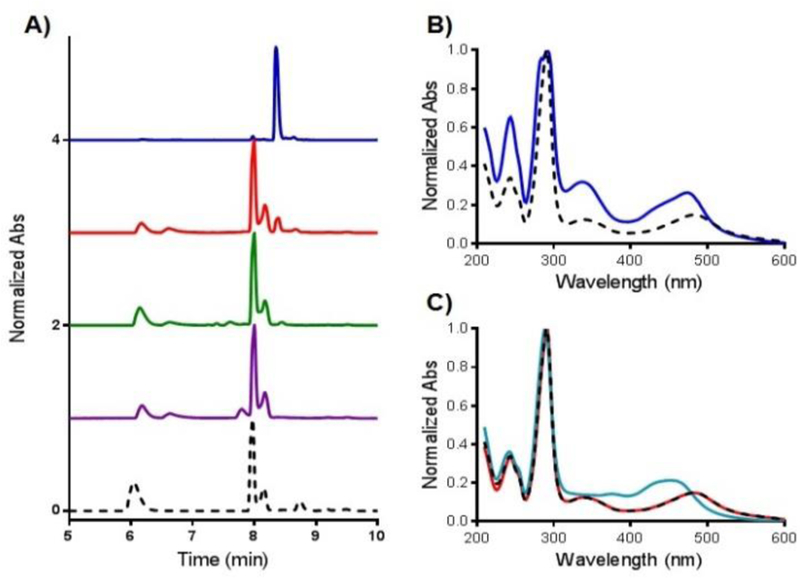
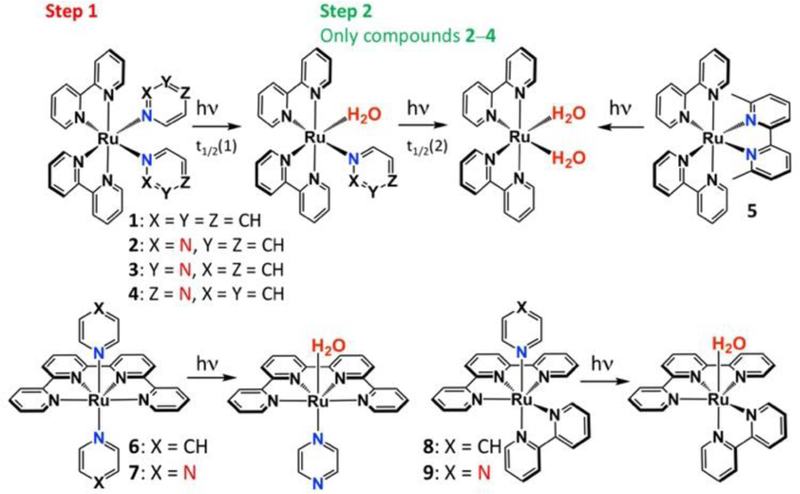
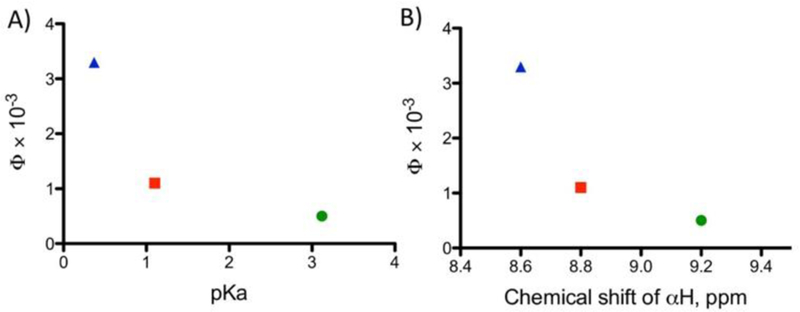
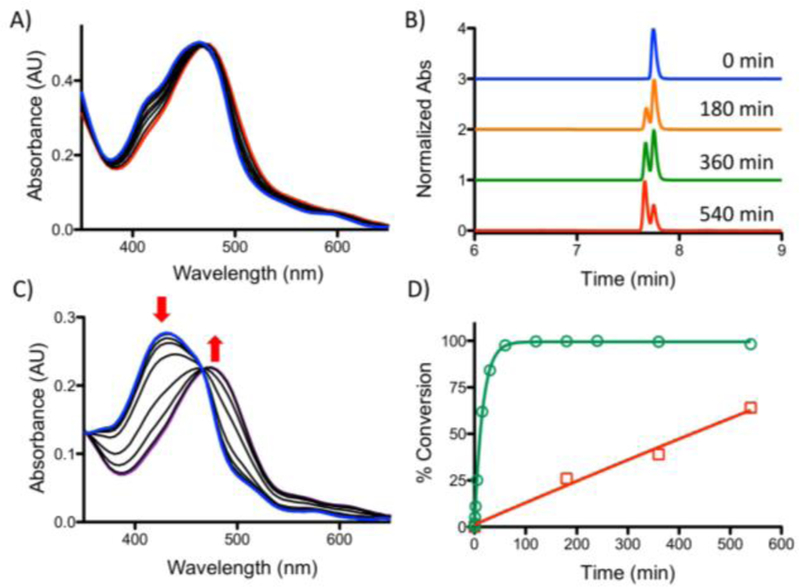
Coordination complexes can be used to photocage biologically active ligands, providing control over the location, time, and dose of a delivered drug. Dual action agents can be created if both the ligand released and the ligand-deficient metal center effect biological processes. Ruthenium(ii) complexes coordinated to pyridyl ligands generally are only capable of releasing one ligand in H2O, wasting equivalents of drug molecules, and producing a Ru(ii) center that is not cytotoxic. In contrast, Ru(ii) polypyridyl complexes containing diazine ligands eject both monodentate ligands, with the quantum yield (φPS) of the second phase varying as a function of ligand pKa and the pH of the medium. This effect is general, as it is effective with different Ru(ii) structures, and demonstrates that diazine-based drugs are the preferred choice for the development of light-activated dual action Ru(ii) agents.
配合物可以用来光解生物活性配体,从而控制药物的位置、时间和剂量。如果释放的配体和缺乏配体的金属中心都能影响生物过程,则可以创建双重作用的试剂。与吡啶配体配位的钌(ii)配合物通常只能在 H2O 中释放一个配体,浪费了药物分子的当量,并且产生了无细胞毒性的 Ru(ii)中心。相比之下,含有嗪配体的 Ru(ii)多吡啶配合物会同时排出单齿配体,第二阶段的量子产率(φPS)随配体 pKa 和介质 pH 的变化而变化。这种效应是普遍的,因为它对不同的 Ru(ii)结构都有效,这表明基于嗪的药物是开发光激活双重作用 Ru(ii)试剂的首选。