Department of Psychology & Human Development, Vanderbilt University, 230 Appleton Place, Nashville, TN 37203, USA.
Department of Psychology & Human Development, Vanderbilt University, 230 Appleton Place, Nashville, TN 37203, USA.
Neuroimage. 2019 Jan 15;185:245-254. doi: 10.1016/j.neuroimage.2018.10.047. Epub 2018 Oct 19.
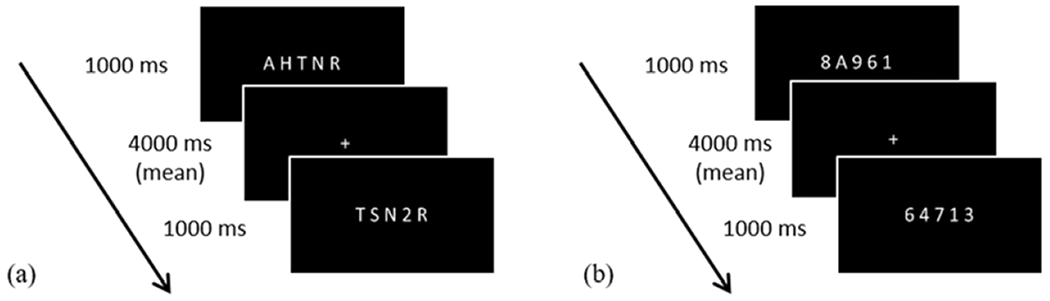
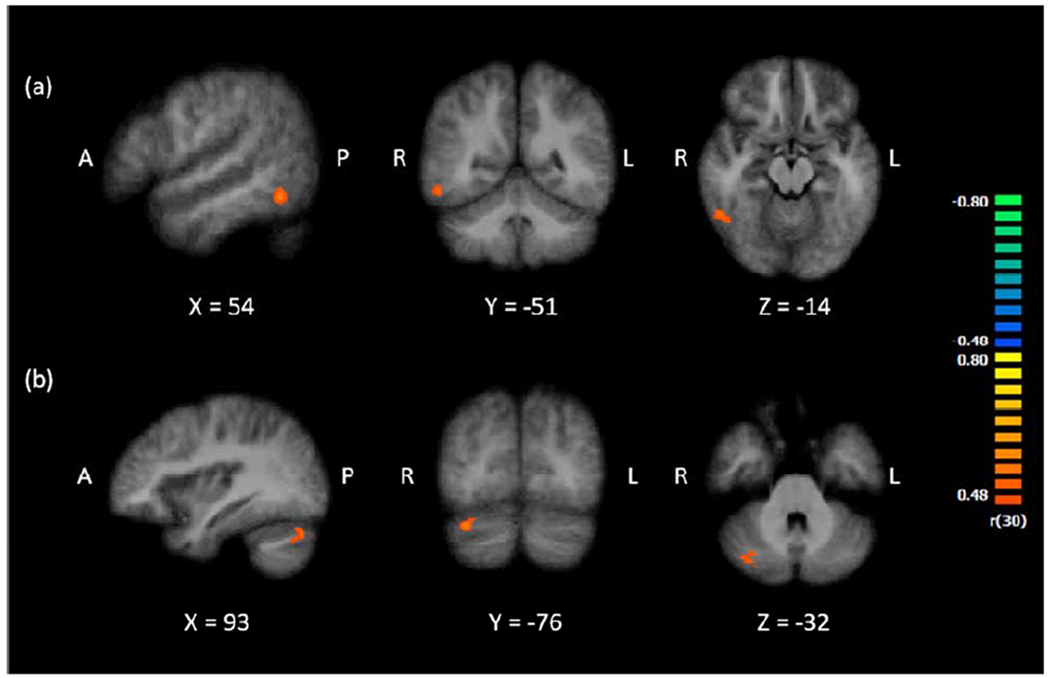
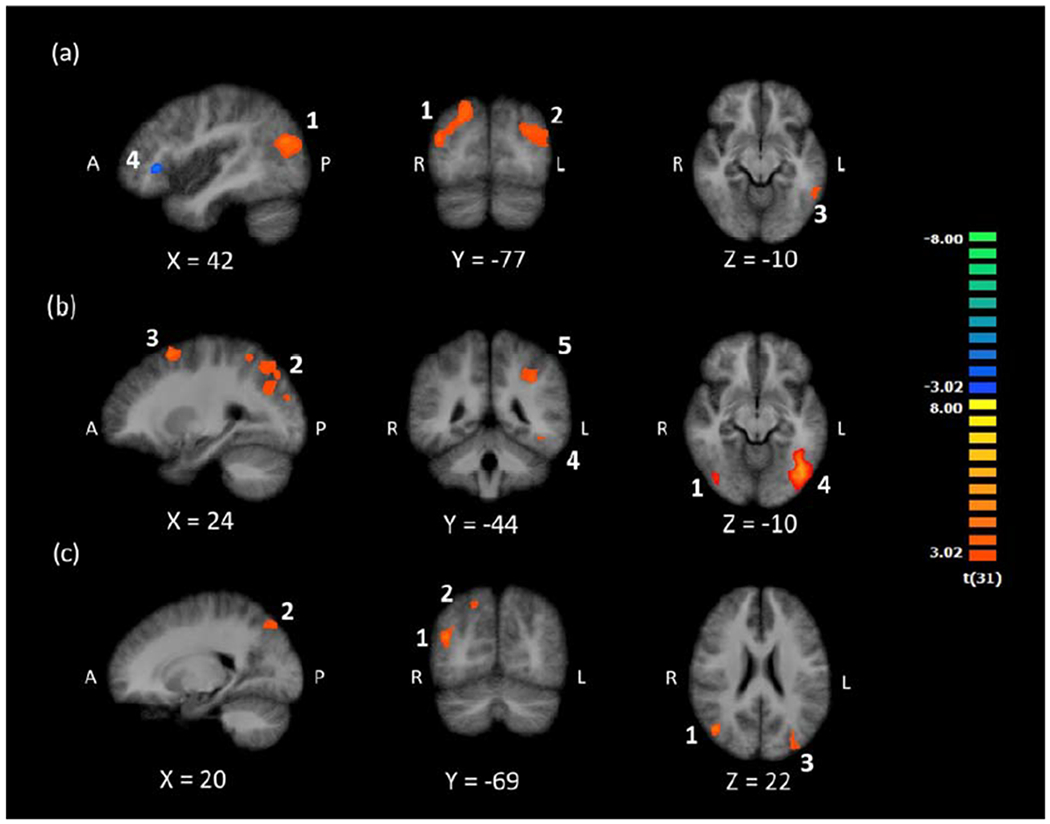
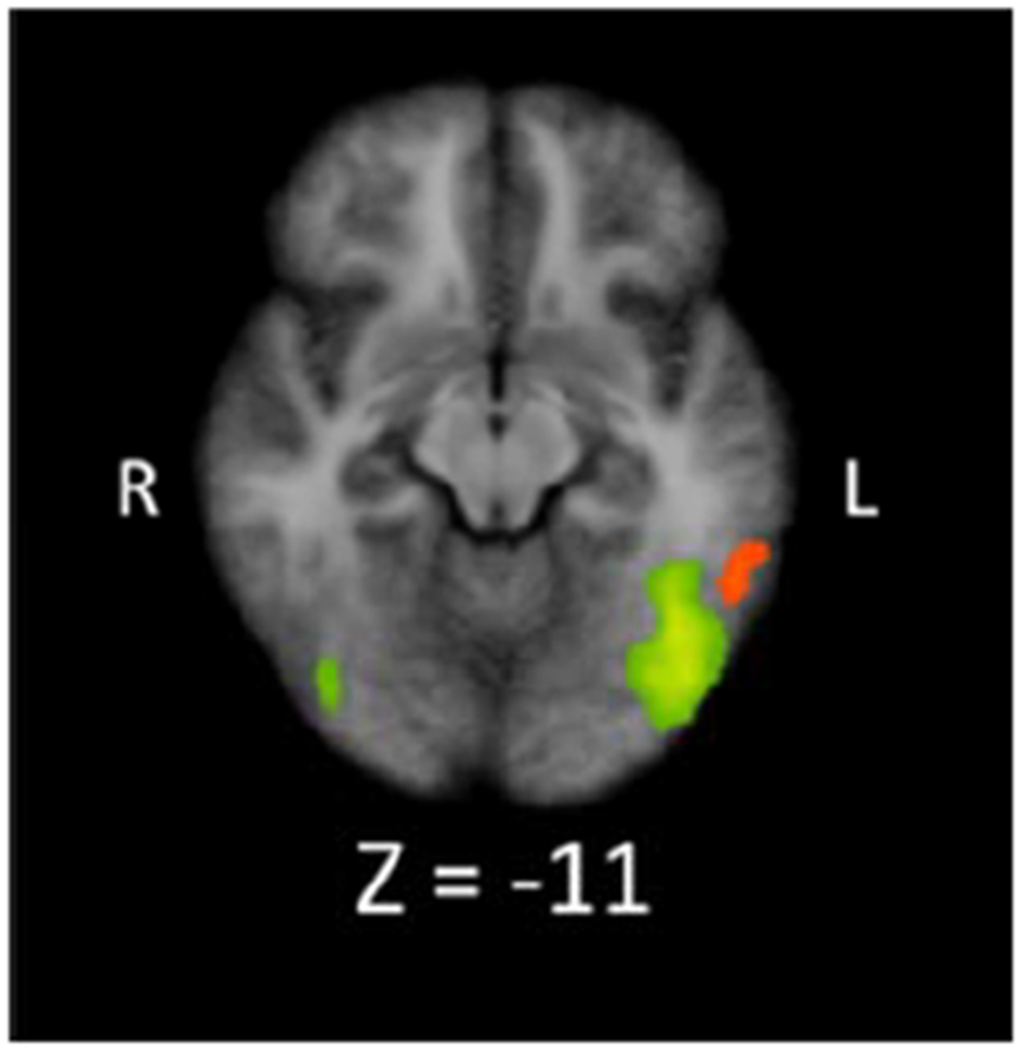
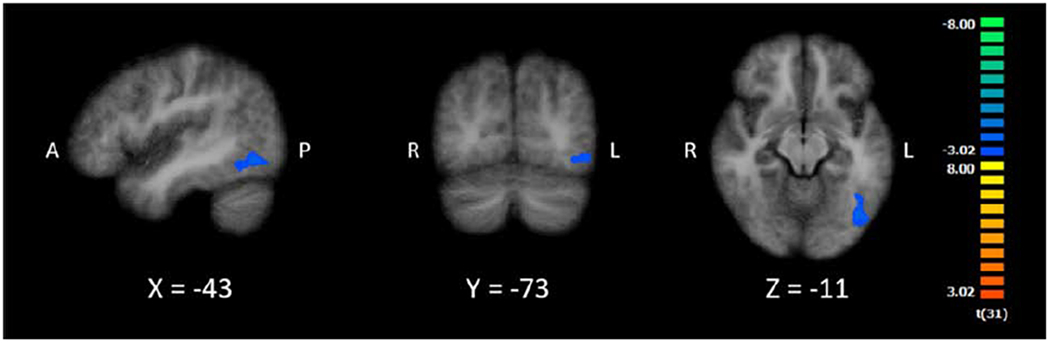
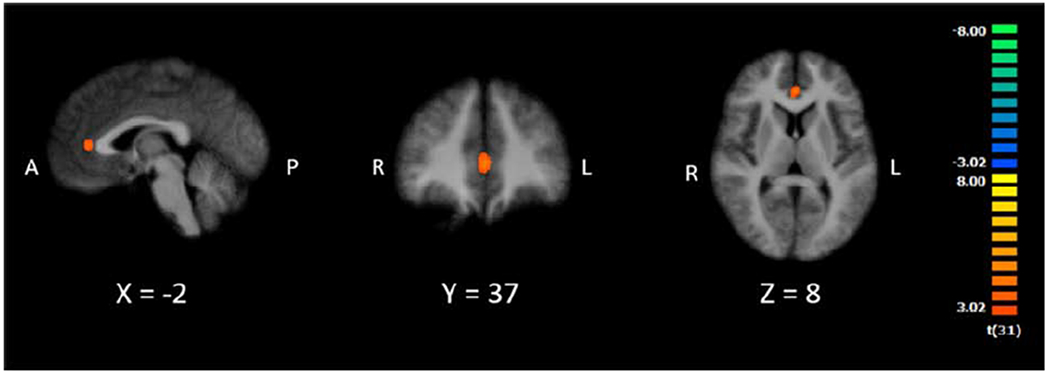
The dominant model of number processing suggests the existence of a Number Form Area (NFA) in the inferior temporal gyrus (ITG) that supports the processing of Arabic digits as visual symbols of number. However, studies have produced inconsistent evidence for the presence and laterality of digit-specific ITG activity. Furthermore, whether any such activity relates to mathematical competence is unknown. This study investigated these two issues using functional magnetic resonance imaging. Thirty-two adults performed digit and letter detection tasks and reading and mathematics tests. During digit detection, participants determined whether digits were present in a string of letters (e.g., AH3NR versus AHTNR). During letter detection, participants determined whether letters were present in a string of digits (e.g., 93R78 versus 93478). Results showed four clusters in frontal, occipital, and temporal regions for digit detection, including a left ITG cluster. Five clusters in frontal, parietal, occipital, and temporal regions were associated with letter detection, including a left ITG cluster. Digit and letter-related ITG clusters were spatially distinct; however, a direct contrast of digit and letter processing did not reveal greater activity in the left ITG for digit detection. Whole brain correlations showed greater digit-related activity in the right ITG for participants with higher calculation skills, but there was no correlation between letter activity and calculation skills. Together, our results suggest functional localization, but not specialization, for digits in the left ITG and provide the first evidence of a relationship between calculation skills and digit processing in the right ITG.
数字加工的主导模型表明,在下颞叶(ITG)中存在一个数字形式区域(NFA),该区域支持将阿拉伯数字作为数字的视觉符号进行处理。然而,研究对数字特异性 ITG 活动的存在和偏侧性提供了不一致的证据。此外,任何此类活动是否与数学能力有关尚不清楚。本研究使用功能磁共振成像研究了这两个问题。32 名成年人执行了数字和字母检测任务以及阅读和数学测试。在数字检测中,参与者确定字符串中的字母是否存在数字(例如,AH3NR 与 AHTNR)。在字母检测中,参与者确定字符串中的数字是否存在字母(例如,93R78 与 93478)。结果显示,数字检测涉及额、枕和颞叶区域的四个簇,包括左 ITG 簇。字母检测涉及额、顶、枕和颞叶区域的五个簇,包括左 ITG 簇。数字和字母相关的 ITG 簇在空间上是不同的;然而,数字和字母处理的直接对比并没有显示左 ITG 对数字检测的活动增加。全脑相关性表明,计算能力较高的参与者右侧 ITG 的数字相关活动增加,但字母活动与计算能力之间没有相关性。总的来说,我们的结果表明左 ITG 中存在数字的功能定位,但不是专业化,并且首次提供了计算能力与右侧 ITG 中数字处理之间关系的证据。