Department of Otorhinolaryngology-Head and Neck Surgery, Soonchunhyang University College of Medicine, Cheonan, Korea.
Department of Medicine, The Graduate School of Yonsei University, Seoul, Korea.
Cancer Sci. 2018 Dec;109(12):3816-3825. doi: 10.1111/cas.13839. Epub 2018 Nov 16.
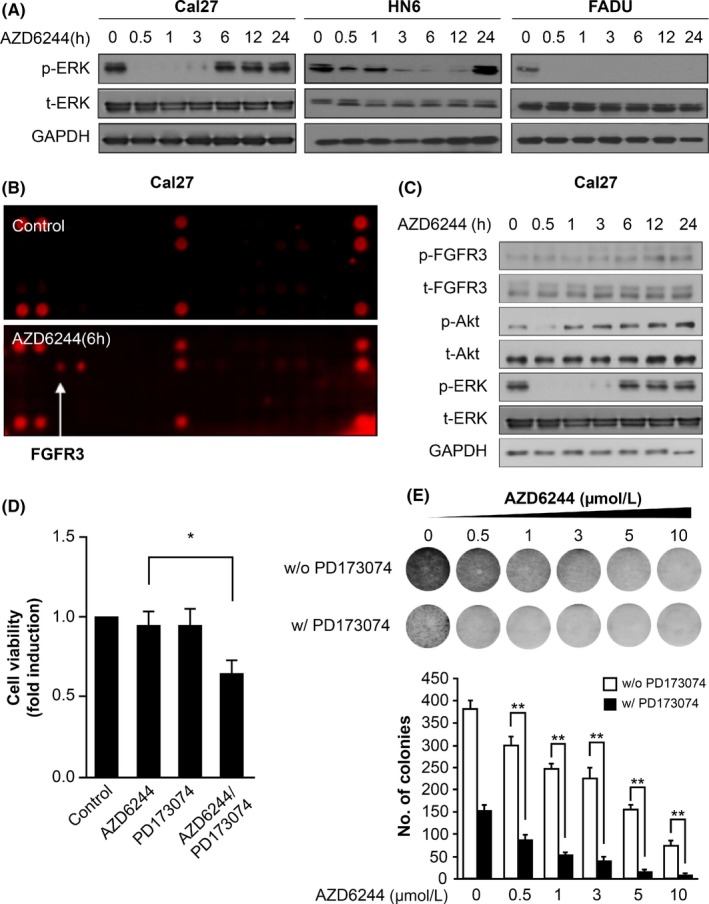
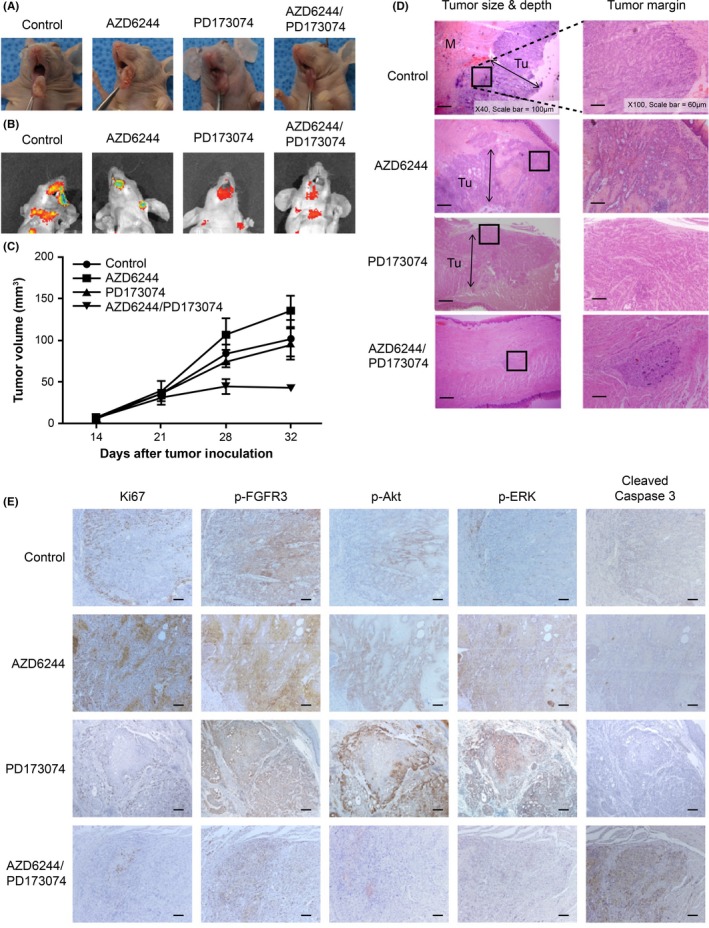
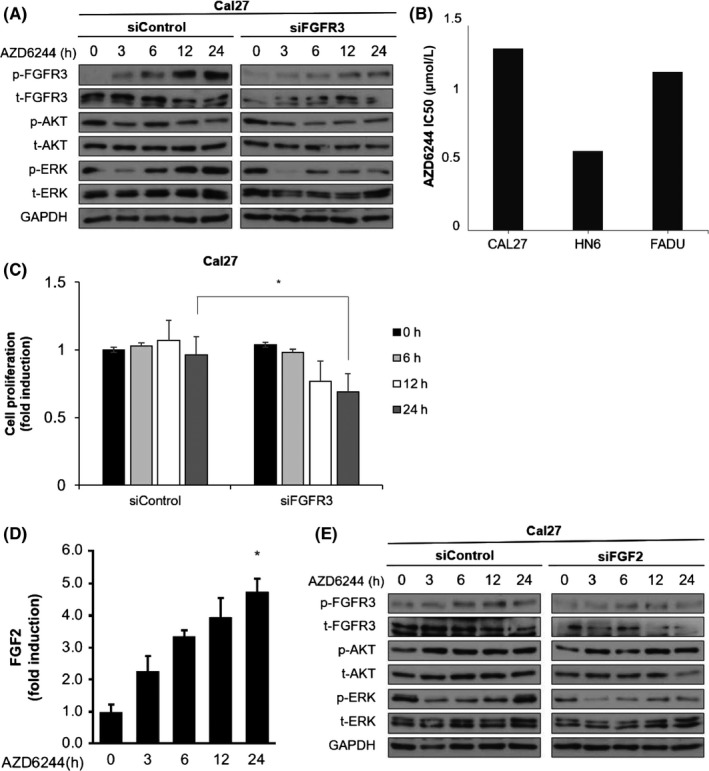
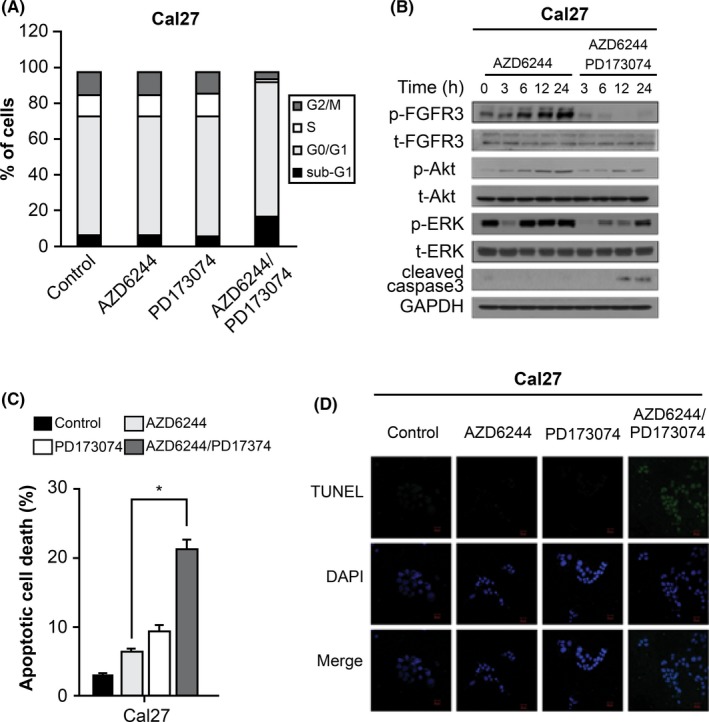
Recurrent or metastatic head and neck squamous cell carcinoma (HNSCC) has been a longstanding challenge for head and neck oncologists, and current treatments still have limited efficacy. ERK is aberrantly overexpressed and activated in HNSCC. Herein, we aimed to investigate the cause of the limited therapeutic effect of selumetinib, a selective inhibitor of MEK in HNSCC, as MEK/ERK reactivation inevitably occurs. We assessed the effects of combining selumetinib with fibroblast growth factor receptor 3 (FGFR3) inhibitor (PD173074) on tumor growth. Selumetinib transiently inhibited MAPK signaling and reactivated ERK signaling in HNSCC cells. Rebound in the ERK and Akt pathways in HNSCC cells was accompanied by increased FGFR3 signaling after selumetinib treatment. Feedback activation of FGFR3 was a result of autocrine secretion of the FGF2 ligand. The FGFR3 inhibitor PD173074 prevented MAPK rebound and sensitized the response of HNSCC cells to selumetinib. These results provided rational therapeutic strategies for clinical studies of this subtype of patients that show a poor prognosis with selumetinib. Our data provide a rationale for combining a MEK inhibitor with inhibitors of feedback activation of FGFR3 signaling in HNSCC cells. ERK rebound as a result of the upregulation of FGFR3 and the ligand FGF2 diminished the antitumor effects of selumetinib, which was overcome by combination treatment with the FGFR3 inhibitor.
复发性或转移性头颈部鳞状细胞癌(HNSCC)一直是头颈部肿瘤学家面临的长期挑战,目前的治疗方法仍然疗效有限。ERK 在 HNSCC 中异常过表达和激活。在此,我们旨在研究 MEK 选择性抑制剂 selumetinib 在 HNSCC 中治疗效果有限的原因,因为 MEK/ERK 必然会重新激活。我们评估了将 selumetinib 与成纤维细胞生长因子受体 3(FGFR3)抑制剂(PD173074)联合用于肿瘤生长的效果。Selumetinib 可短暂抑制 HNSCC 细胞中的 MAPK 信号传导,并重新激活 ERK 信号传导。Selumetinib 处理后,ERK 和 Akt 通路在 HNSCC 细胞中的反弹伴随着 FGFR3 信号的增加。FGFR3 的反馈激活是 FGF2 配体自分泌的结果。FGFR3 抑制剂 PD173074 可防止 MAPK 反弹,并使 HNSCC 细胞对 selumetinib 的反应敏感。这些结果为临床研究提供了合理的治疗策略,对于那些对 selumetinib 预后不良的患者亚群,这些结果具有重要意义。我们的数据为在 HNSCC 细胞中联合使用 MEK 抑制剂和反馈激活 FGFR3 信号抑制剂提供了理论依据。FGFR3 和配体 FGF2 的上调导致 ERK 反弹,减弱了 selumetinib 的抗肿瘤作用,而联合使用 FGFR3 抑制剂则克服了这一问题。