Departments of Craniofacial Biology and Radiation Oncology, University of Colorado Denver Anschutz Medical Campus, Aurora, CO80045, USA.
Clin Cancer Res. 2011 Aug 1;17(15):5016-25. doi: 10.1158/1078-0432.CCR-11-0050. Epub 2011 Jun 14.
We previously reported that a fibroblast growth factor (FGF) receptor (FGFR) signaling pathway drives growth of lung cancer cell lines of squamous and large cell histologies. Herein, we explored FGFR dependency in cell lines derived from the tobacco-related malignancy, head and neck squamous cell carcinoma (HNSCC).
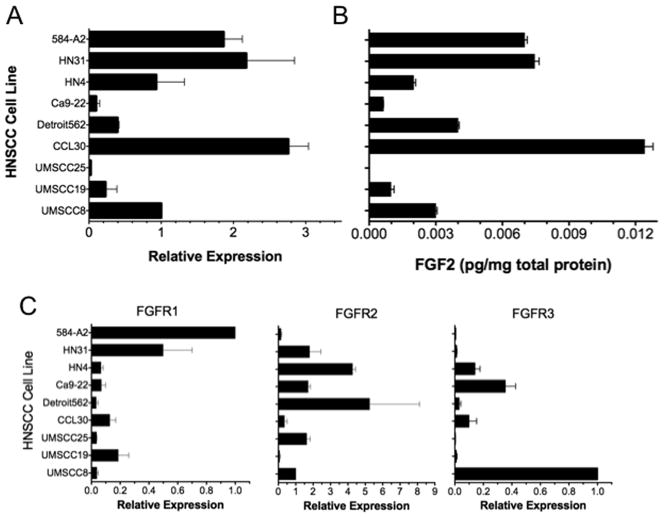
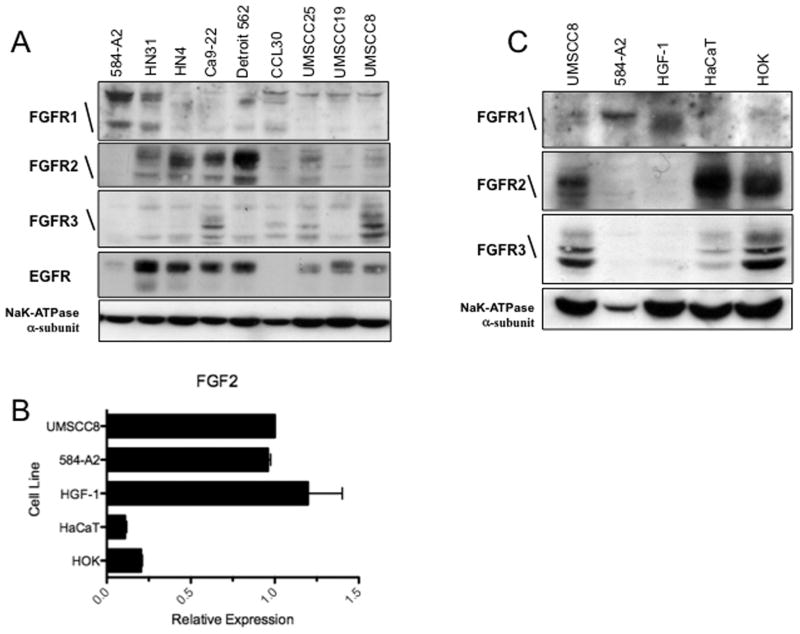
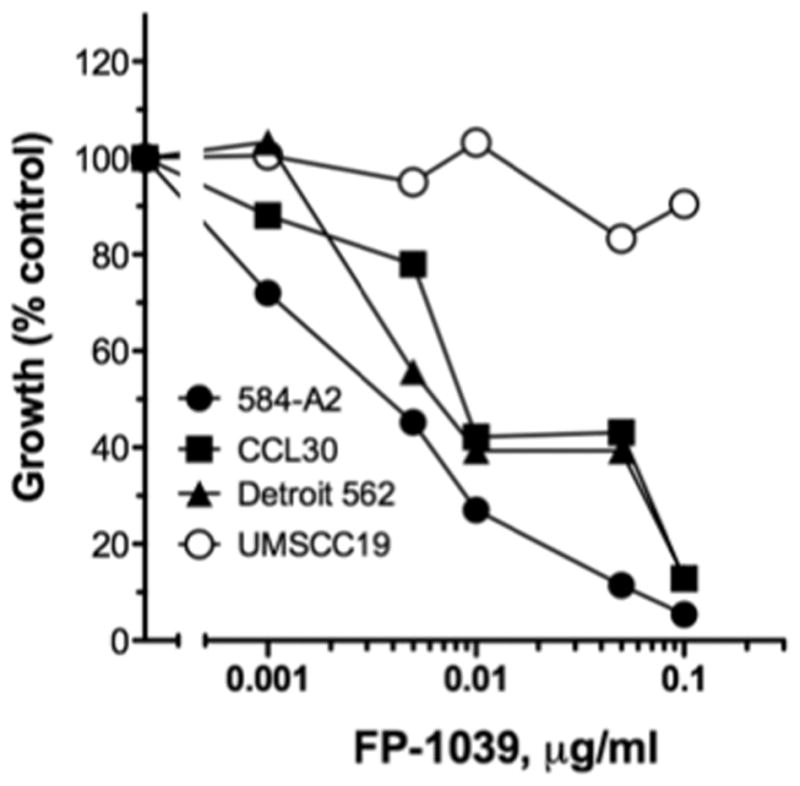
FGF and FGFR mRNA and protein expression was assessed in nine HNSCC cell lines. Dependence on secreted FGF2 for cell growth was tested with FP-1039, an FGFR1-Fc fusion protein. FGFR and epidermal growth factor receptor (EGFR) dependence was defined by sensitivity to multiple inhibitors selective for FGFRs or EGFR.
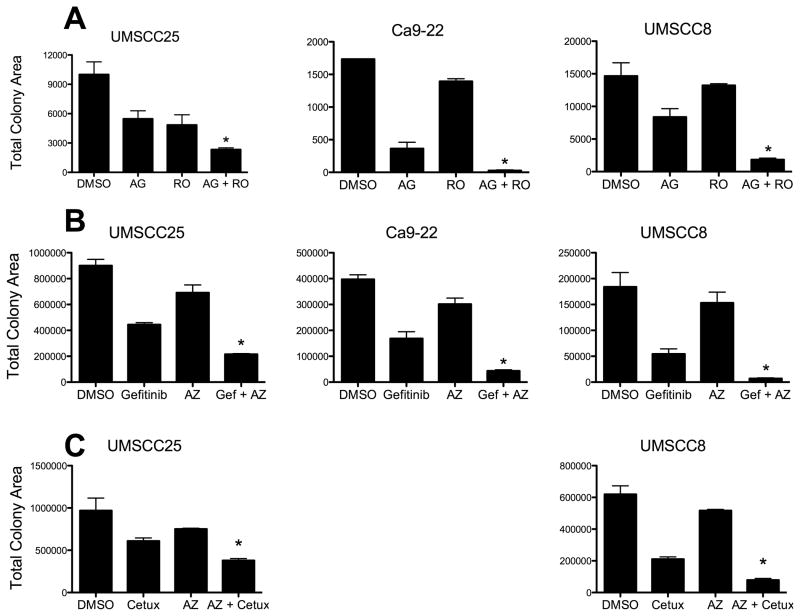
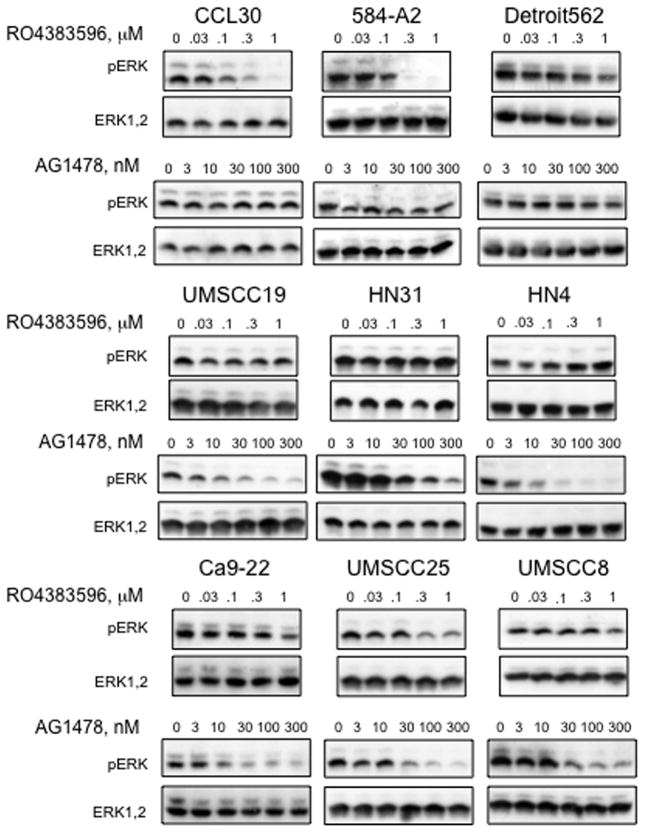
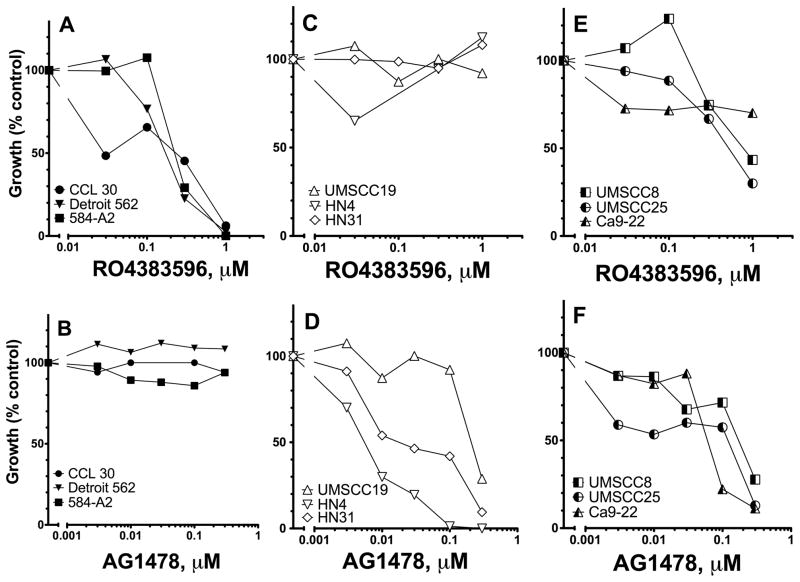
FGF2 was expressed in eight of the nine HNSCC cell lines examined. Also, FGFR2 and FGFR3 were frequently expressed, whereas only two lines expressed FGFR1. FP-1039 inhibited growth of HNSCC cell lines expressing FGF2, identifying FGF2 as an autocrine growth factor. FGFR inhibitors selectively reduced in vitro growth and extracellular signal-regulated kinase signaling in three HNSCC cell lines, whereas three distinct lines exhibited responsiveness to both EGFR and FGFR inhibitors. Combinations of these drugs yielded additive growth inhibition. Finally, three cell lines were highly sensitive to EGFR tyrosine kinase inhibitors (TKI) with no contribution from FGFR pathways.
FGFR signaling was dominant or codominant with EGFR in six HNSCC lines, whereas three lines exhibited little or no role for FGFRs and were highly EGFR dependent. Thus, the HNSCC cell lines can be divided into subsets defined by sensitivity to EGFR and FGFR-specific TKIs. FGFR inhibitors may represent novel therapeutics to deploy alone or in combination with EGFR inhibitors in HNSCC.
我们之前报道称,成纤维细胞生长因子(FGF)受体(FGFR)信号通路驱动鳞状细胞癌和大细胞癌组织学肺癌细胞系的生长。在此,我们探索了源自烟草相关恶性肿瘤,头颈部鳞状细胞癌(HNSCC)的细胞系中 FGFR 的依赖性。
评估了 9 种 HNSCC 细胞系中 FGF 和 FGFR mRNA 和蛋白的表达。用 FGFR1-Fc 融合蛋白 FP-1039 测试对分泌的 FGF2 依赖细胞生长的情况。通过对 FGFR 和表皮生长因子受体(EGFR)的多种抑制剂的敏感性来定义 FGFR 和 EGFR 的依赖性。
在所检查的 9 种 HNSCC 细胞系中,有 8 种表达了 FGF2。此外,FGFR2 和 FGFR3 频繁表达,而只有两种细胞系表达 FGFR1。FP-1039 抑制表达 FGF2 的 HNSCC 细胞系的生长,表明 FGF2 是一种自分泌生长因子。FGFR 抑制剂选择性地降低了三种 HNSCC 细胞系中的体外生长和细胞外信号调节激酶信号,而三种不同的细胞系对 EGFR 和 FGFR 抑制剂均有反应。这些药物的组合产生了相加的生长抑制作用。最后,三种细胞系对 EGFR 酪氨酸激酶抑制剂(TKI)高度敏感,而 FGFR 途径没有贡献。
在六种 HNSCC 细胞系中,FGFR 信号与 EGFR 占主导地位或共占主导地位,而三种细胞系表现出 FGFR 作用较小或没有作用,并且高度依赖 EGFR。因此,HNSCC 细胞系可以分为对 EGFR 和 FGFR 特异性 TKI 敏感的亚组。FGFR 抑制剂可能代表单独使用或与 EGFR 抑制剂联合使用的新型治疗方法。