Gu Qing-Fang, Yu Jie-Zhong, Wu Hao, Li Yan-Hua, Liu Chun-Yun, Feng Ling, Zhang Guang-Xian, Xiao Bao-Guo, Ma Cun-Gen
Department of Neurology, Institute of Brain Science, Medical School, Shanxi Datong University, Datong, Shanxi 037009, P.R. China.
Department of Neurology, Thomas Jefferson University, Philadelphia, PA 19107, USA.
Exp Ther Med. 2018 Nov;16(5):3929-3938. doi: 10.3892/etm.2018.6701. Epub 2018 Sep 5.
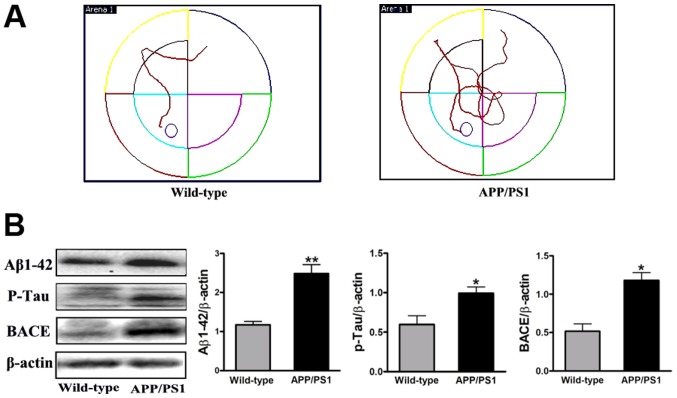
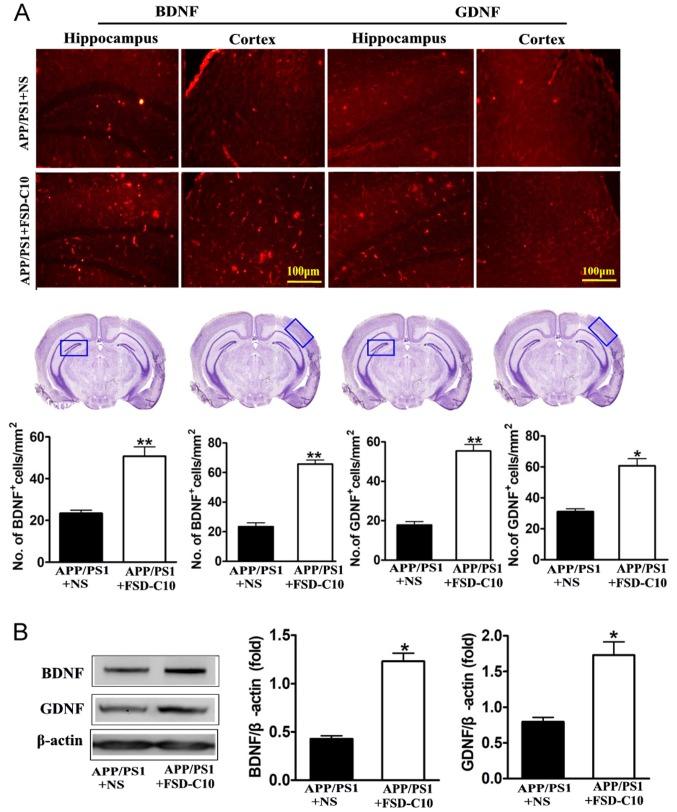
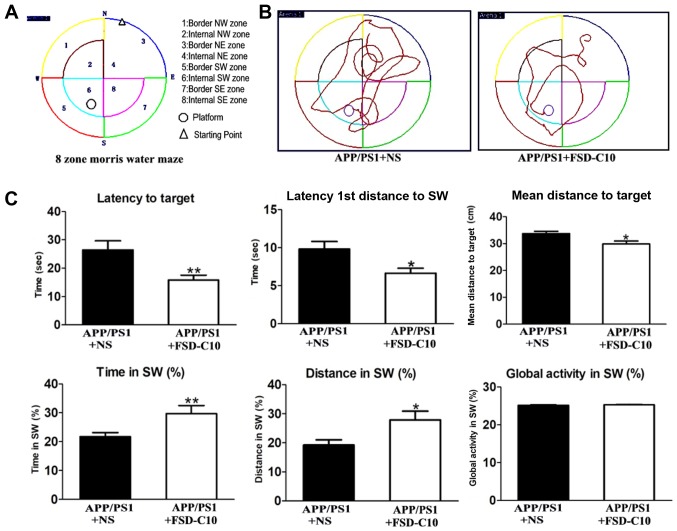
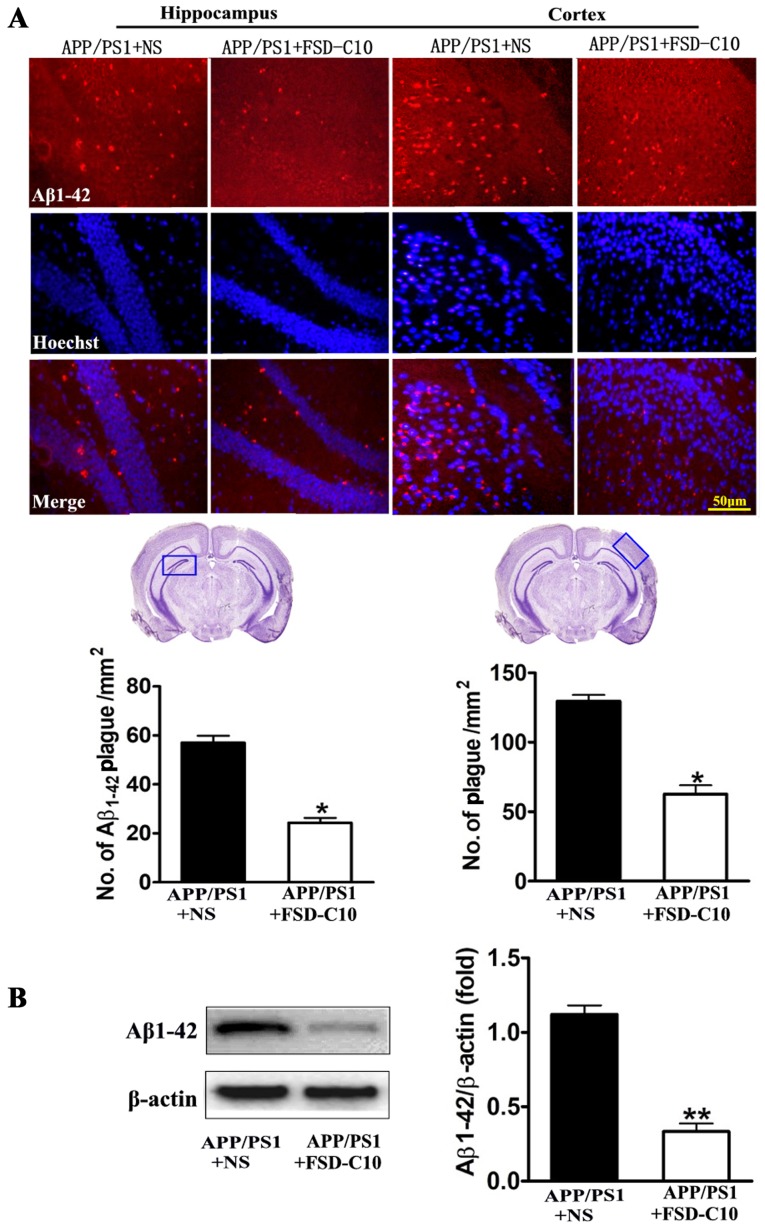
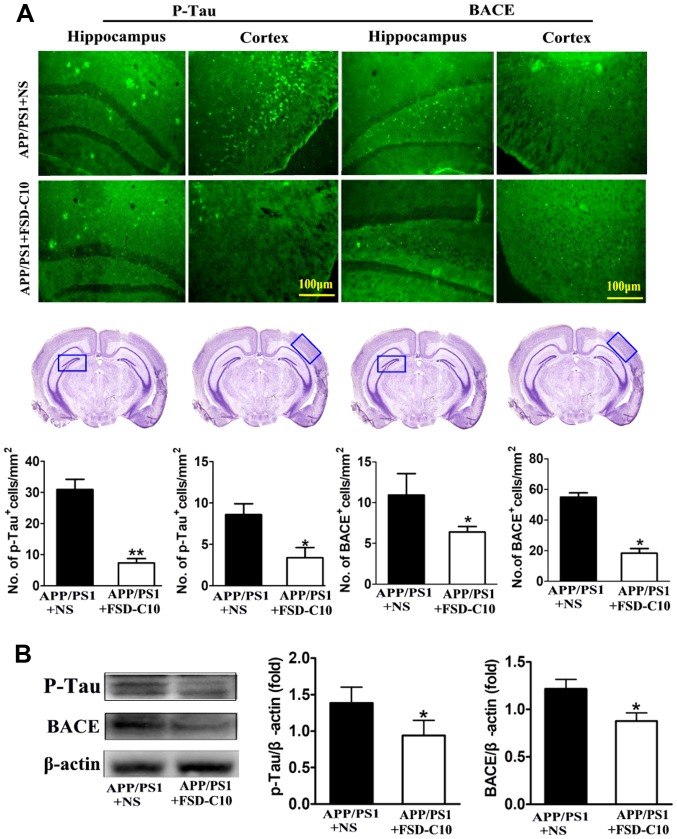
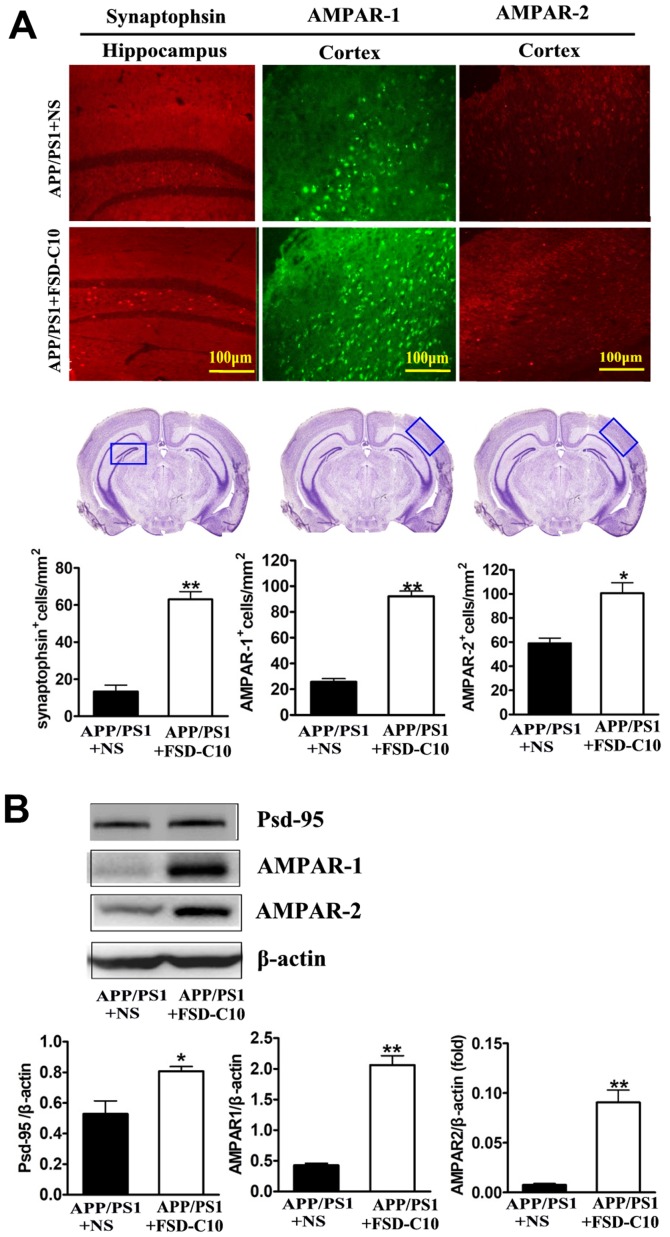
Fasudil, a Rho kinase (ROCK) inhibitor, effectively inhibits disease severity in a mouse model of Alzheimer's disease (AD). However, given its significant limitations, including a relatively narrow safety window and poor oral bioavailability, Fasudil is not suitable for long-term use. Thus, screening for ROCK inhibitor(s) that are more efficient, safer, can be used orally and suitable for long-term use in the treatment of neurodegenerative disorders is required. The main purpose of the present study is to explore whether FSD-C10, a novel ROCK inhibitor, has therapeutic potential in amyloid precursor protein/presenilin-1 transgenic (APP/PS1 Tg) mice, and to determine possible mechanisms of its action. The results showed that FSD-C10 effectively improved learning and memory impairment, accompanied by reduced expression of amyloid-β 1-42 (Aβ), Tau protein phosphorylation (P-tau) and β-site APP-cleaving enzyme in the hippocampus and cortex area of brain. In addition, FSD-C10 administration boosted the expression of synapse-associated proteins, such as postynaptic density protein 95, synaptophsin, α-amino 3-hydroxy-5-methyl-4-isoxa-zolep-propionate receptor and neurotrophic factors, e,g., brain-derived neurotrophic factor and glial cell line-derived neurotrophic factor. Taken together, our results demonstrate that FSD-C10 has therapeutic potential in the AD mouse model, possibly through inhibiting the formation of Aβ and P-tau, and promoting the generation of synapse-associated proteins and neurotrophic factors.
法舒地尔是一种Rho激酶(ROCK)抑制剂,可有效抑制阿尔茨海默病(AD)小鼠模型中的疾病严重程度。然而,鉴于其存在显著局限性,包括相对较窄的安全窗和较差的口服生物利用度,法舒地尔不适合长期使用。因此,需要筛选更高效、更安全、可口服且适合长期用于治疗神经退行性疾病的ROCK抑制剂。本研究的主要目的是探讨新型ROCK抑制剂FSD-C10在淀粉样前体蛋白/早老素-1转基因(APP/PS1 Tg)小鼠中是否具有治疗潜力,并确定其可能的作用机制。结果表明,FSD-C10有效改善了学习和记忆障碍,同时伴有大脑海马体和皮质区域淀粉样β蛋白1-42(Aβ)、Tau蛋白磷酸化(P-tau)和β位点APP裂解酶表达的降低。此外,给予FSD-C10可提高突触相关蛋白的表达,如突触后致密蛋白95、突触素、α-氨基-3-羟基-5-甲基-4-异恶唑丙酸受体以及神经营养因子,例如脑源性神经营养因子和胶质细胞系源性神经营养因子。综上所述,我们的结果表明FSD-C10在AD小鼠模型中具有治疗潜力,可能是通过抑制Aβ和P-tau的形成,并促进突触相关蛋白和神经营养因子的生成。