• 文献检索
  • 文档翻译
  • 深度研究
  • 学术资讯
  • Suppr Zotero 插件Zotero 插件
  • 邀请有礼
  • 套餐&价格
  • 历史记录
应用&插件
Suppr Zotero 插件Zotero 插件浏览器插件Mac 客户端Windows 客户端微信小程序
定价
高级版会员购买积分包购买API积分包
服务
文献检索文档翻译深度研究API 文档MCP 服务
关于我们
关于 Suppr公司介绍联系我们用户协议隐私条款
关注我们

Suppr 超能文献

核心技术专利:CN118964589B侵权必究
粤ICP备2023148730 号-1Suppr @ 2026

文献检索

告别复杂PubMed语法,用中文像聊天一样搜索,搜遍4000万医学文献。AI智能推荐,让科研检索更轻松。

立即免费搜索

文件翻译

保留排版,准确专业,支持PDF/Word/PPT等文件格式,支持 12+语言互译。

免费翻译文档

深度研究

AI帮你快速写综述,25分钟生成高质量综述,智能提取关键信息,辅助科研写作。

立即免费体验

面知觉增强抽动秽语综合征患者岛叶和运动网络的反应性。

Face perception enhances insula and motor network reactivity in Tourette syndrome.

机构信息

Sackler Centre for Consciousness Science, University of Sussex, UK.

Department of Neuroscience, Brighton and Sussex Medical School, UK.

出版信息

Brain. 2018 Nov 1;141(11):3249-3261. doi: 10.1093/brain/awy254.

DOI:10.1093/brain/awy254
PMID:30346484
原文链接:https://pmc.ncbi.nlm.nih.gov/articles/PMC6202569/
Abstract

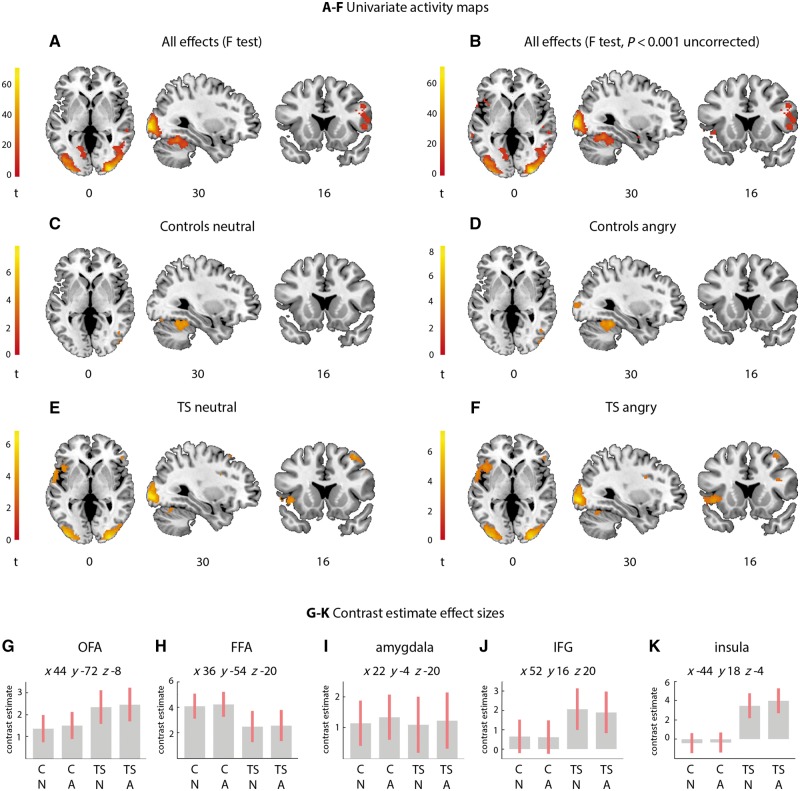
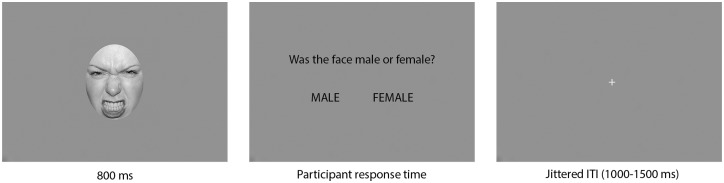
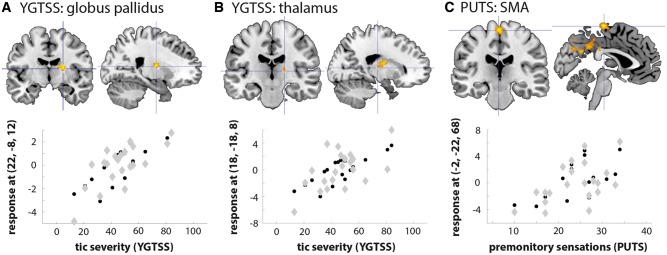
Tourette syndrome is a neurodevelopmental disorder, characterized by motor and phonic tics. Tics are typically experienced as avolitional, compulsive, and associated with premonitory urges. They are exacerbated by stress and can be triggered by external stimuli, including social cues like the actions and facial expressions of others. Importantly, emotional social stimuli, with angry facial stimuli potentially the most potent social threat cue, also trigger behavioural reactions in healthy individuals, suggesting that such mechanisms may be particularly sensitive in people with Tourette syndrome. Twenty-one participants with Tourette syndrome and 21 healthy controls underwent functional MRI while viewing faces wearing either neutral or angry expressions to quantify group differences in neural activity associated with processing social information. Simultaneous video recordings of participants during neuroimaging enabled us to model confounding effects of tics on task-related responses to the processing of faces. In both Tourette syndrome and control participants, face stimuli evoked enhanced activation within canonical face perception regions, including the occipital face area and fusiform face area. However, the Tourette syndrome group showed additional responses within the anterior insula to both neutral and angry faces. Functional connectivity during face viewing was then examined in a series of psychophysiological interactions. In participants with Tourette syndrome, the insula showed functional connectivity with a set of cortical regions previously implicated in tic generation: the presupplementary motor area, premotor cortex, primary motor cortex, and the putamen. Furthermore, insula functional connectivity with the globus pallidus and thalamus varied in proportion to tic severity, while supplementary motor area connectivity varied in proportion to premonitory sensations, with insula connectivity to these regions increasing to a greater extent in patients with worse symptom severity. In addition, the occipital face area showed increased functional connectivity in Tourette syndrome participants with posterior cortical regions, including primary somatosensory cortex, and occipital face area connectivity with primary somatosensory and primary motor cortices varied in proportion to tic severity. There were no significant psychophysiological interactions in controls. These findings highlight a potential mechanism in Tourette syndrome through which heightened representation within insular cortex of embodied affective social information may impact the reactivity of subcortical motor pathways, supporting programmed motor actions that are causally implicated in tic generation. Medicinal and psychological therapies that focus on reducing insular hyper-reactivity to social stimuli may have potential benefit for tic reduction in people with Tourette syndrome.
https://cdn.ncbi.nlm.nih.gov/pmc/blobs/1c80/6202569/9c278b9c8c25/awy254f4.jpg
https://cdn.ncbi.nlm.nih.gov/pmc/blobs/1c80/6202569/c67d7c52bf14/awy254f1.jpg
https://cdn.ncbi.nlm.nih.gov/pmc/blobs/1c80/6202569/1f12594c4c0a/awy254f2.jpg
https://cdn.ncbi.nlm.nih.gov/pmc/blobs/1c80/6202569/9c278b9c8c25/awy254f4.jpg
https://cdn.ncbi.nlm.nih.gov/pmc/blobs/1c80/6202569/c67d7c52bf14/awy254f1.jpg
https://cdn.ncbi.nlm.nih.gov/pmc/blobs/1c80/6202569/1f12594c4c0a/awy254f2.jpg
https://cdn.ncbi.nlm.nih.gov/pmc/blobs/1c80/6202569/9c278b9c8c25/awy254f4.jpg
摘要

妥瑞氏症候群是一种神经发育障碍,其特征为运动性抽搐和发声性抽搐。抽搐通常是不由自主的、强制性的,与预感冲动有关。它们会因压力而加剧,并可能被外部刺激触发,包括他人的动作和面部表情等社会线索。重要的是,情绪性社会刺激,包括愤怒的面部刺激,可能是最有效的社会威胁线索,也会引发健康个体的行为反应,这表明在妥瑞氏症候群患者中,这些机制可能特别敏感。21 名妥瑞氏症候群患者和 21 名健康对照者在观看戴有中性或愤怒表情的面孔时进行了功能性磁共振成像,以量化与处理社会信息相关的神经活动的组间差异。在神经影像学期间对参与者进行同步视频记录,使我们能够对抽动对处理面孔的任务相关反应的混杂影响进行建模。在妥瑞氏症候群患者和对照组参与者中,面孔刺激均在包括枕叶面孔区和梭状回面孔区在内的典型面孔感知区域内引起了增强的激活。然而,妥瑞氏症候群组在对中性和愤怒面孔时,在前脑岛内显示出了额外的反应。然后,通过一系列心理生理交互作用来检查观看面孔时的功能连接。在妥瑞氏症候群患者中,脑岛与先前与抽动生成有关的一组皮质区域显示出功能连接:补充运动区、运动前区、初级运动皮质和壳核。此外,脑岛与苍白球和丘脑的功能连接与抽动严重程度成正比,而补充运动区的连接与预感感觉成正比,随着患者症状严重程度的增加,脑岛与这些区域的连接程度增加更大。此外,在妥瑞氏症候群患者中,枕叶面孔区与后皮质区域(包括初级体感皮层)之间的功能连接增加,并且在初级体感和初级运动皮质之间,枕叶面孔区的功能连接与抽动严重程度成正比。对照组中没有显著的心理生理交互作用。这些发现突出了妥瑞氏症候群中的一种潜在机制,即脑岛皮层内对具身情感社会信息的增强表示可能会影响皮质下运动通路的反应性,支持程序化的运动动作,这些动作在抽动生成中具有因果关系。专注于减少脑岛对社会刺激的过度反应的医学和心理治疗方法可能对减少妥瑞氏症候群患者的抽动具有潜在益处。

相似文献

1
Face perception enhances insula and motor network reactivity in Tourette syndrome.面知觉增强抽动秽语综合征患者岛叶和运动网络的反应性。
Brain. 2018 Nov 1;141(11):3249-3261. doi: 10.1093/brain/awy254.
2
Role of the right dorsal anterior insula in the urge to tic in Tourette syndrome.右侧背侧前脑岛在抽动秽语综合征抽动冲动中的作用。
Mov Disord. 2015 Aug;30(9):1190-7. doi: 10.1002/mds.26230. Epub 2015 Apr 8.
3
Amplified engagement of prefrontal cortex during control of voluntary action in Tourette syndrome.抽动秽语综合征患者在控制自主行动时前额叶皮质的参与增强。
Brain Commun. 2020 Nov 27;2(2):fcaa199. doi: 10.1093/braincomms/fcaa199. eCollection 2020.
4
Centrality of prefrontal and motor preparation cortices to Tourette Syndrome revealed by meta-analysis of task-based neuroimaging studies.基于任务的神经影像学研究的荟萃分析显示前额叶和运动准备皮质在图雷特综合征中的核心地位。
Neuroimage Clin. 2017 Aug 3;16:257-267. doi: 10.1016/j.nicl.2017.08.004. eCollection 2017.
5
The functional connectivity profile of tics and obsessive-compulsive symptoms in Tourette Syndrome.抽动秽语综合征中抽动和强迫症状的功能连接特征。
J Psychiatr Res. 2020 Apr;123:128-135. doi: 10.1016/j.jpsychires.2020.01.019. Epub 2020 Jan 30.
6
The role of the insula in the generation of motor tics and the experience of the premonitory urge-to-tic in Tourette syndrome.脑岛在抽动秽语综合征中运动性抽动的产生及抽动先兆冲动体验中的作用。
Cortex. 2020 May;126:119-133. doi: 10.1016/j.cortex.2019.12.021. Epub 2020 Jan 22.
7
Altered structural connectivity of cortico-striato-pallido-thalamic networks in Gilles de la Tourette syndrome.抽动秽语综合征中皮质-纹状体-苍白球-丘脑网络的结构连接改变。
Brain. 2015 Feb;138(Pt 2):472-82. doi: 10.1093/brain/awu311. Epub 2014 Nov 11.
8
Functional immaturity of cortico-basal ganglia networks in Gilles de la Tourette syndrome.图雷特综合征中海马-基底神经节网络的功能不成熟。
Brain. 2012 Jun;135(Pt 6):1937-46. doi: 10.1093/brain/aws056. Epub 2012 Mar 19.
9
Action inhibition in Tourette syndrome.抽动秽语综合征中的动作抑制
Mov Disord. 2014 Oct;29(12):1532-8. doi: 10.1002/mds.25944. Epub 2014 Jul 3.
10
Neuroimaging the emotional modulation of urge inhibition in Tourette Syndrome.神经影像学研究抽动秽语综合征中冲动抑制的情绪调节。
Cortex. 2021 Feb;135:341-351. doi: 10.1016/j.cortex.2020.10.010. Epub 2020 Nov 1.

引用本文的文献

1
Premonitory urge in tic disorders - a scoping review.抽动障碍中的先兆冲动——一项范围综述
Front Psychiatry. 2025 Jan 30;16:1504442. doi: 10.3389/fpsyt.2025.1504442. eCollection 2025.
2
Structural and functional alterations in the brain gray matter among Tourette syndrome patients: a multimodal meta-analysis of fMRI and VBM studies.抽动秽语综合征患者脑灰质的结构和功能改变:一项功能磁共振成像和体素形态学研究的多模态荟萃分析
J Neurol. 2025 Jan 15;272(2):133. doi: 10.1007/s00415-024-12852-w.
3
When the interoceptive and conceptual clash: The case of oppositional phenomenal self-modelling in Tourette syndrome.

本文引用的文献

1
Transcranial Magnetic Stimulation in Tourette Syndrome: A Historical Perspective, Its Current Use and the Influence of Comorbidities in Treatment Response.抽动秽语综合征中的经颅磁刺激:历史回顾、当前应用及共病对治疗反应的影响
Brain Sci. 2018 Jul 6;8(7):129. doi: 10.3390/brainsci8070129.
2
Altered perception-action binding modulates inhibitory control in Gilles de la Tourette syndrome.感知-动作绑定的改变调节图雷特综合征的抑制控制。
J Child Psychol Psychiatry. 2019 Sep;60(9):953-962. doi: 10.1111/jcpp.12938. Epub 2018 Jun 20.
3
Premonitory urges and tics in Tourette syndrome: computational mechanisms and neural correlates.
当内感受和概念冲突时:抽动秽语综合征中对立的现象自我建模的案例。
Cogn Affect Behav Neurosci. 2024 Aug;24(4):660-680. doi: 10.3758/s13415-024-01189-6. Epub 2024 May 22.
4
Impact of movie and video game elements on tic manifestation in children.电影和视频游戏元素对儿童抽动表现的影响。
Eur J Neurol. 2024 Feb;31(2):e16120. doi: 10.1111/ene.16120. Epub 2023 Nov 10.
5
Elevated representational similarity of voluntary action and inhibition in Tourette syndrome.抽动秽语综合征中自愿行为和抑制的表征相似性升高。
Brain Commun. 2023 Aug 24;5(5):fcad224. doi: 10.1093/braincomms/fcad224. eCollection 2023.
6
Treatment of Tourette syndrome by acupuncture combined with Chinese medicine based on syndrome differentiation: A review.针灸结合中医辨证治疗抽动秽语综合征的研究进展。
Medicine (Baltimore). 2023 Jul 21;102(29):e34268. doi: 10.1097/MD.0000000000034268.
7
The anterior insular cortex processes social recognition memory.前脑岛皮层处理社会识别记忆。
Sci Rep. 2023 Jul 5;13(1):10853. doi: 10.1038/s41598-023-38044-6.
8
Benefit of visual speech information for word comprehension in post-stroke aphasia.视觉言语信息对脑卒中后失语症患者词语理解的益处。
Cortex. 2023 Aug;165:86-100. doi: 10.1016/j.cortex.2023.04.011. Epub 2023 May 16.
9
Trends of Tourette Syndrome in children from 2011 to 2021: A bibliometric analysis.2011年至2021年儿童抽动秽语综合征的趋势:一项文献计量分析。
Front Behav Neurosci. 2022 Nov 17;16:991805. doi: 10.3389/fnbeh.2022.991805. eCollection 2022.
10
Tourette syndrome: clinical features, pathophysiology, and treatment.妥瑞氏症候群:临床特征、病理生理学和治疗。
Lancet Neurol. 2023 Feb;22(2):147-158. doi: 10.1016/S1474-4422(22)00303-9. Epub 2022 Oct 28.
抽动秽语综合征中的前驱冲动和抽动:计算机制和神经相关性。
Curr Opin Neurobiol. 2017 Oct;46:187-199. doi: 10.1016/j.conb.2017.08.009. Epub 2017 Oct 7.
4
Centrality of prefrontal and motor preparation cortices to Tourette Syndrome revealed by meta-analysis of task-based neuroimaging studies.基于任务的神经影像学研究的荟萃分析显示前额叶和运动准备皮质在图雷特综合征中的核心地位。
Neuroimage Clin. 2017 Aug 3;16:257-267. doi: 10.1016/j.nicl.2017.08.004. eCollection 2017.
5
Multi-echo fMRI: A review of applications in fMRI denoising and analysis of BOLD signals.多回波 fMRI:在 fMRI 去噪和 BOLD 信号分析中的应用综述。
Neuroimage. 2017 Jul 1;154:59-80. doi: 10.1016/j.neuroimage.2017.03.033. Epub 2017 Mar 29.
6
Dynamic causal modelling revisited.重新审视动态因果建模。
Neuroimage. 2019 Oct 1;199:730-744. doi: 10.1016/j.neuroimage.2017.02.045. Epub 2017 Feb 17.
7
Gilles de la Tourette syndrome.图雷特综合征。
Nat Rev Dis Primers. 2017 Feb 2;3:16097. doi: 10.1038/nrdp.2016.97.
8
Neurobiology of the Premonitory Urge in Tourette's Syndrome: Pathophysiology and Treatment Implications.抽动秽语综合征预警冲动的神经生物学:病理生理学及治疗意义
J Neuropsychiatry Clin Neurosci. 2017 Spring;29(2):95-104. doi: 10.1176/appi.neuropsych.16070141. Epub 2017 Jan 25.
9
What makes you tic? Translational approaches to study the role of stress and contextual triggers in Tourette syndrome.是什么让你抽动?研究压力和情境触发因素在抽动秽语综合征中作用的转化方法。
Neurosci Biobehav Rev. 2017 May;76(Pt A):123-133. doi: 10.1016/j.neubiorev.2016.10.003. Epub 2016 Dec 8.
10
Taking time to feel our body: Steady increases in heartbeat perception accuracy and decreases in alexithymia over 9 months of contemplative mental training.花时间感受我们的身体:在9个月的冥想心理训练中,心跳感知准确性稳步提高,述情障碍有所减轻。
Psychophysiology. 2017 Mar;54(3):469-482. doi: 10.1111/psyp.12790. Epub 2016 Dec 7.