Nuffield Department of Clinical Neurosciences, University of Oxford, Oxford, UK.
Department of Experimental Psychology, University of Oxford, Oxford, UK.
Brain. 2018 Nov 1;141(11):3193-3210. doi: 10.1093/brain/awy257.
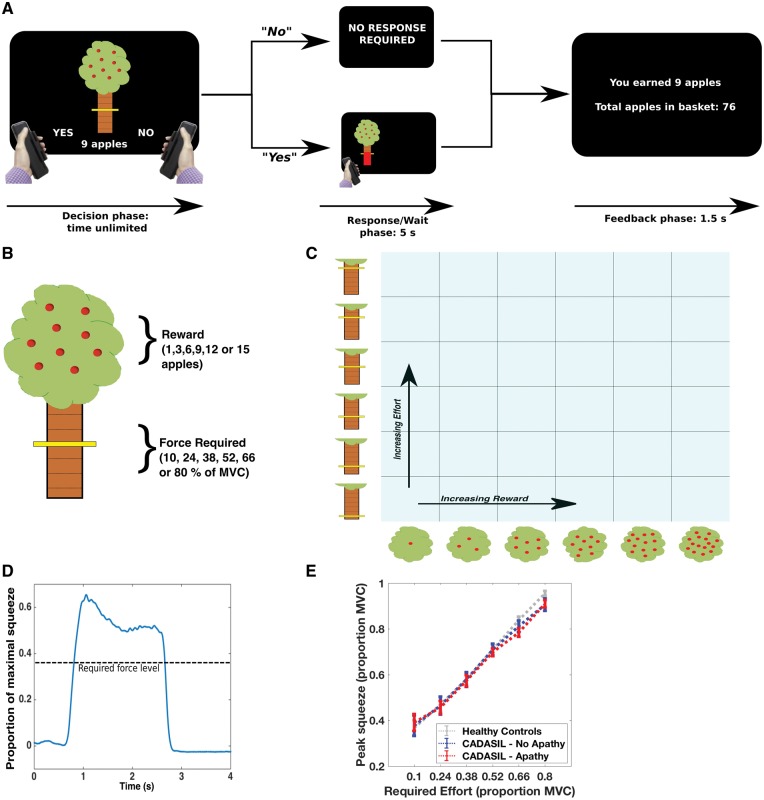
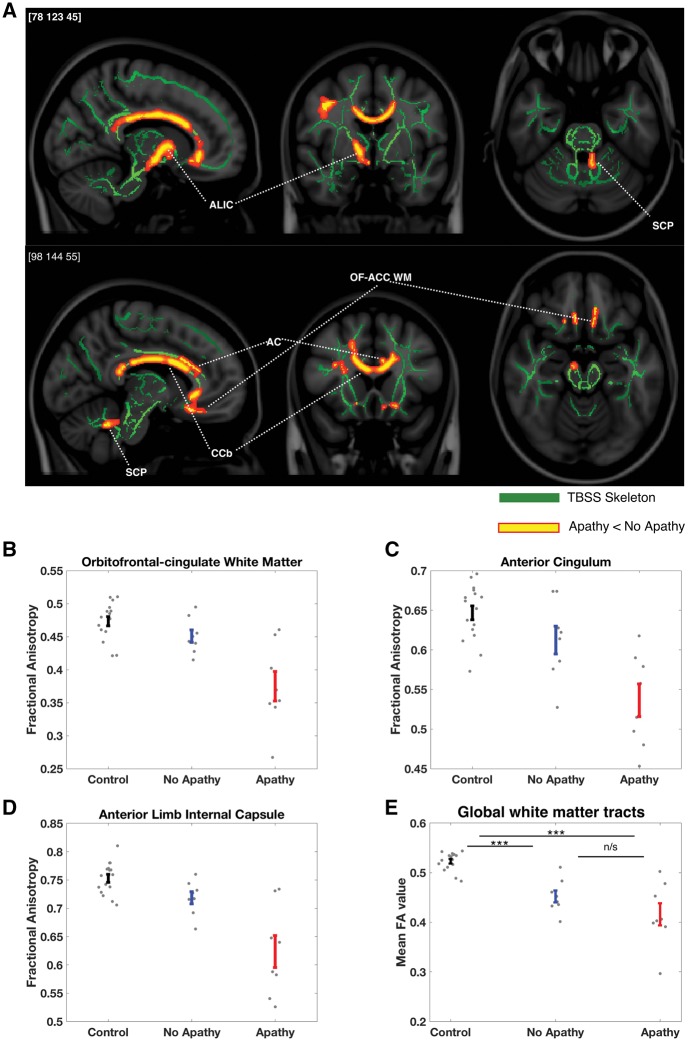
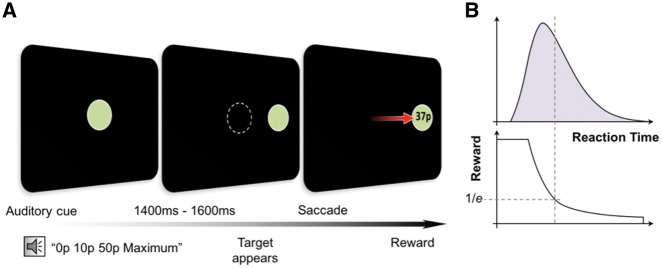
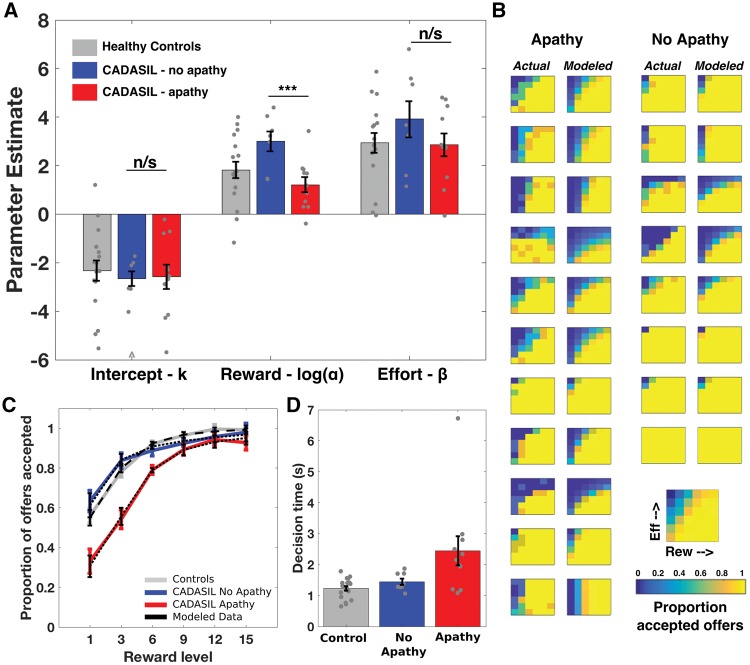
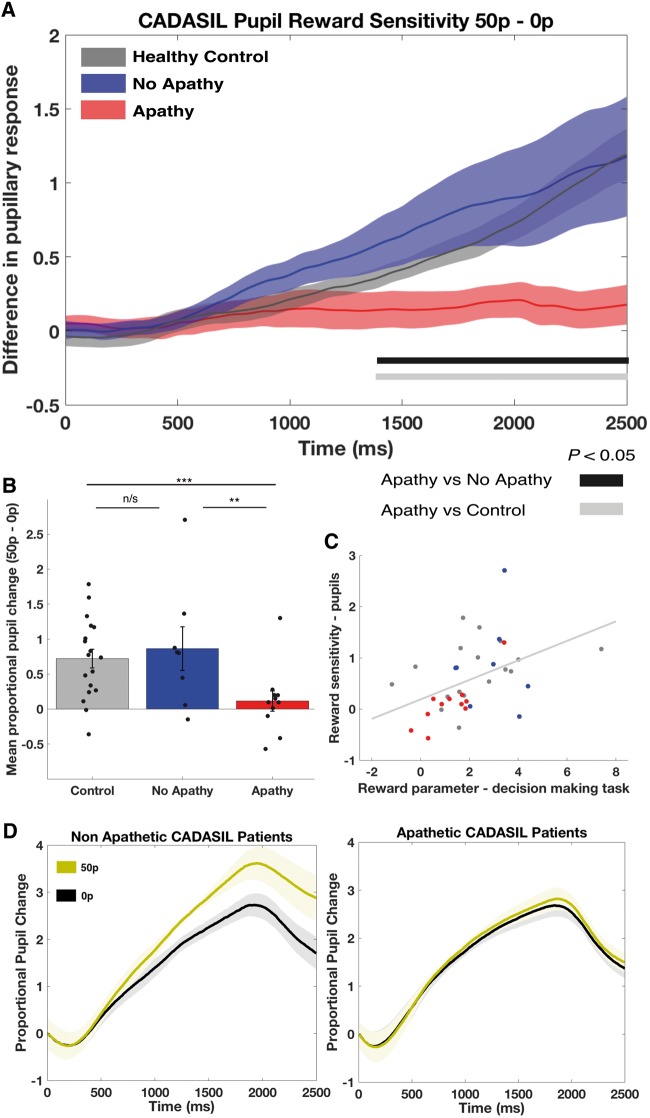
Apathy is a syndrome of reduced motivation that commonly occurs in patients with cerebral small vessel disease, including those with the early onset form, CADASIL (cerebral autosomal dominant arteriopathy with subcortical infarcts and leukoencephalopathy). The cognitive mechanisms underlying apathy are poorly understood and treatment options are limited. We hypothesized that disrupted effort-based decision-making, the cognitive process by which potential rewards and the effort cost required to obtain them is integrated to drive behaviour, might underlie the apathetic syndrome. Nineteen patients with a genetic diagnosis of CADASIL, as a model of 'pure' vascular cognitive impairment, and 19 matched controls were assessed using two different behavioural paradigms and MRI. On a decision-making task, participants decided whether to accept or reject sequential offers of monetary reward in return for exerting physical effort via handheld dynamometers. Six levels of reward and six levels of effort were manipulated independently so offers spanned the full range of possible combinations. Choice, decision time and force metrics were recorded. Each participant's effort and reward sensitivity was estimated using a computational model of choice. On a separate eye movement paradigm, physiological reward sensitivity was indexed by measuring pupillary dilatation to increasing monetary incentives. This metric was related to apathy status and compared to the behavioural metric of reward sensitivity on the decision-making task. Finally, high quality diffusion imaging and tract-based spatial statistics were used to determine whether tracts linking brain regions implicated in effort-based decision-making were disrupted in apathetic patients. Overall, apathetic patients with CADASIL rejected significantly more offers on the decision-making task, due to reduced reward sensitivity rather than effort hypersensitivity. Apathy was also associated with blunted pupillary responses to incentives. Furthermore, these independent behavioural and physiological markers of reward sensitivity were significantly correlated. Non-apathetic patients with CADASIL did not differ from controls on either task, whilst actual motor performance of apathetic patients in both tasks was also normal. Apathy was specifically associated with reduced fractional anisotropy within tracts connecting regions previously associated with effort-based decision-making. These findings demonstrate behavioural, physiological and anatomical evidence that dysfunctional effort-based decision-making underlies apathy in patients with CADASIL, a model disorder for sporadic small vessel disease. Reduced incentivization by rewards rather than hypersensitivity to effort costs drives this altered pattern of behaviour. The study provides empirical evidence of a cognitive mechanism for apathy in cerebral small vessel disease, and identifies a promising therapeutic target for interventions to improve this debilitating condition.
冷漠是一种动机降低的综合征,常见于脑小血管病患者,包括早发性脑动脉病伴皮质下梗死和白质脑病(CADASIL)患者。冷漠的认知机制尚不清楚,治疗选择有限。我们假设,破坏基于努力的决策,即整合潜在奖励和获得它们所需的努力成本以驱动行为的认知过程,可能是冷漠综合征的基础。19 名患有 CADASIL 遗传诊断的患者作为“纯”血管性认知障碍的模型,以及 19 名匹配的对照者接受了两种不同的行为范式和 MRI 评估。在决策任务中,参与者决定是否接受或拒绝通过手持测力计进行体力劳动以换取金钱奖励的连续报价。独立操纵六个奖励水平和六个努力水平,以便提供的奖励跨越可能的组合的全部范围。记录选择、决策时间和力的度量。使用选择的计算模型估计每个参与者的努力和奖励敏感性。在单独的眼动范式中,通过测量瞳孔对增加的金钱奖励的扩张来衡量生理奖励敏感性。该指标与冷漠状态相关,并与决策任务中的奖励敏感性的行为指标进行比较。最后,使用高质量的弥散成像和基于束的空间统计学来确定连接与基于努力的决策相关的脑区的束是否在冷漠患者中受损。总体而言,CADASIL 的冷漠患者在决策任务中拒绝的报价明显更多,这是由于奖励敏感性降低而不是努力敏感性过高。冷漠还与激励引起的瞳孔反应迟钝有关。此外,这些独立的奖励敏感性行为和生理标志物显著相关。CADASIL 的非冷漠患者在两项任务上均与对照组无差异,而冷漠患者在两项任务中的实际运动表现也正常。冷漠与连接先前与基于努力的决策相关的区域的束内的分数各向异性降低有关。这些发现提供了行为、生理和解剖学证据,表明 CADASIL 患者的冷漠是基于努力的决策功能障碍的结果,CADASIL 是散发性小血管病的模型疾病。奖励的激励作用降低而不是对努力成本的过度敏感导致了这种行为模式的改变。该研究为大脑小血管疾病冷漠提供了认知机制的实证证据,并确定了改善这种使人衰弱的疾病的干预措施的有希望的治疗靶点。