Nuffield Department of Clinical Neurosciences, University of Oxford, Level 6, West Wing, John Radcliffe Hospital, Oxford, OX3 9DU, UK.
Department of Experimental Psychology, University of Oxford, Anna Watts Building, Radcliffe Observatory Quarter, Oxford, OX2 6GG, UK.
Brain. 2021 May 7;144(4):1247-1262. doi: 10.1093/brain/awab013.
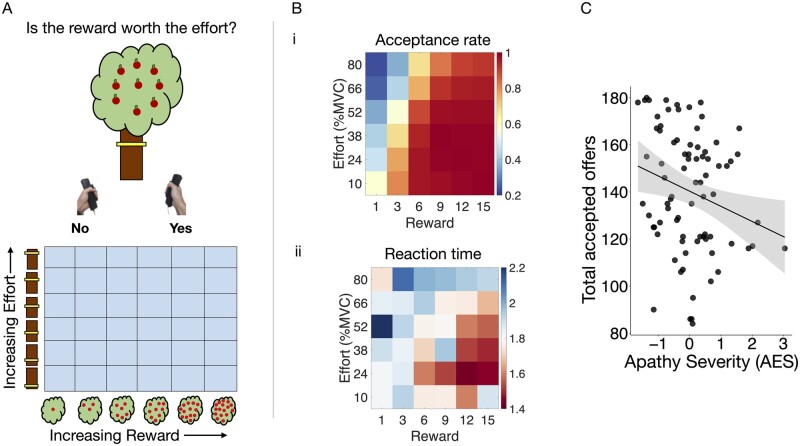
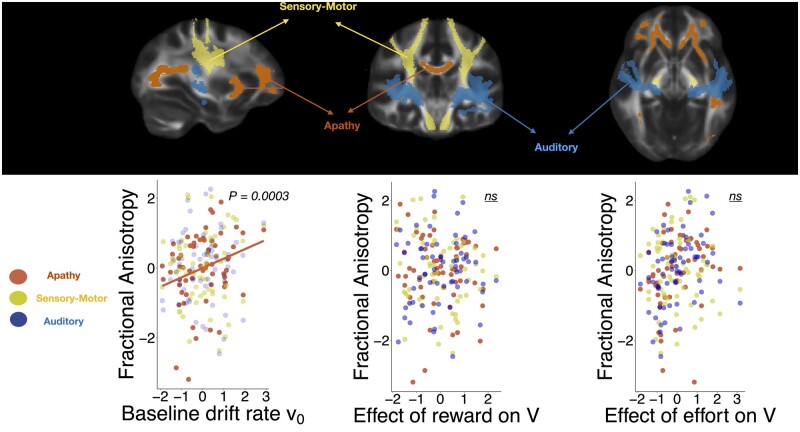
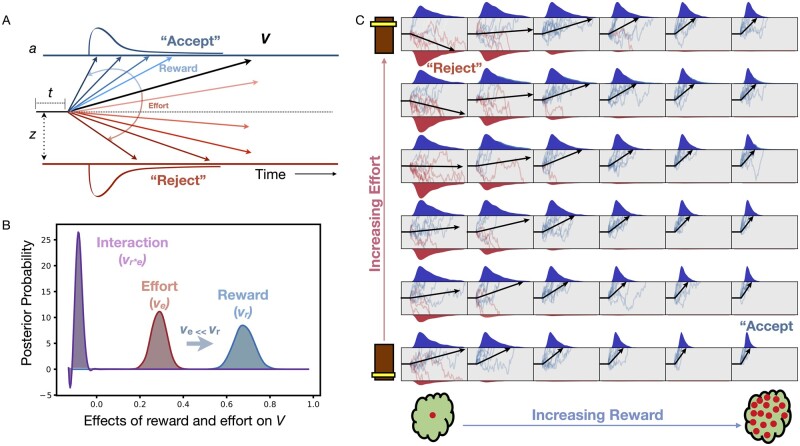
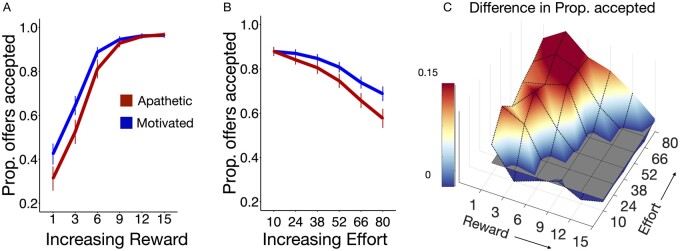
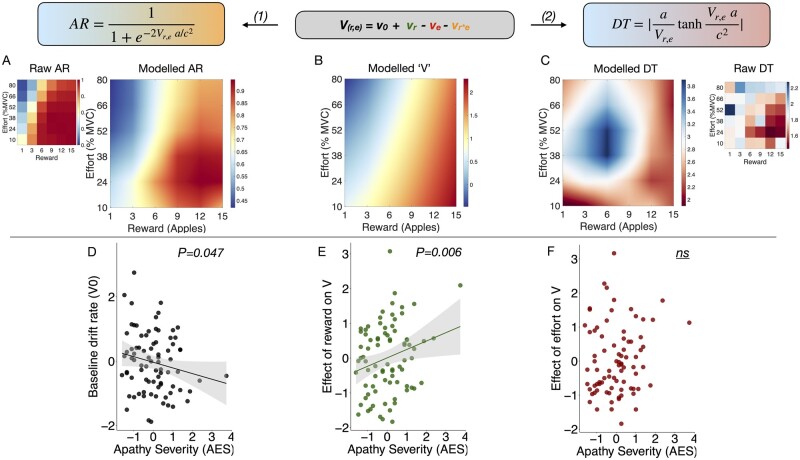
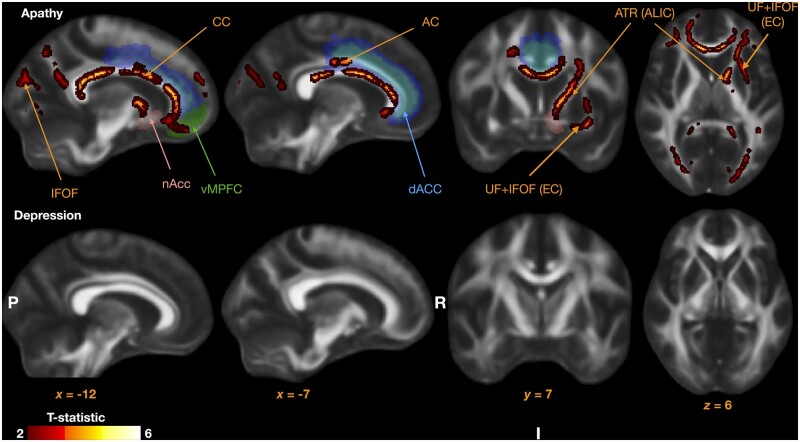
Patients with small vessel cerebrovascular disease frequently suffer from apathy, a debilitating neuropsychiatric syndrome, the underlying mechanisms of which remain to be established. Here we investigated the hypothesis that apathy is associated with disrupted decision making in effort-based decision making, and that these alterations are associated with abnormalities in the white matter network connecting brain regions that underpin such decisions. Eighty-two patients with MRI evidence of small vessel disease were assessed using a behavioural paradigm as well as diffusion weighted MRI. The decision-making task involved accepting or rejecting monetary rewards in return for performing different levels of physical effort (hand grip force). Choice data and reaction times were integrated into a drift diffusion model that framed decisions to accept or reject offers as stochastic processes approaching a decision boundary with a particular drift rate. Tract-based spatial statistics were used to assess the relationship between white matter tract integrity and apathy, while accounting for depression. Overall, patients with apathy accepted significantly fewer offers on this decision-making task. Notably, while apathetic patients were less responsive to low rewards, they were also significantly averse to investing in high effort. Significant reductions in white matter integrity were observed to be specifically related to apathy, but not to depression. These included pathways connecting brain regions previously implicated in effort-based decision making in healthy people. The drift rate to decision parameter was significantly associated with both apathy and altered white matter tracts, suggesting that both brain and behavioural changes in apathy are associated with this single parameter. On the other hand, depression was associated with an increase in the decision boundary, consistent with an increase in the amount of evidence required prior to making a decision. These findings demonstrate altered effort-based decision making for reward in apathy, and also highlight dissociable mechanisms underlying apathy and depression in small vessel disease. They provide clear potential brain and behavioural targets for future therapeutic interventions, as well as modelling parameters that can be used to measure the effects of treatment at the behavioural level.
小血管性脑血管病患者常患有冷漠症,这是一种使人虚弱的神经精神综合征,其潜在机制尚未确定。在这里,我们假设冷漠与努力决策中的决策障碍有关,并且这些改变与支持这些决策的大脑区域之间的白质网络异常有关。使用行为范式以及扩散加权 MRI 评估了 82 名具有 MRI 小血管疾病证据的患者。决策任务涉及接受或拒绝货币奖励,以换取执行不同水平的体力劳动(手握力)。选择数据和反应时间被整合到漂移扩散模型中,该模型将接受或拒绝报价的决策视为接近具有特定漂移率的决策边界的随机过程。基于束的空间统计学用于评估白质束完整性与冷漠之间的关系,同时考虑到抑郁。总体而言,患有冷漠症的患者在该决策任务中接受的报价明显减少。值得注意的是,虽然冷漠症患者对低奖励的反应较弱,但他们也明显不愿意投入高努力。观察到白质完整性的显着降低与冷漠有关,但与抑郁无关。这些包括连接大脑区域的通路,这些区域以前与健康人群的努力决策有关。漂移率到决策参数与冷漠和改变的白质束都显着相关,这表明冷漠的大脑和行为变化都与该单个参数相关。另一方面,抑郁与决策边界的增加有关,这与做出决策之前需要增加证据量一致。这些发现表明,冷漠症患者的奖励努力决策发生了改变,并且还强调了小血管疾病中冷漠和抑郁的潜在机制不同。它们为未来的治疗干预提供了明确的潜在大脑和行为靶点,以及可用于在行为水平上测量治疗效果的建模参数。