Gyawali Bishal, Neupane Dinesh, Vaidya Abhinav, Sandbæk Annelli, Kallestrup Per
Department of Public Health, Aarhus University, Aarhus, Denmark.
Nepal Development Society, Bharatpur, Nepal.
Trials. 2018 Oct 22;19(1):579. doi: 10.1186/s13063-018-2954-3.
Type 2 diabetes is one of the fastest emerging chronic diseases in low- and middle-income countries. Population-based approaches, such as involvement of lay health workers offering culturally appropriate diabetes health promotion, may be the blueprint for the management of type 2 diabetes. This study aims to examine the effectiveness of a family-based home health education intervention on type 2 diabetes provided by female community health volunteers (FCHVs) in a semi-urban area of Lekhnath Municipality of Nepal.
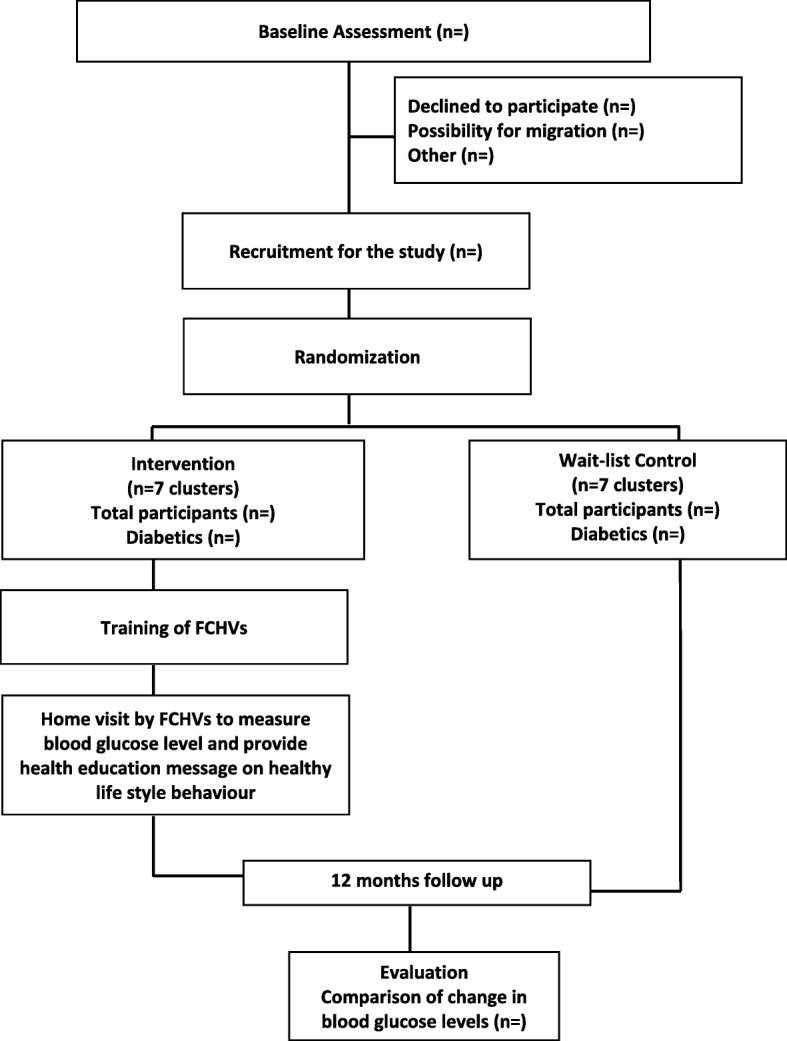
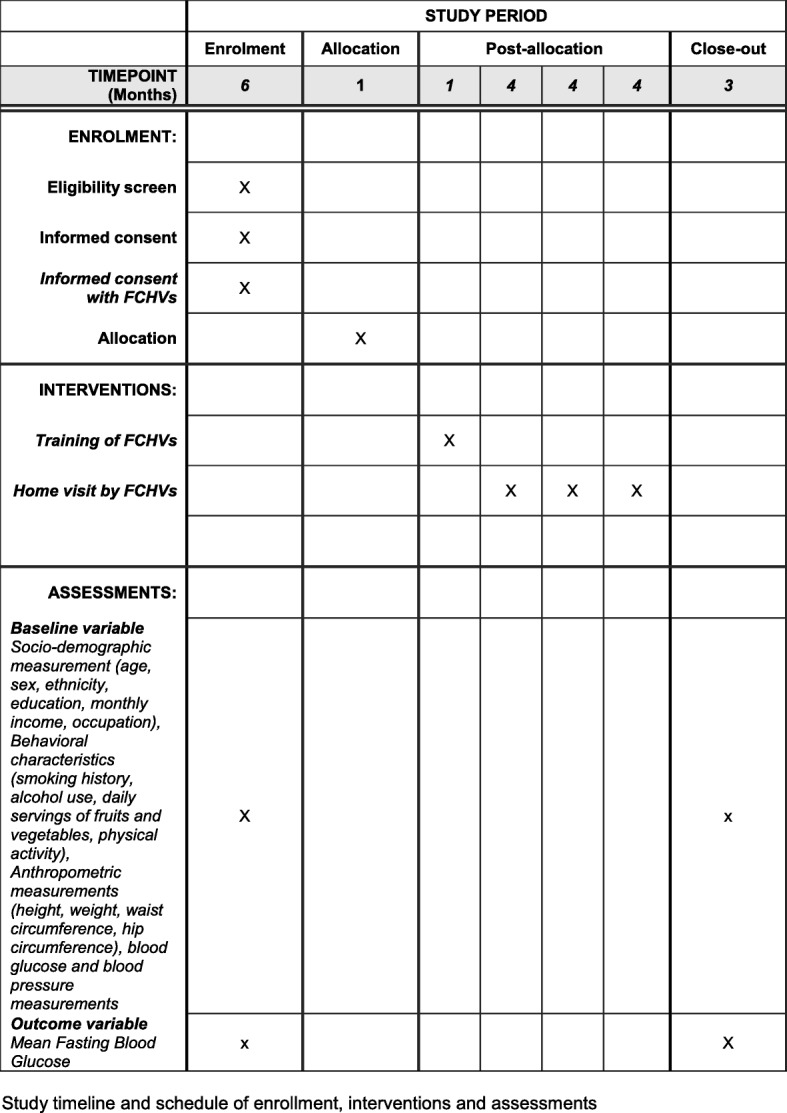
The COmmunity-Based INtervention for management of Diabetes in Nepal (COBIN-D) trial is a community-based, open-label, two-armed, cluster-randomized trial with seven randomly selected intervention and seven wait-list control clusters. A total of 112 subjects with type 2 diabetes will be recruited from the intervention clusters and 112 subjects from the wait-list control clusters. Based on the Health Belief Model and Social Support Theory, a 12-month family-based lifestyle intervention will be administered through FCHVs. Wait-list control clusters will continue to manage their glycemic condition as usual and their intervention will be delayed for 12 months. Participants will be measured at the beginning of the study and 12 months later. The primary outcome measure of the study will be difference in mean change (from baseline to 1 year) in fasting blood glucose between the two study arms. Impacts will be estimated using intention-to-treat analysis.
The COBIN-D is the first study investigating the effect of family-based home health education and screening on blood sugar levels in adults by FCHVs at community level in Nepal. The perspective of this study is to develop and implement, in collaboration with the community, a community-based, culturally sensitive diabetes prevention and control program. It is anticipated that the study can act as a feasible and affordable tool for evidence-based integrated care for improvement of diabetes management and outcomes in Nepal as well as in other low- and middle-income countries.
ClinicalTrials.gov, Identifier: NCT03304158 . Registered retrospectively on 03 October 2017.
2型糖尿病是低收入和中等收入国家中迅速出现的慢性病之一。基于人群的方法,如让非专业卫生工作者参与提供符合文化背景的糖尿病健康促进服务,可能是2型糖尿病管理的蓝图。本研究旨在检验尼泊尔莱克纳特市半城市地区女性社区卫生志愿者(FCHV)提供的基于家庭的2型糖尿病健康教育干预措施的效果。
尼泊尔基于社区的糖尿病管理干预试验(COBIN-D)是一项基于社区的、开放标签的、双臂、整群随机试验,随机选择7个干预组和7个等待名单对照组。将从干预组招募112名2型糖尿病患者,从等待名单对照组招募112名患者。基于健康信念模型和社会支持理论,将通过FCHV实施为期12个月的基于家庭的生活方式干预。等待名单对照组将继续照常管理血糖状况,其干预将推迟12个月。将在研究开始时和12个月后对参与者进行测量。该研究的主要结局指标将是两个研究组之间空腹血糖平均变化(从基线到1年)的差异。将使用意向性分析来估计影响。
COBIN-D是第一项研究尼泊尔社区层面FCHV对成年人血糖水平进行基于家庭的健康教育和筛查效果的研究。本研究的目的是与社区合作制定并实施一项基于社区的、对文化敏感的糖尿病预防和控制计划。预计该研究可作为一种可行且经济实惠的工具,用于基于证据的综合护理,以改善尼泊尔以及其他低收入和中等收入国家的糖尿病管理和结局。
ClinicalTrials.gov,标识符:NCT03304158。于2017年10月3日追溯注册。