Center for Clinical Cancer Genetics and Global Health and Section of Hematology and Oncology, Department of Medicine, University of Chicago, Chicago, IL, 60637, USA.
Fred Hutch Cancer Center, University of Washington, Seattle, WA, 98109, USA.
Sci Rep. 2018 Oct 22;8(1):15572. doi: 10.1038/s41598-018-33629-y.
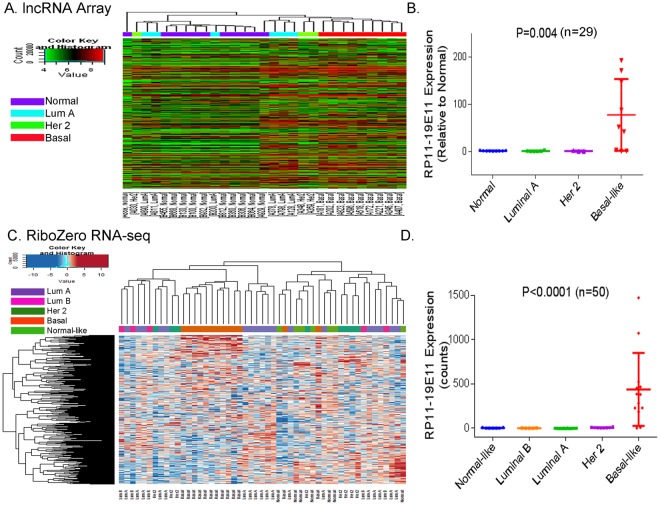
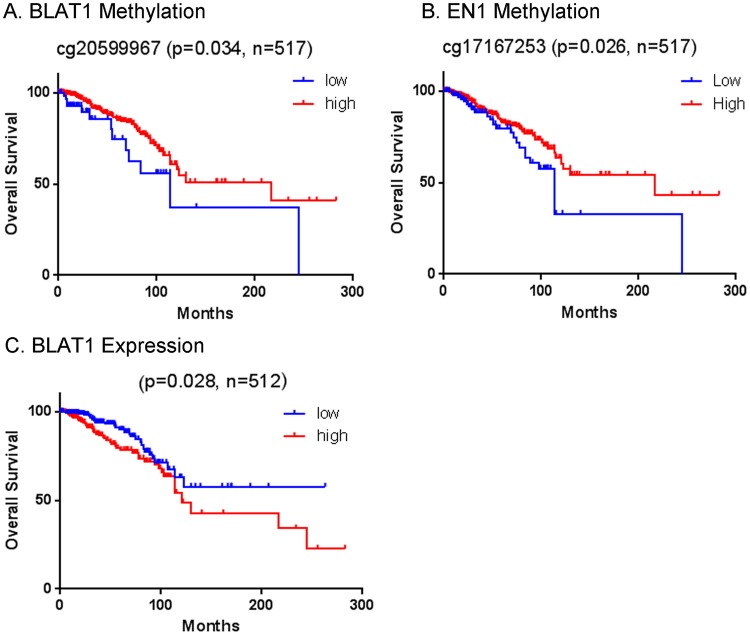
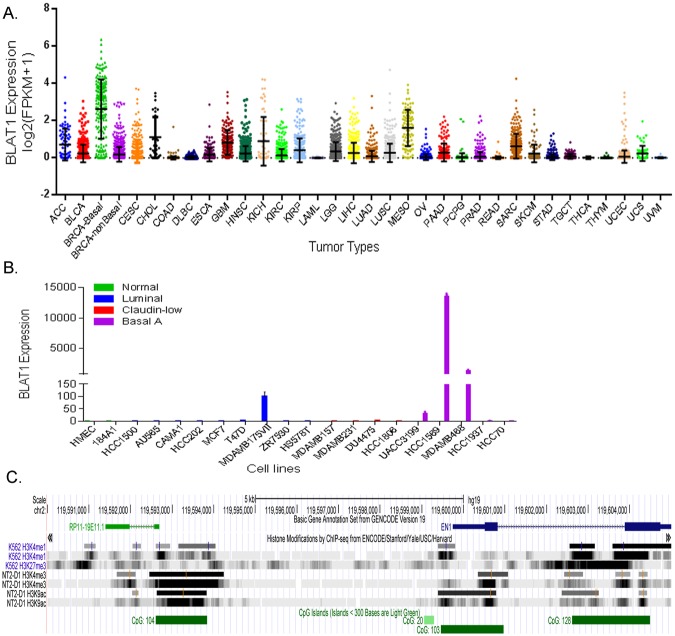
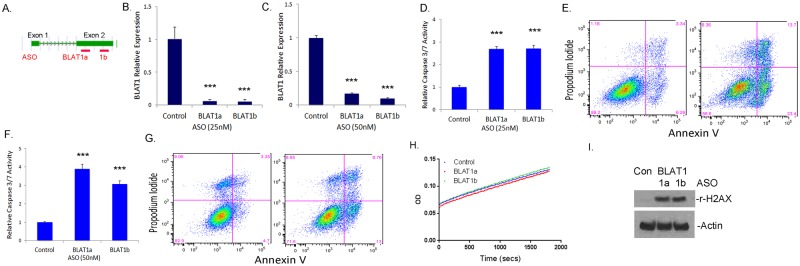
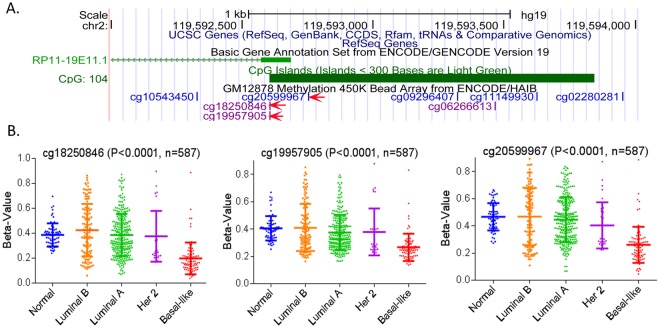
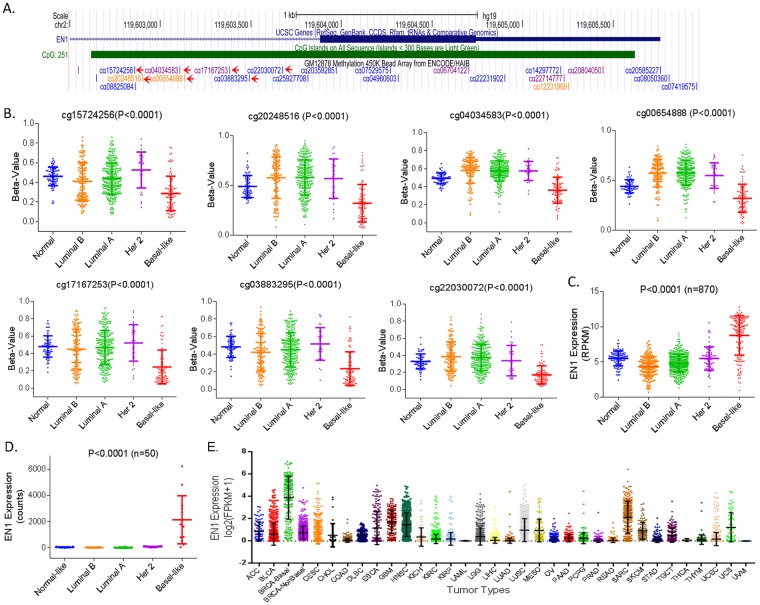
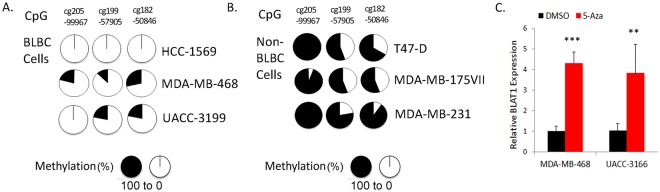
Long-noncoding RNAs (lncRNAs) have been shown to participate in oncogenesis across a variety of cancers and may represent novel therapeutic targets. However, little is known about the role of lncRNAs in basal-like breast cancer (BLBC), the aggressive form of breast cancer with no molecularly defined therapeutic target. To examine whether altered lncRNA expression contributes to the aggressive phenotype characteristic of BLBC, we performed a comparative analysis of BLBC versus non-BLBC using microarray profiling and RNA sequencing of primary breast cancer. We identified RP11-19E11.1 as a significantly up-regulated lncRNA in BLBC tumors and named it Basal-Like breast cancer Associated Transcript 1 (BLAT1). Analysis of pan-cancer datasets showed the highest expression of BLAT1 in BLBC tumors compared to all other cancers. Depletion of BLAT1 in breast cancer cells led to significantly increased apoptosis, partly because of accumulation of DNA damage. Mechanistically, BLAT1 expression is regulated at the epigenetic level via DNA methylation at CpG islands in the promoter. Concordantly, patients harboring tumors with BLAT1 hypomethylation showed decreased overall survival. Our results suggest that increased expression of BLAT1 via CpG site hypomethylation may contribute to the aggressive phenotype of BLBC, raising a possibility of new biomarkers for prognosis of aggressive BLBC tumors.
长链非编码 RNA(lncRNAs)已被证明参与多种癌症的发生,可能代表新的治疗靶点。然而,lncRNAs 在基底样乳腺癌(BLBC)中的作用知之甚少,BLBC 是一种侵袭性乳腺癌,没有明确的分子治疗靶点。为了研究 lncRNA 表达的改变是否有助于 BLBC 侵袭性表型的特征,我们使用微阵列分析和原发性乳腺癌的 RNA 测序对 BLBC 与非 BLBC 进行了比较分析。我们发现 RP11-19E11.1 在 BLBC 肿瘤中显著上调,并将其命名为基底样乳腺癌相关转录本 1(BLAT1)。对泛癌症数据集的分析显示,与所有其他癌症相比,BLAT1 在 BLBC 肿瘤中的表达最高。在乳腺癌细胞中耗尽 BLAT1 会导致细胞凋亡显著增加,部分原因是 DNA 损伤的积累。从机制上讲,BLAT1 的表达通过启动子 CpG 岛的 DNA 甲基化在表观遗传水平上受到调控。一致地,携带 BLAT1 低甲基化肿瘤的患者总生存期降低。我们的研究结果表明,CpG 位点低甲基化导致 BLAT1 表达增加可能有助于 BLBC 的侵袭性表型,为侵袭性 BLBC 肿瘤的预后提供了新的生物标志物的可能性。