Battenberg Kai, Potter Daniel, Tabuloc Christine A, Chiu Joanna C, Berry Alison M
Department of Plant Sciences, University of California, Davis, Davis, CA, United States.
Department of Entomology and Nematology, University of California, Davis, Davis, CA, United States.
Front Plant Sci. 2018 Oct 8;9:1256. doi: 10.3389/fpls.2018.01256. eCollection 2018.
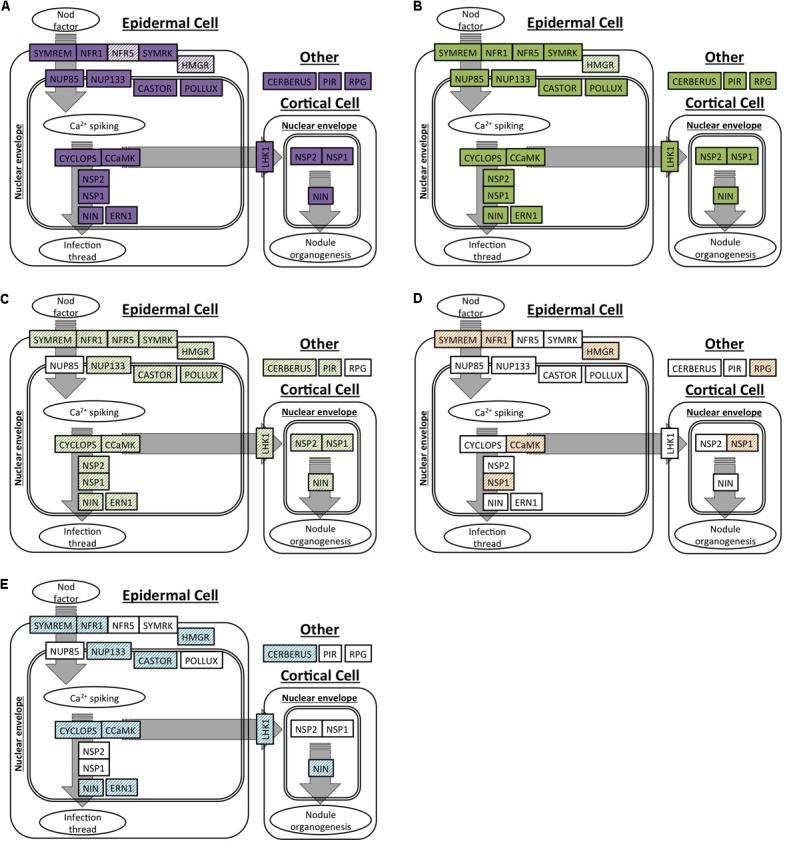
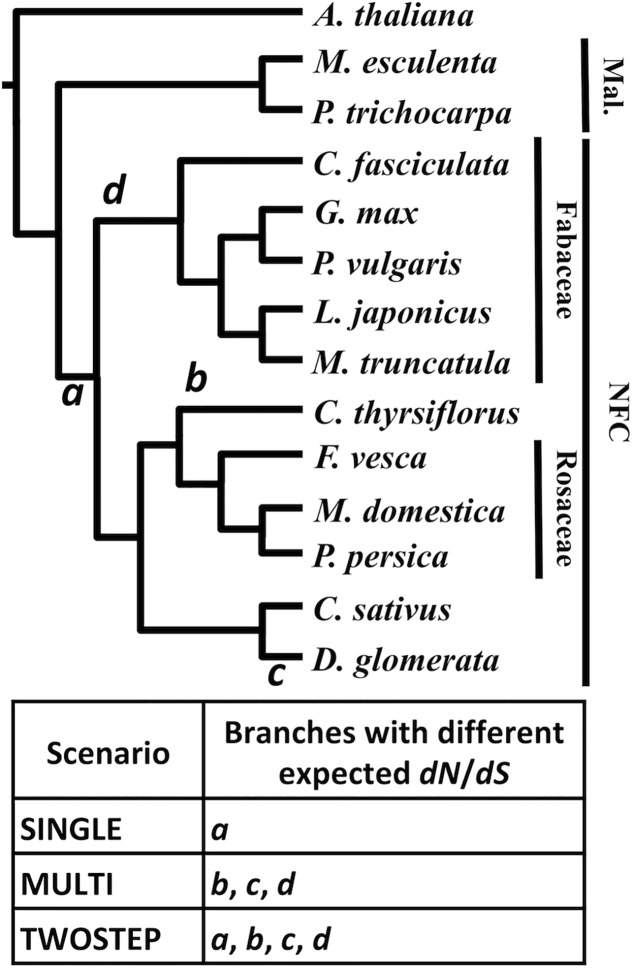
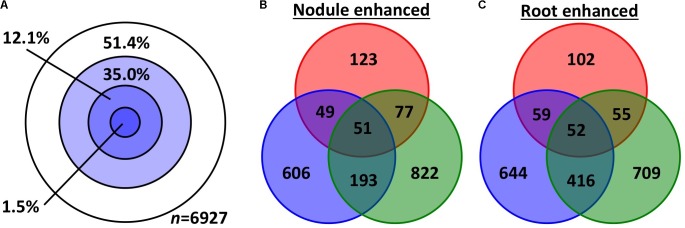
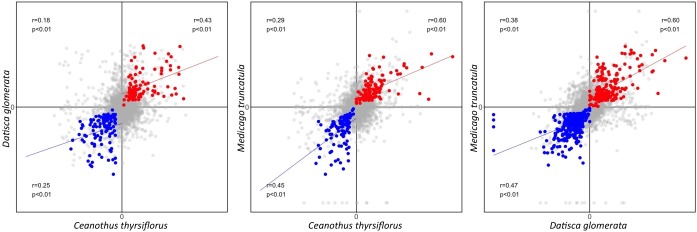
Root nodule symbiosis (RNS) is a symbiotic interaction established between angiosperm hosts and nitrogen-fixing soil bacteria in specialized organs called root nodules. The host plants provide photosynthate and the microsymbionts supply fixed nitrogen. The origin of RNS represents a major evolutionary event in the angiosperms, and understanding the genetic underpinnings of this event is of major economic and agricultural importance. Plants that engage in RNS are restricted to a single angiosperm clade known as the nitrogen-fixing clade (NFC), yet occur in multiple lineages scattered within the NFC. It has been postulated that RNS evolved in two steps: a gain-of-predisposition event occurring at the base of the NFC, followed by a gain-of-function event in each host plant lineage. Here, we first explore the premise that RNS has evolved from a single common background, and then we explore whether a two-step process better explains the evolutionary origin of RNS than either a single-step process, or multiple origins. We assembled the transcriptomes of root and nodule of two actinorhizal plants, and . Together with the corresponding published transcriptomes of the model legume , the gene expression patterns in roots and nodules were compared across the three lineages. We found that orthologs of many genes essential for RNS in the model legumes are expressed in all three lineages, and that the overall nodule gene expression patterns were more similar to each other than expected by random chance, a finding that supports a common evolutionary background for RNS shared by the three lineages. Moreover, phylogenetic analyses suggested that a substantial portion of the genes experiencing selection pressure changes at the base of the NFC also experienced additional changes at the base of each host plant lineage. Our results (1) support the occurrence of an event that led to RNS at the base of the NFC, and (2) suggest a subsequent change in each lineage, most consistent with a two-step origin of RNS. Among several conserved functions identified, strigolactone-related genes were down-regulated in nodules of all three species, suggesting a shared function similar to that shown for arbuscular mycorrhizal symbioses.
根瘤共生(RNS)是被子植物宿主与固氮土壤细菌在称为根瘤的特殊器官中建立的一种共生相互作用。宿主植物提供光合产物,而共生微生物提供固定氮。RNS的起源是被子植物中的一个重大进化事件,了解这一事件的遗传基础具有重大的经济和农业意义。参与RNS的植物仅限于一个称为固氮分支(NFC)的被子植物分支,但出现在NFC内分散的多个谱系中。据推测,RNS的进化分两步进行:在NFC基部发生的易感性获得事件,随后在每个宿主植物谱系中发生功能获得事件。在这里,我们首先探讨RNS从单一共同背景进化而来的前提,然后探讨与单步过程或多个起源相比,两步过程是否能更好地解释RNS的进化起源。我们组装了两种放线菌根植物根和根瘤的转录组,即 和 。连同模式豆科植物相应已发表的转录组,比较了三个谱系根和根瘤中的基因表达模式。我们发现,模式豆科植物中许多对RNS至关重要的基因的直系同源基因在所有三个谱系中均有表达,并且总体根瘤基因表达模式彼此之间比随机预期更为相似,这一发现支持了三个谱系共享的RNS的共同进化背景。此外,系统发育分析表明,在NFC基部经历选择压力变化的基因中有很大一部分在每个宿主植物谱系基部也经历了额外的变化。我们的结果(1)支持在NFC基部发生导致RNS的事件,(2)表明每个谱系随后发生了变化,这与RNS的两步起源最为一致。在确定的几个保守功能中,独脚金内酯相关基因在所有三个物种的根瘤中均下调,表明其具有与丛枝菌根共生相似的共享功能。