1Department of Genetics and Genome Biology, University of Leicester, Leicester, UK.
2Milner Centre for Evolution, Department of Biology and Biochemistry, University of Bath, Bath, UK.
Microb Genom. 2018 Nov;4(11). doi: 10.1099/mgen.0.000228. Epub 2018 Oct 23.
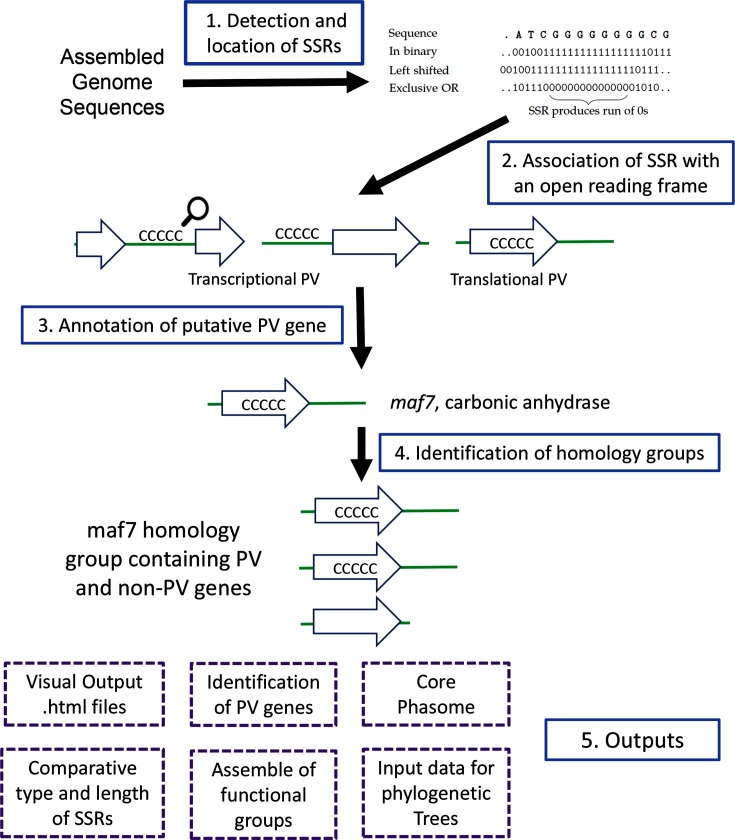
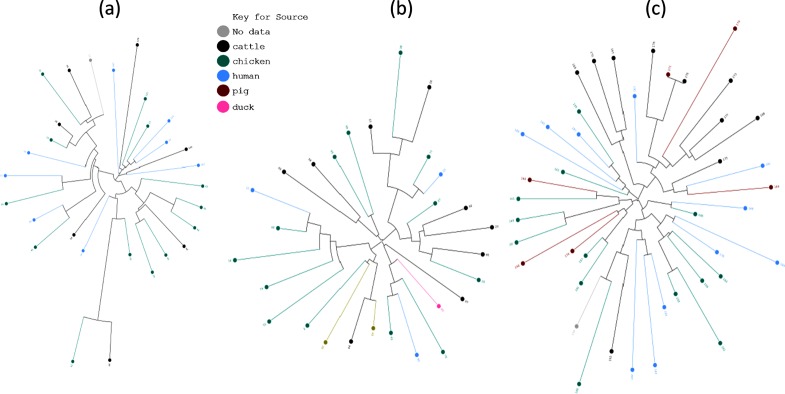
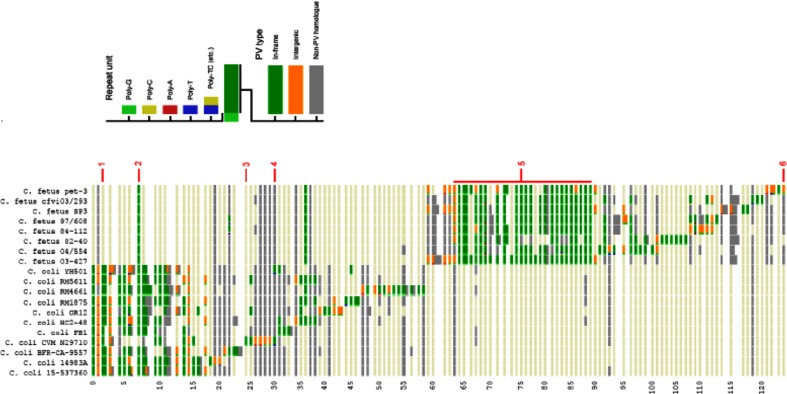
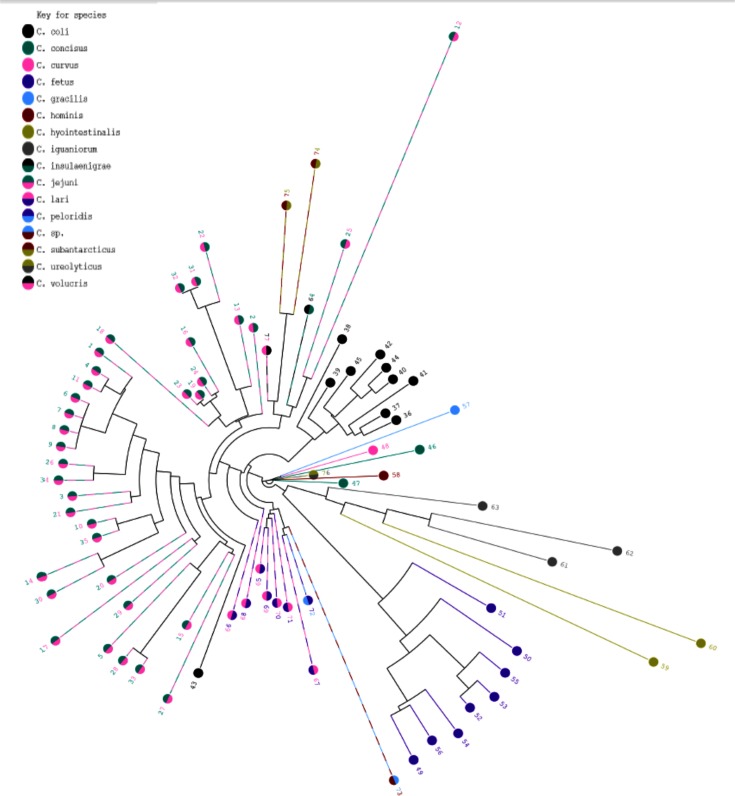
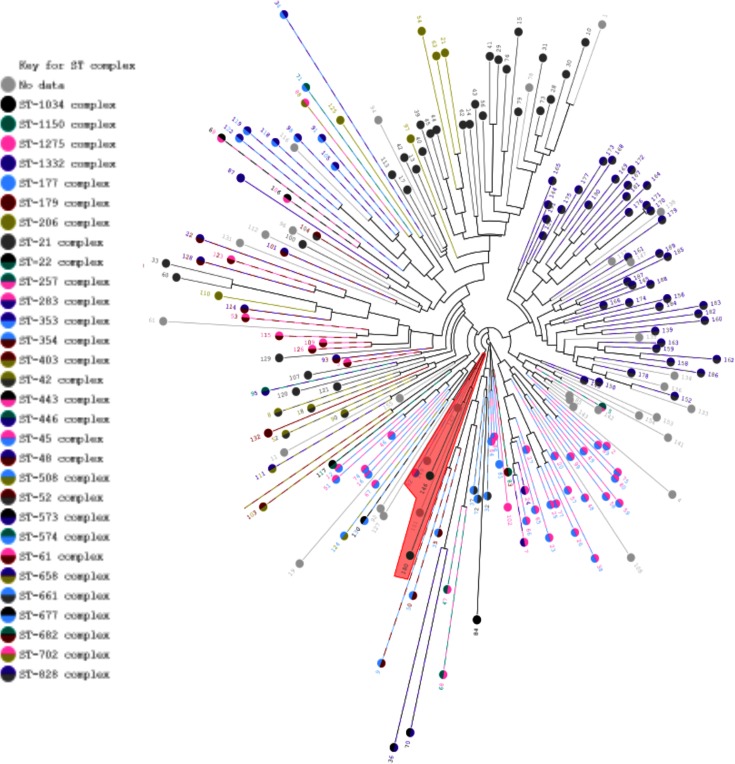
Hypermutable simple sequence repeats (SSRs) are drivers of phase variation (PV) whose stochastic, high-frequency, reversible switches in gene expression are a common feature of several pathogenic bacterial species, including the human pathogen Campylobacter jejuni. Here we examine the distribution and conservation of known and putative SSR-driven phase variable genes - the phasome - in the genus Campylobacter. PhasomeIt, a new program, was specifically designed for rapid identification of SSR-mediated PV. This program detects the location, type and repeat number of every SSR. Each SSR is linked to a specific gene and its putative expression state. Other outputs include conservation of SSR-driven phase-variable genes and the 'core phasome' - the minimal set of PV genes in a phylogenetic grouping. Analysis of 77 complete Campylobacter genome sequences detected a 'core phasome' of conserved PV genes in each species and a large number of rare PV genes with few, or no, homologues in other genome sequences. Analysis of a set of partial genome sequences, with food-chain-associated metadata, detected evidence of a weak link between phasome and source host for disease-causing isolates of sequence type (ST)-828 but not the ST-21 or ST-45 complexes. Investigation of the phasomes in the genus Campylobacter provided evidence of overlapping but distinctive mechanisms of PV-mediated adaptation to specific niches. This suggests that the phasome could be involved in host adaptation and spread of campylobacters. Finally, this tool is malleable and will have utility for studying the distribution and genic effects of other repetitive elements in diverse bacterial species.
高度易变的简单序列重复(SSRs)是相位变异(PV)的驱动因素,其基因表达的随机、高频、可逆开关是包括人类病原体空肠弯曲菌在内的几种病原细菌的共同特征。在这里,我们研究了已知和推定的 SSR 驱动的相位可变基因 - 相位体 - 在弯曲菌属中的分布和保守性。PhasomeIt 是一个专门设计的新程序,用于快速识别 SSR 介导的 PV。该程序可以检测每个 SSR 的位置、类型和重复次数。每个 SSR 都与特定的基因及其推定的表达状态相关联。其他输出包括 SSR 驱动的相位可变基因和“核心相位体”的保守性 - 在一个系统发育分组中,PV 基因的最小集合。对 77 个完整的弯曲菌基因组序列的分析在每个物种中检测到了保守的 PV 基因的“核心相位体”,以及大量罕见的 PV 基因,它们在其他基因组序列中很少或没有同源物。对一组具有食物链相关元数据的部分基因组序列的分析检测到了与序列型(ST)-828 的致病分离株的相位体和来源宿主之间存在弱联系的证据,但与 ST-21 或 ST-45 复合物没有。对弯曲菌属的相位体的研究提供了证据,表明 PV 介导的对特定生态位的适应性存在重叠但独特的机制。这表明相位体可能参与了弯曲菌的宿主适应性和传播。最后,这个工具是可塑的,并且将在研究其他重复元件在不同细菌物种中的分布和基因效应方面具有实用性。