Xiao Cuiying, Liu Naili, Province Haley, Piñol Ramón A, Gavrilova Oksana, Reitman Marc L
Diabetes, Endocrinology, and Obesity Branch, National Institute of Diabetes and Digestive and Kidney Diseases, NIH, Bethesda, MD 20892, USA.
Mouse Metabolism Core, National Institute of Diabetes and Digestive and Kidney Diseases, NIH, Bethesda, MD 20892, USA.
Mol Metab. 2020 Jun;36:100969. doi: 10.1016/j.molmet.2020.02.012. Epub 2020 Feb 29.
Bombesin-like receptor 3 (BRS3) is an orphan receptor and Brs3 knockout mice develop obesity with increased food intake and reduced resting metabolic rate and body temperature. The neuronal populations contributing to these effects were examined.
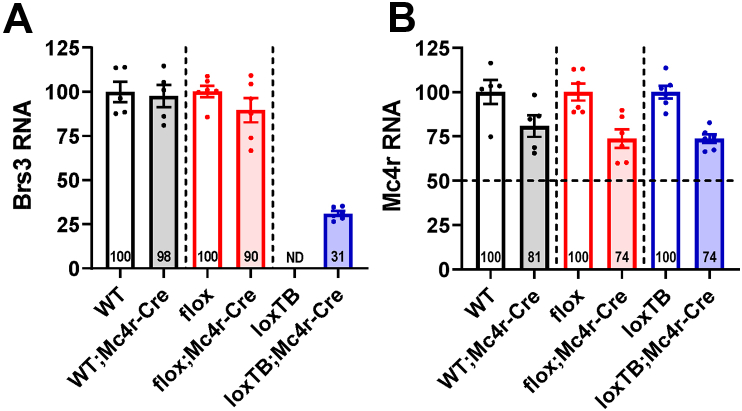
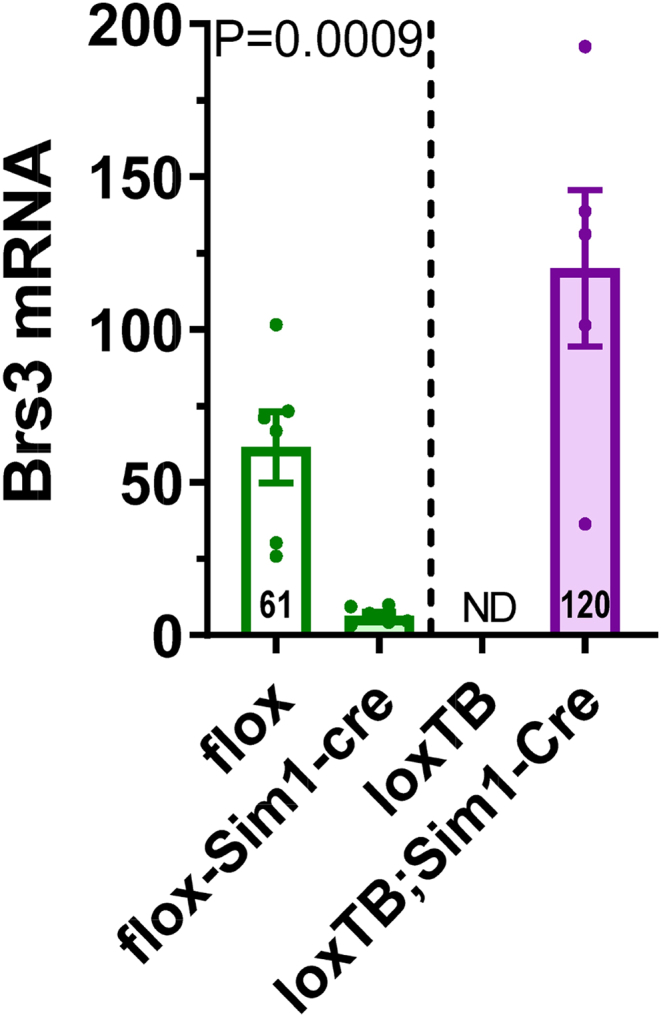
We studied energy metabolism in mice with Cre-mediated recombination causing 1) loss of BRS3 selectively in SIM1- or MC4R-expressing neurons or 2) selective re-expression of BRS3 from a null background in these neurons.
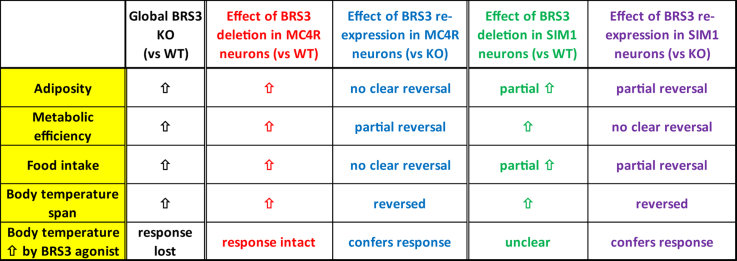
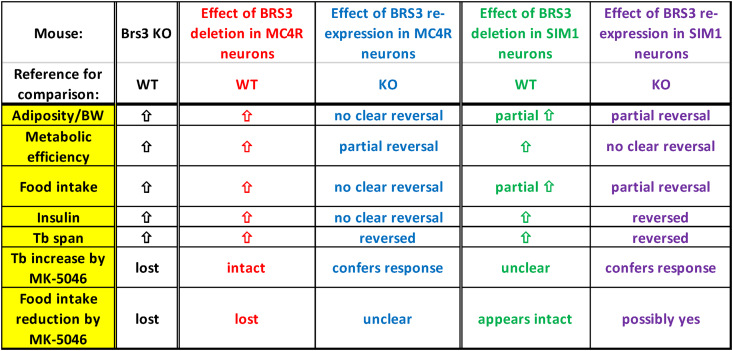
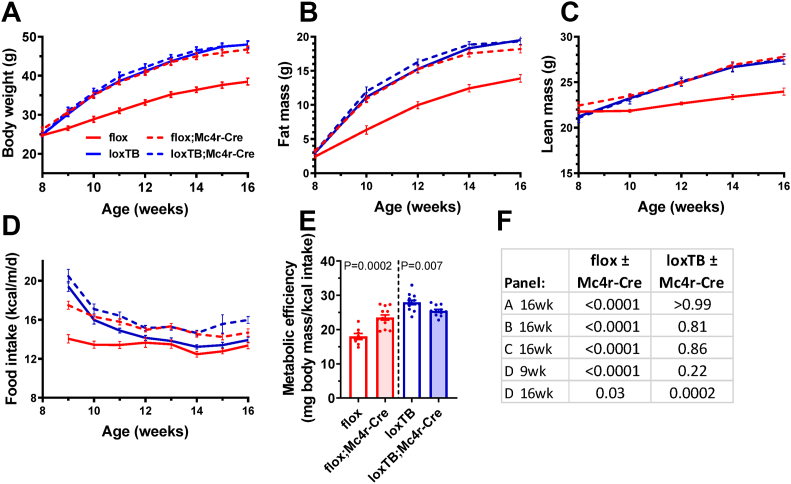
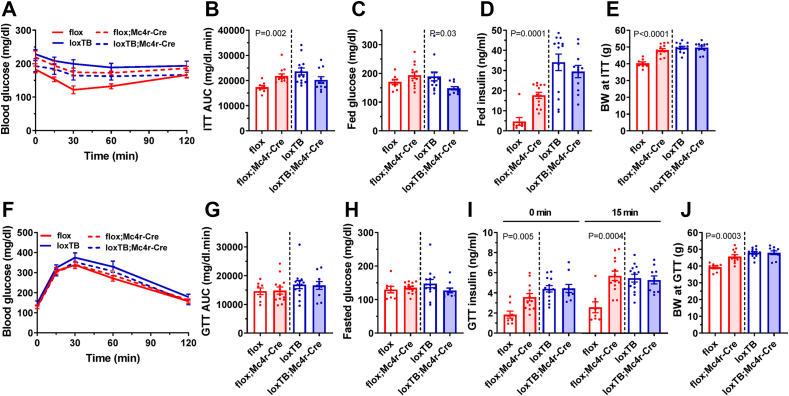
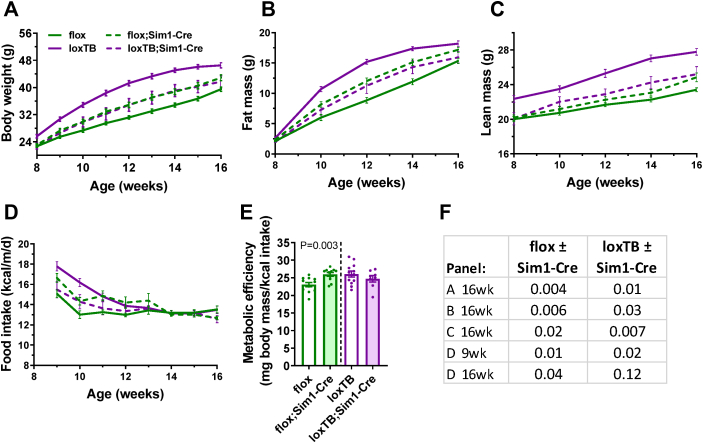
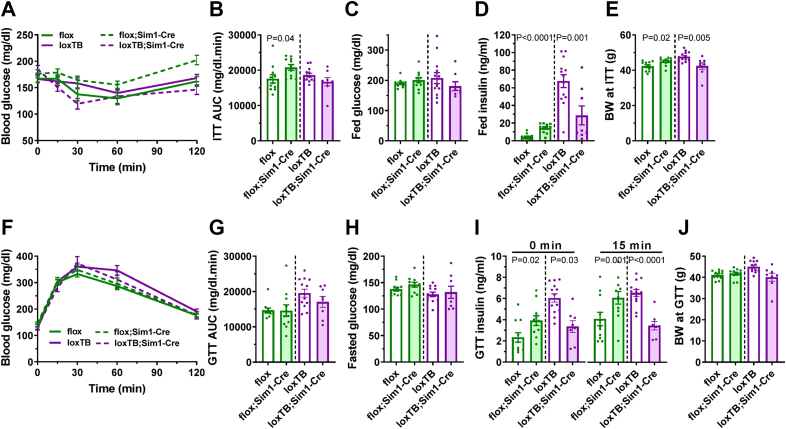
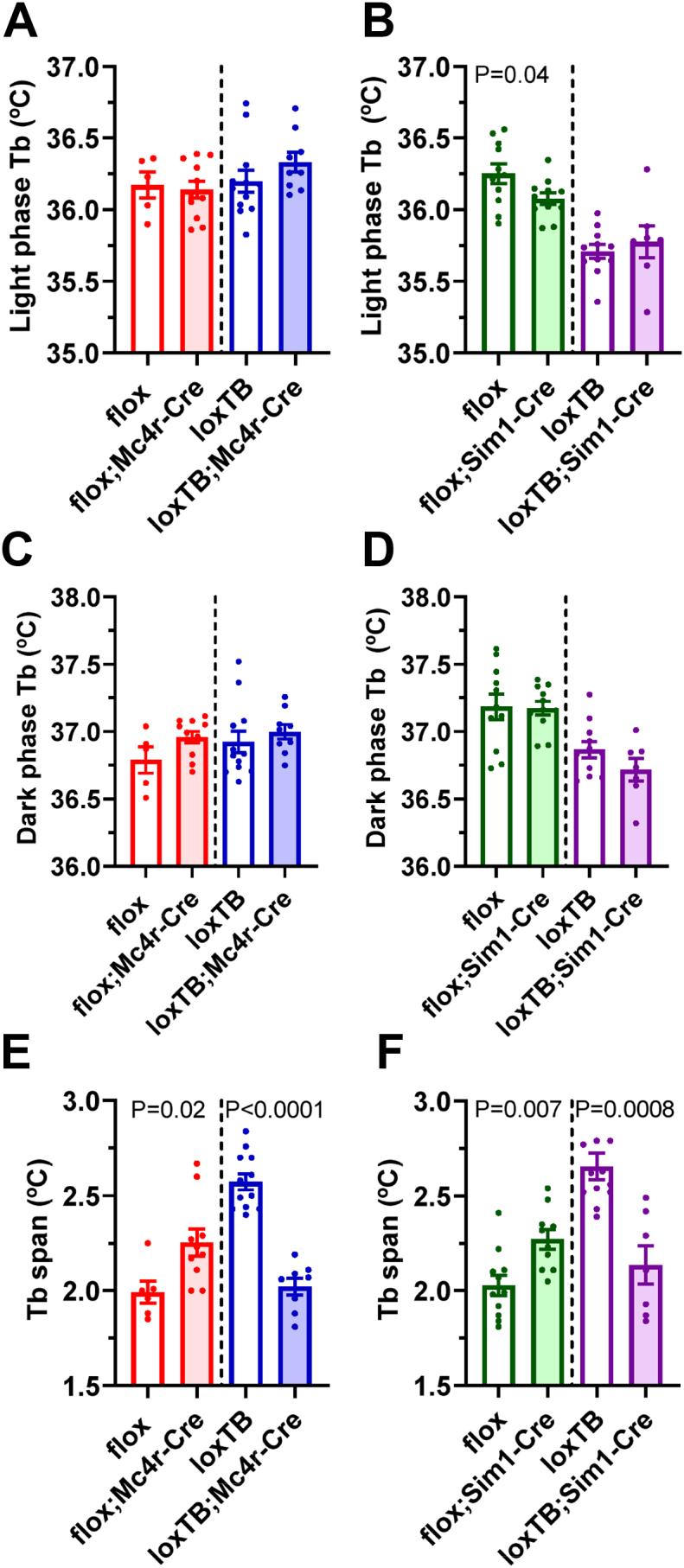
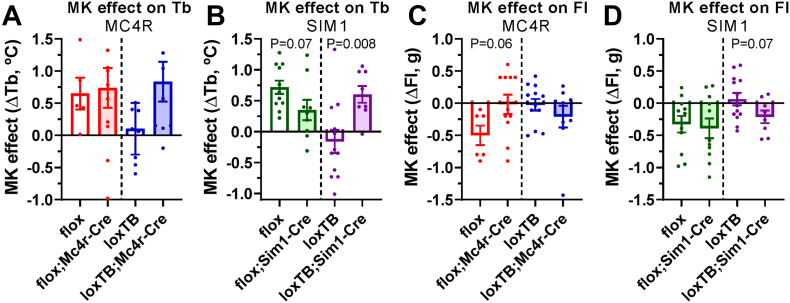
The deletion of BRS3 in MC4R neurons increased body weight/adiposity, metabolic efficiency, and food intake, and reduced insulin sensitivity. BRS3 re-expression in these neurons caused partial or no reversal of these traits. However, these observations were confounded by an obesity phenotype caused by the Mc4r-Cre allele, independent of its recombinase activity. The deletion of BRS3 in SIM1 neurons increased body weight/adiposity and food intake, but not to the levels of the global null. The re-expression of BRS3 in SIM1 neurons reduced body weight/adiposity and food intake, but not to wild type levels. The deletion of BRS3 in either MC4R- or SIM1-expressing neurons affected body temperature, with re-expression in either population reversing the null phenotype. MK-5046, a BRS3 agonist, increases light phase body temperature in wild type, but not Brs3 null, mice and BRS3 re-expression in either population restored response to MK-5046.
BRS3 in both MC4R- and SIM1-expressing neurons contributes to regulation of body weight/adiposity, insulin sensitivity, food intake, and body temperature.
胃泌素释放肽样受体3(BRS3)是一种孤儿受体,Brs3基因敲除小鼠会出现肥胖,伴有食物摄入量增加、静息代谢率和体温降低。本研究对导致这些效应的神经元群体进行了检测。
我们研究了通过Cre介导的重组作用使以下情况的小鼠的能量代谢:1)在表达SIM1或MC4R的神经元中选择性缺失BRS3;2)在这些神经元中从无效背景选择性重新表达BRS3。
MC4R神经元中BRS3的缺失增加了体重/肥胖程度、代谢效率和食物摄入量,并降低了胰岛素敏感性。这些神经元中BRS3的重新表达导致这些特征部分或未得到逆转。然而,这些观察结果因Mc4r - Cre等位基因导致的肥胖表型而混淆,该表型与其重组酶活性无关。SIM1神经元中BRS3的缺失增加了体重/肥胖程度和食物摄入量,但未达到整体无效水平。SIM1神经元中BRS3的重新表达降低了体重/肥胖程度和食物摄入量,但未恢复到野生型水平。在表达MC4R或SIM1的神经元中BRS3的缺失均影响体温,在这两种神经元群体中重新表达均可逆转无效表型。BRS3激动剂MK - 5046可增加野生型小鼠而非Brs3基因敲除小鼠的明相体温,在这两种神经元群体中重新表达BRS3均可恢复对MK - 5046的反应。
表达MC4R和SIM1的神经元中的BRS3均有助于调节体重/肥胖程度、胰岛素敏感性、食物摄入量和体温。