Department of Medical Genetics, University of Cambridge, Cambridge Institute for Medical Research, Wellcome Trust/MRC Building, Cambridge Biomedical Campus, Hills Road, Cambridge CB2 0XY, UK.
Department of Physiology, Development and Neuroscience, University of Cambridge, Downing Street, Cambridge CB2 3DY, UK.
Open Biol. 2018 Oct 24;8(10):180106. doi: 10.1098/rsob.180106.
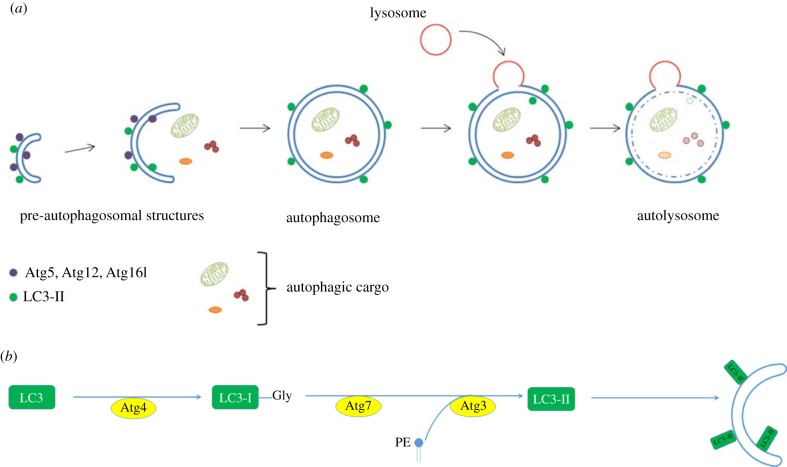
Autophagy is an intracellular clearance pathway that delivers cytoplasmic contents to the lysosome for degradation. It plays a critical role in maintaining protein homeostasis and providing nutrients under conditions where the cell is starved. It also helps to remove damaged organelles and misfolded or aggregated proteins. Thus, it is not surprising that defects in this pathway are associated with a variety of pathological conditions, such as neurodegeneration, cancer and infection. Pharmacological upregulation of autophagy is considered a promising therapeutic strategy for the treatment of neurodegenerative and infectious diseases. Studies in knockout mice have demonstrated that autophagy is essential for nervous system function, and data from invertebrate and vertebrate models suggest that the efficiency of autophagic processes generally declines with age. However, much of our understanding of the intracellular regulation of autophagy comes from studies, and there is a paucity of knowledge about how this process is regulated within different tissues and during the processes of ageing and disease. Here, we review the available tools to probe these questions within vertebrate model systems. We discuss how these tools have been used to date and consider future avenues of research.
自噬是一种细胞内清除途径,可将细胞质内容物递送至溶酶体进行降解。它在细胞饥饿时维持蛋白质平衡和提供营养物质方面发挥着关键作用。它还有助于清除受损的细胞器以及错误折叠或聚集的蛋白质。因此,这条途径的缺陷与多种病理状况(如神经退行性疾病、癌症和感染)有关,这并不奇怪。自噬的药理学上调被认为是治疗神经退行性和感染性疾病的有前途的治疗策略。敲除小鼠的研究表明,自噬对于神经系统功能至关重要,无脊椎动物和脊椎动物模型的数据表明,自噬过程的效率通常随着年龄的增长而降低。然而,我们对自噬的细胞内调控的了解大多来自于研究,而对于这一过程在不同组织以及衰老和疾病过程中是如何被调控的,我们知之甚少。在这里,我们回顾了可用于在脊椎动物模型系统中探究这些问题的现有工具。我们讨论了迄今为止这些工具的使用情况,并考虑了未来的研究途径。