Department of Medical Genetics, Cambridge Institute for Medical Research, Wellcome/MRC Building, Addenbrooke's Hospital, Hills Road, Cambridge CB2 2XY, UK.
Exp Neurol. 2012 Nov;238(1):22-8. doi: 10.1016/j.expneurol.2010.11.003. Epub 2010 Nov 21.
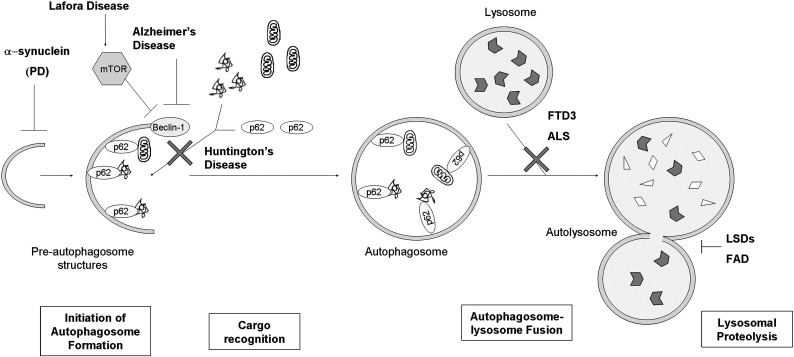
The accumulation of misfolded proteins in insoluble aggregates within the neuronal cytoplasm is one of the common pathological hallmarks of most adult-onset human neurodegenerative diseases. The clearance of these misfolded proteins may represent a promising therapeutic strategy in these diseases. The two main routes for intracellular protein degradation are the ubiquitin-proteasome and the autophagy-lysosome pathways. In this review, we will focus on the autophagic pathway, by providing some examples of how impairment at different steps in this degradation pathway is related to different neurodegenerative diseases. We will also consider that upregulating autophagy may be useful in the treatment of some of these diseases. Finally, we discuss how antioxidants, which have been considered to be beneficial in neurodegenerative diseases, can block autophagy, thus potentially compromising their therapeutic potential.
蛋白质在神经元细胞质内的不溶性聚集体中的错误折叠积累是大多数成人发病的人类神经退行性疾病的共同病理特征之一。清除这些错误折叠的蛋白质可能代表这些疾病有希望的治疗策略。细胞内蛋白质降解的两个主要途径是泛素蛋白酶体途径和自噬溶酶体途径。在这篇综述中,我们将重点介绍自噬途径,通过提供一些例子来说明该降解途径的不同步骤的损伤如何与不同的神经退行性疾病有关。我们还将考虑上调自噬可能对治疗其中一些疾病有用。最后,我们讨论了抗氧化剂如何在神经退行性疾病中被认为是有益的,它们可以阻断自噬,从而潜在地损害它们的治疗潜力。