Department of Public Health and Infectious Diseases, Sapienza University of Rome, Rome, Italy.
Department of Infectious Diseases, National Institute of Health, Rome, Italy.
PLoS One. 2018 Oct 24;13(10):e0205147. doi: 10.1371/journal.pone.0205147. eCollection 2018.
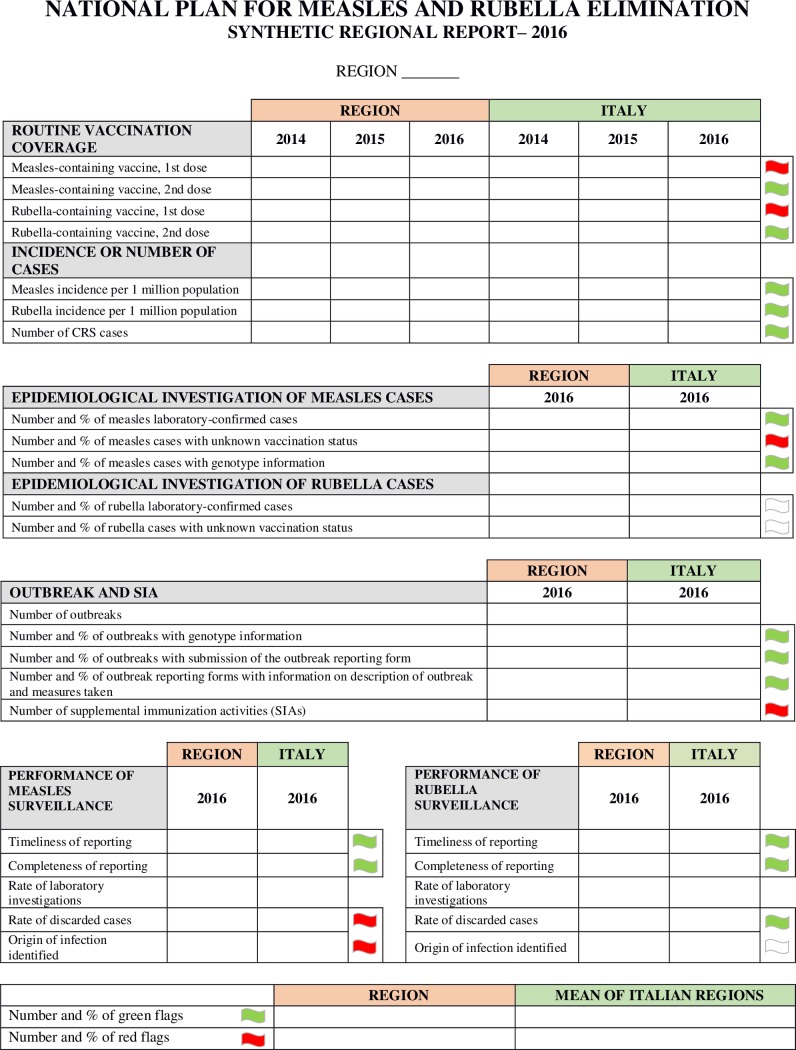
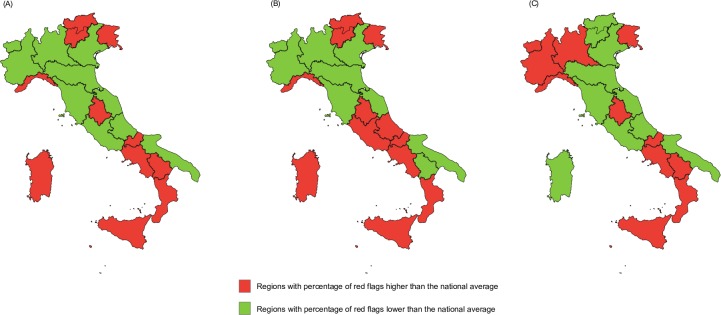
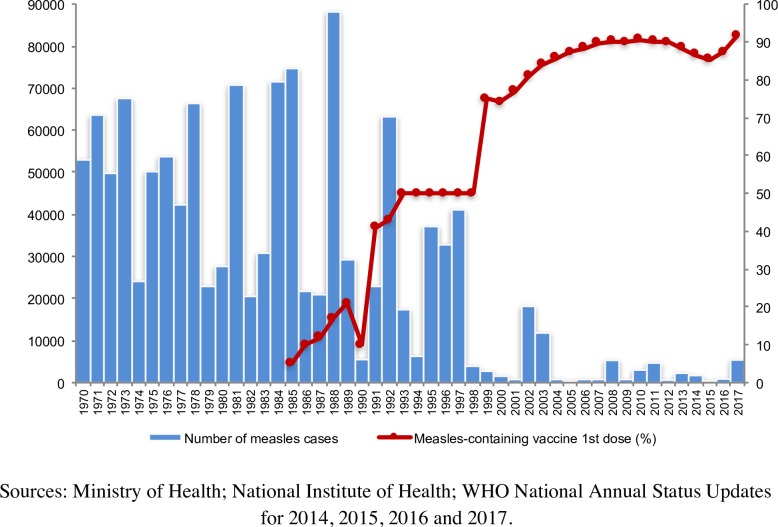
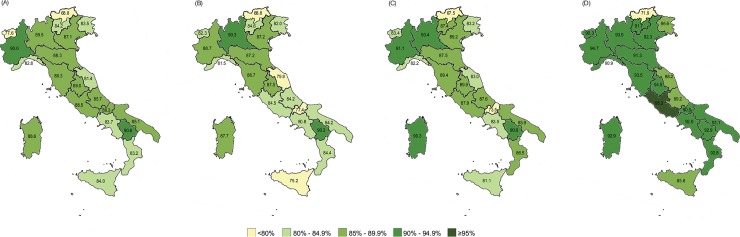
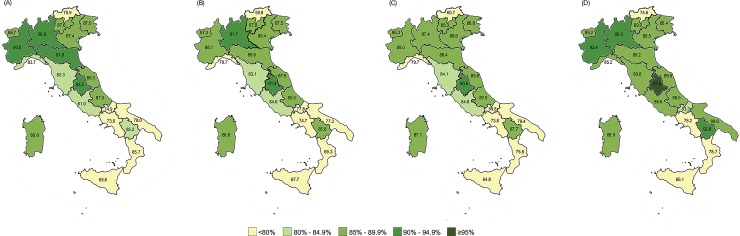
Although most countries in the WHO European Region were verified in 2017 as having interrupted endemic measles transmission, nine countries were still endemic. Among these, Italy accounted for the second highest number of measles cases reported in Europe in 2017. The elimination of measles is verified at national level by each country's National Verification Committee (NVC) through the production of an Annual Status Update (ASU). Since in Italy decentralization has led to an inhomogeneous implementation of immunization strategies among the 21 administrative Regions, the Italian NVC proposed that measles elimination should also be documented at the subnational level through regional ASUs and Synthetic Regional Reports (SRRs). The regional ASUs and the SRRs for 2014, 2015 and 2016 were produced and appraised by the NVC to evaluate the Regions' performances in each individual year as well as over the whole period. A specific analysis of vaccination coverage, including official immunization data for 2017, was performed. Moreover, the measles epidemic of 2017 was examined. Firstly, in the period 2014-2016, low immunization rates were registered in most Regions. Sixty-three per cent of southern Regions reported rates below the national mean and an overall low-quality performance. The approval of Italy's mandatory vaccination law in 2017 resulted in a marked increase in vaccination coverage; however, this increase was not homogeneous among Regions. Secondly, more than 50% of Regions did not report any supplemental immunization activity (SIA) for the period 2014-2016. Thirdly, from 2014 to 2016, fewer than one-third of Regions improved their reporting of outbreaks. Finally, over the study period, only two Regions reached the target required by the WHO for measles laboratory investigations. In countries with decentralized health policies, subnational monitoring can help identify local barriers to measles elimination. In Italy it has highlighted the need for further SIAs and a stronger surveillance system.
虽然 2017 年世界卫生组织欧洲区域大多数国家已证实消除了地方性麻疹传播,但仍有 9 个国家存在地方性麻疹。在这些国家中,意大利报告的 2017 年欧洲麻疹病例数位居第二。国家验证委员会(NVC)通过编写年度现状更新(ASU),在国家层面验证消除麻疹情况。由于意大利权力下放导致 21 个行政区之间免疫策略实施不一致,意大利 NVC 提议通过地区 ASU 和综合地区报告(SRR)在次国家层面记录消除麻疹情况。NVC 编写和评估了 2014、2015 和 2016 年的地区 ASU 和 SRR,以评估各地区每年和整个期间的表现。对疫苗接种覆盖率进行了专门分析,包括 2017 年的官方免疫数据。此外,还检查了 2017 年的麻疹疫情。首先,在 2014-2016 年期间,大多数地区的免疫率较低。63%的南部地区报告的免疫率低于全国平均水平,整体表现不佳。2017 年意大利强制性疫苗接种法的批准导致疫苗接种率显著提高;然而,各地区之间的增加并不均衡。其次,超过 50%的地区在 2014-2016 年期间未报告任何补充免疫活动(SIA)。第三,从 2014 年到 2016 年,不到三分之一的地区改进了疫情报告。最后,在研究期间,只有两个地区达到了世界卫生组织对麻疹实验室调查的目标要求。在权力下放的卫生政策国家,次国家监测可以帮助确定消除麻疹的地方障碍。在意大利,它突出表明需要进一步开展补充免疫活动和加强监测系统。