Cherrez-Ojeda Ivan, Vanegas Emanuel, Felix Miguel, Mata Valeria L, Cherrez Annia
Universidad Espíritu Santo, Km. 2.5 vía La Puntilla, 0901-952, Samborondon, Guayaquil, Ecuador.
Respiralab, Respiralab Research Group, Guayaquil, Ecuador.
BMC Dermatol. 2018 Oct 25;18(1):8. doi: 10.1186/s12895-018-0077-x.
Despite the current knowledge of UV, there is a lack of consensus among diagnostic criteria and management. In general, antihistamine therapy is regularly used for the symptomatic management of pruritus but does not control inflammation or alter the course of the disease. Monoclonal antibodies such as omalizumab (anti-IgE) have been proposed as a potential treatment for urticarial vasculitis. A few studies have reported the benefits of omalizumab in patient-reported outcome measures (PROMs). Herein we describe a female patient with urticarial vasculitis who was treated with omalizumab. We discuss the response to treatment and possible implications of PROMs in guiding the management of the disease.
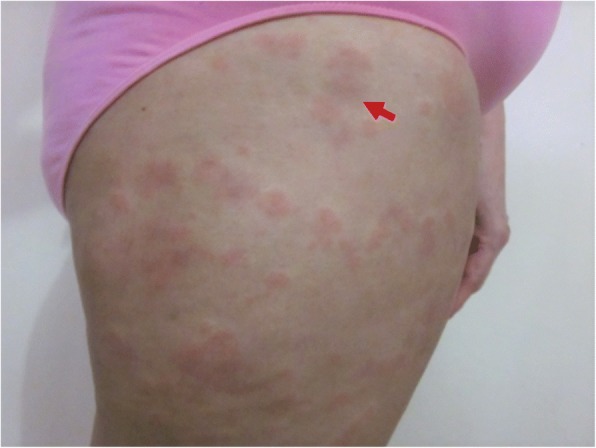
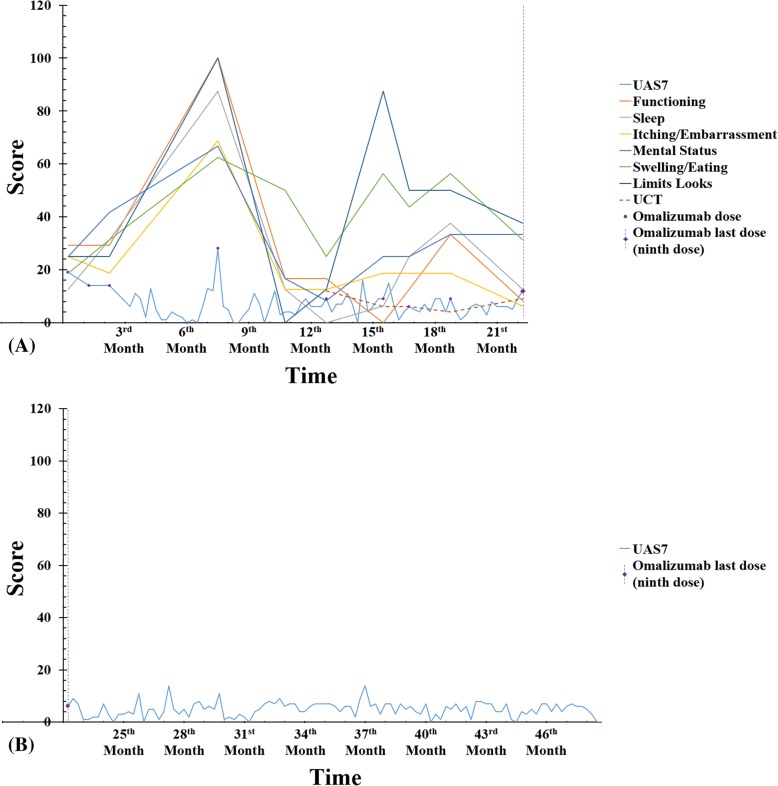
We describe the case of a 57-year-old woman with a diagnosis of urticarial vasculitis. Due to lack of response to first-line treatment and the severity of the disease, treatment with omalizumab was initiated. Omalizumab 150 mg was administered every four weeks for three months. Second-generation antihistamines were used as needed. Both CU-Q2oL and UAS 7 improved. After three-month therapy with omalizumab, disease severity improved from moderate severity (UAS7 = 19) to well controlled (UAS7 = 6). However, 5 months after the last administration of omalizumab, the patient complained of worsening symptoms and active disease with quality of life impairment. A single dose of omalizumab (150 mg) was prescribed with corticosteroids. Thereafter, the patient presented a disease activity and quality of life with a fluctuating pattern that was controlled with additional doses of omalizumab.
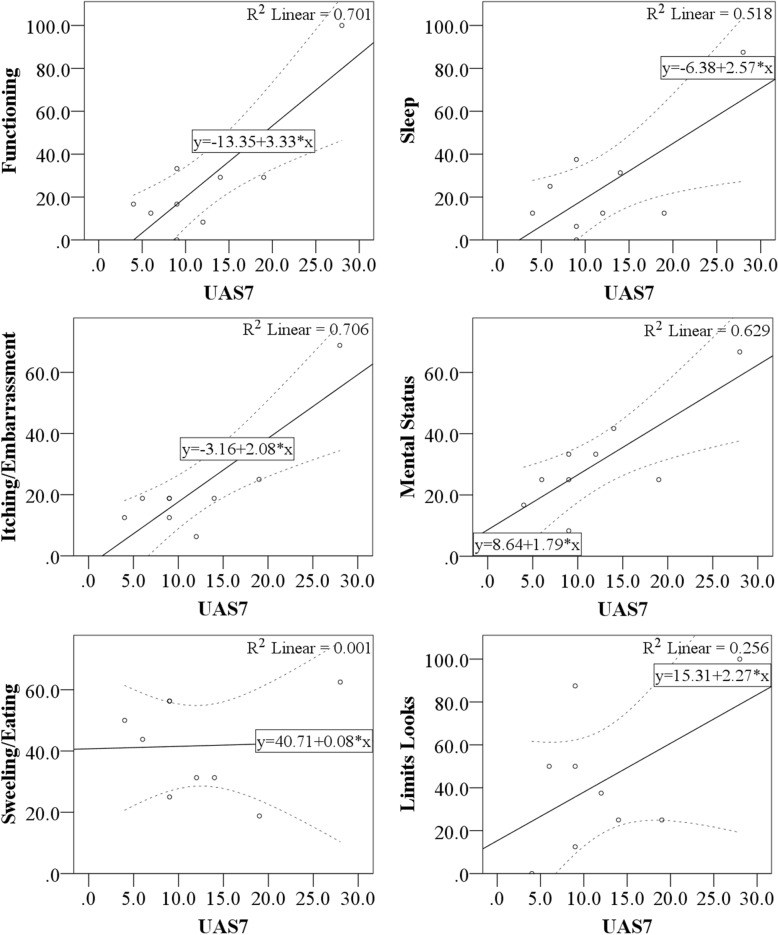
In chronic urticaria, patient-reported outcome measures (PROMs) are important for assessing disease status and the impact of symptoms on patients' lives. However, to our knowledge, there is no validated tool to measure such outcomes in UV patients. Although UAS7 and CU-Q2oL were not designed for UV assessment, they might be useful in the clinical setting as objective measures to determine treatment efficacy. However, some domains in the CU-Q2oL questionnaires do not correlate well with UAS7, which might serve as a relative indication to continue treatment despite disease severity improvement. Based on our observations, we believe omalizumab 150 mg might be a feasible therapeutic alternative when first-line treatment is unsuccessful.
尽管目前对紫外线已有一定了解,但在诊断标准和治疗方面仍缺乏共识。一般来说,抗组胺药常用于瘙痒症状的对症治疗,但无法控制炎症或改变疾病进程。单克隆抗体如奥马珠单抗(抗IgE)已被提议作为荨麻疹性血管炎的一种潜在治疗方法。一些研究报告了奥马珠单抗在患者报告结局指标(PROMs)方面的益处。在此,我们描述一位接受奥马珠单抗治疗的荨麻疹性血管炎女性患者。我们讨论了治疗反应以及PROMs在指导该疾病管理中的可能意义。
我们描述了一名57岁诊断为荨麻疹性血管炎的女性患者。由于对一线治疗无反应且疾病严重,开始使用奥马珠单抗治疗。每四周给予奥马珠单抗150mg,持续三个月。根据需要使用第二代抗组胺药。慢性荨麻疹生活质量问卷(CU-Q2oL)和荨麻疹活动度评分(UAS 7)均有所改善。经过三个月的奥马珠单抗治疗,疾病严重程度从中度(UAS7 = 19)改善至控制良好(UAS7 = 6)。然而,在最后一次使用奥马珠单抗5个月后,患者抱怨症状恶化且疾病活动,生活质量受损。给予一剂奥马珠单抗(150mg)并联合使用皮质类固醇。此后,患者的疾病活动度和生活质量呈现波动模式,通过额外剂量的奥马珠单抗得以控制。
在慢性荨麻疹中,患者报告结局指标对于评估疾病状态以及症状对患者生活的影响很重要。然而,据我们所知,尚无经过验证的工具来测量荨麻疹性血管炎患者的此类结局。尽管UAS7和CU-Q2oL并非专为荨麻疹性血管炎评估而设计,但在临床环境中,它们可能作为确定治疗效果的客观指标有用。然而,CU-Q2oL问卷中的一些领域与UAS7的相关性不佳,这可能是尽管疾病严重程度有所改善仍继续治疗的一个相对指标。基于我们的观察,我们认为当一线治疗失败时,150mg奥马珠单抗可能是一种可行的治疗选择。