Faculty of Engineering, Department of Chemical Engineering, South Kensington Campus, Imperial College London, London, SW7 2AZ, United Kingdom.
Imaging Department, Charing Cross Hospital, Imperial College Healthcare NHS Trust, London, W6 8RF, United Kingdom.
Sci Rep. 2018 Oct 25;8(1):15810. doi: 10.1038/s41598-018-34082-7.
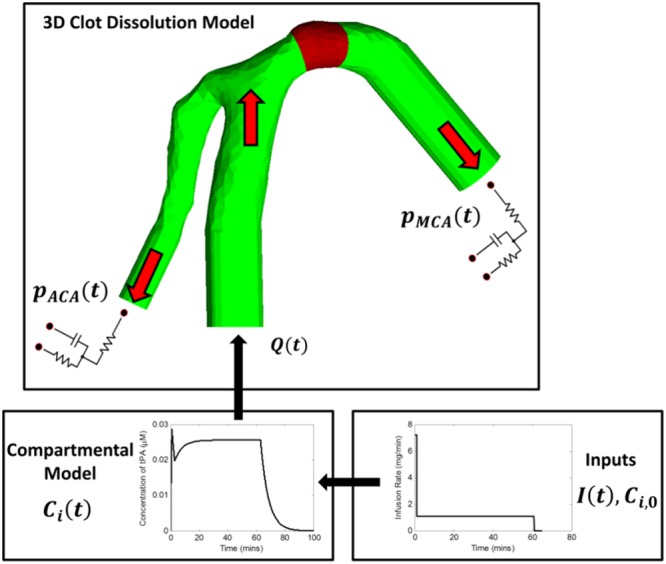
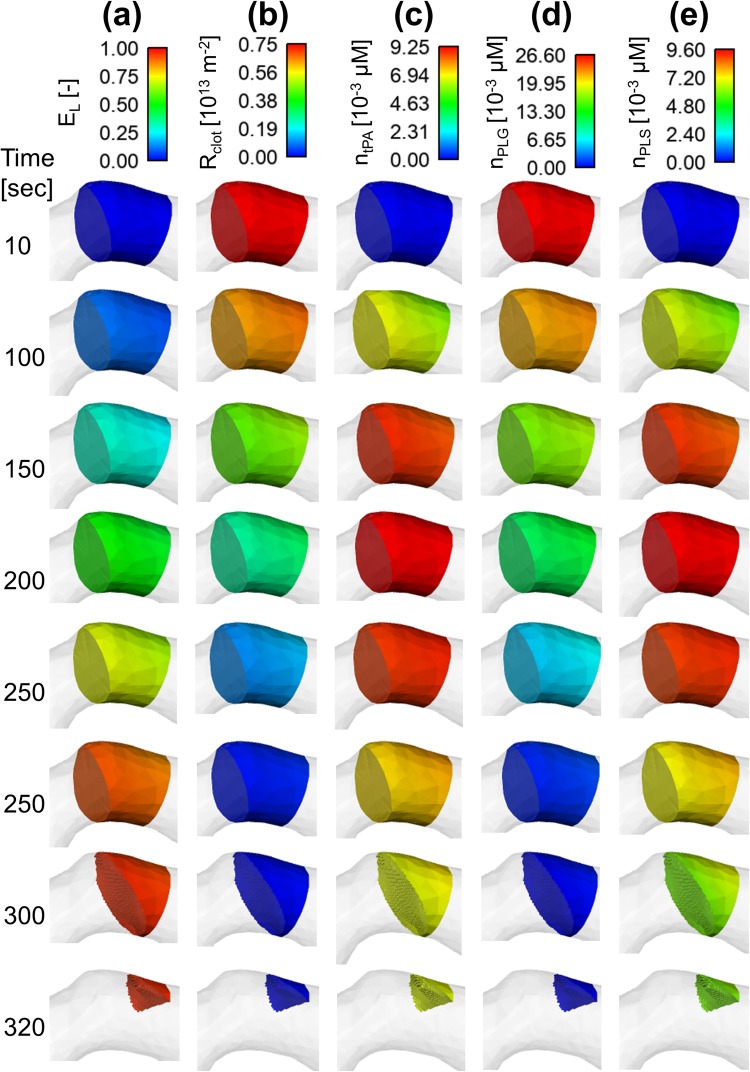
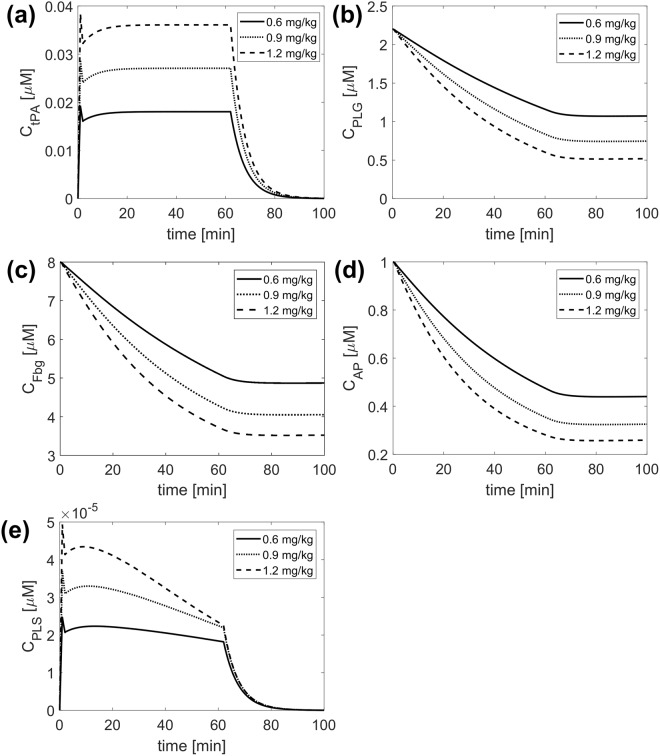
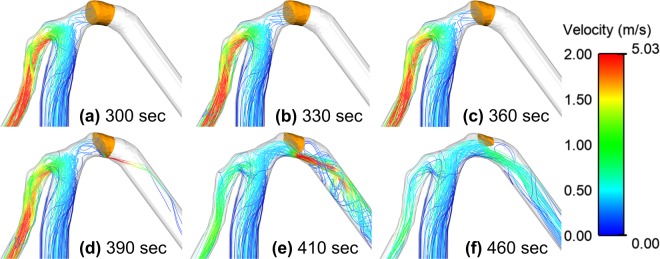
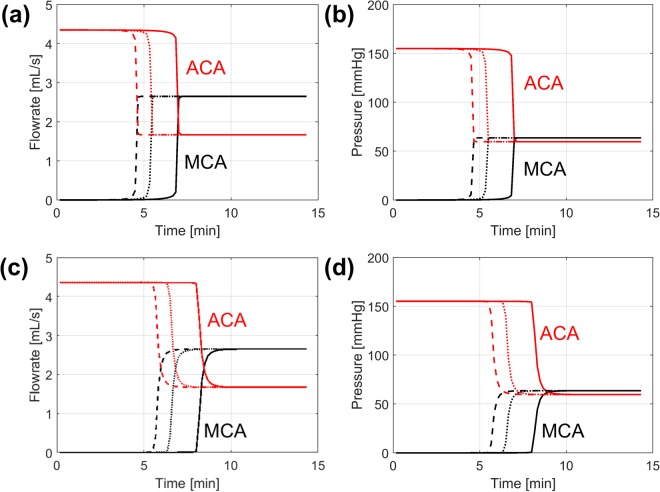
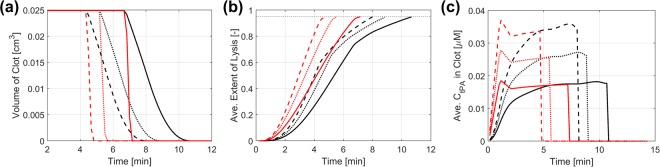
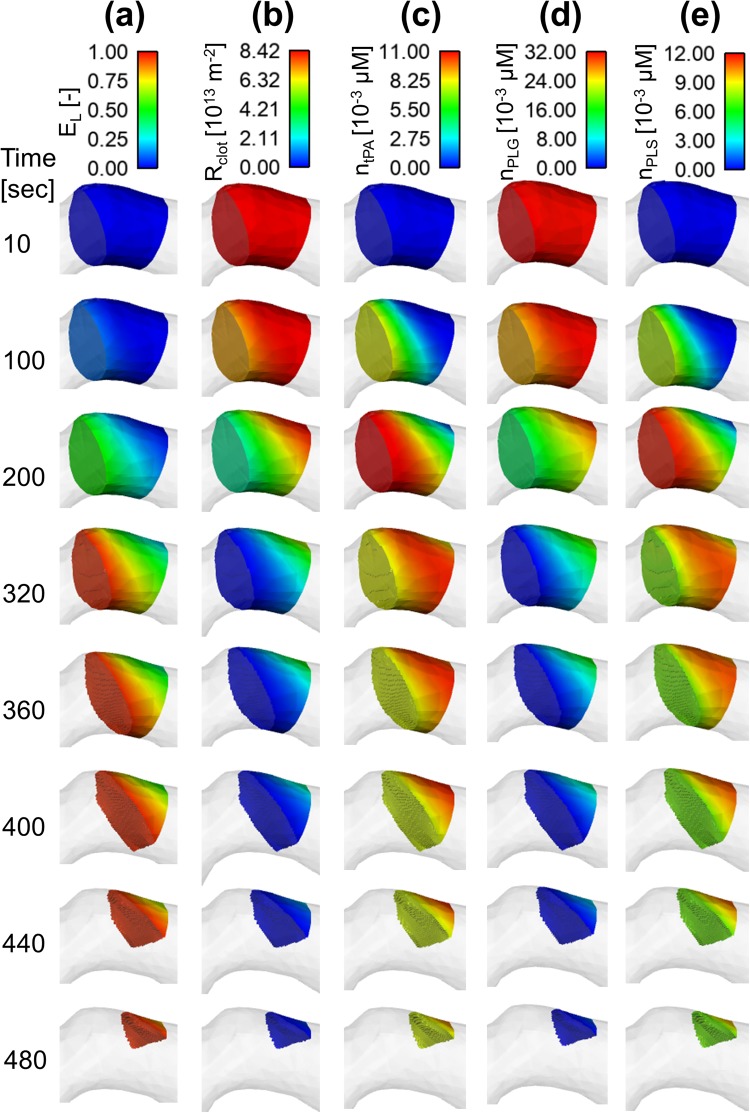
Ischaemic stroke can occur when an artery to the brain is blocked by a blood clot. The use of thrombolytic agents, such as tissue plasminogen activator (tPA), to dissolve the occluding clot is limited by the risk of intracerebral haemorrhage (ICH), a known side effect associated with tPA. We developed a computational thrombolysis model for a 3D patient-specific artery coupled with a compartmental model for temporal concentrations of tPA and lysis proteins during intravenous infusion of tPA, in order to evaluate the effects of tPA dose on the efficacy of thrombolytic therapy and the risk of ICH. The model was applied to a 3-mm-long fibrin clot with two different fibrin fibre radii in the middle cerebral artery (MCA) - a setting relevant to ischaemic stroke, and results for different tPA dose levels and fibrin fibre radii were compared. Our simulation results showed that clot lysis was accelerated at higher tPA doses at the expense of a substantial increase in the risk of ICH. It was also found that a fine clot with a smaller fibre radius dissolved much slowly than a coarse clot due to a slower tPA penetration into the clots.
当大脑中的动脉被血栓阻塞时,就会发生缺血性中风。使用溶栓药物,如组织型纤溶酶原激活剂(tPA),来溶解阻塞的血栓受到脑出血(ICH)风险的限制,这是与 tPA 相关的已知副作用。我们开发了一种针对特定患者的 3D 动脉的计算性溶栓模型,同时结合了在静脉输注 tPA 期间 tPA 和溶蛋白的时间浓度的室模型,以评估 tPA 剂量对溶栓治疗效果和 ICH 风险的影响。该模型应用于大脑中动脉(MCA)中具有两种不同纤维半径的 3 毫米长纤维蛋白凝块 - 这与缺血性中风相关,并且比较了不同 tPA 剂量水平和纤维半径的结果。我们的模拟结果表明,在较高的 tPA 剂量下,血栓溶解加速,但脑出血的风险大大增加。还发现,由于 tPA 向凝块的渗透速度较慢,因此具有较小纤维半径的细凝块的溶解速度比粗凝块慢得多。