IMUNOREG-Grupo de Pesquisa em Regulação da Resposta Imune, Laboratório de Pesquisas em Virologia e Imunologia, Instituto de Ciências Biológicas e da Saúde, Universidade Federal de Alagoas, Maceió, Brazil.
Laboratório de Imunobiologia dos Transplantes, Departamento de Imunologia, Instituto de Ciências Biomédicas, Universidade de São Paulo, São Paulo, Brazil.
Front Cell Infect Microbiol. 2018 Oct 10;8:345. doi: 10.3389/fcimb.2018.00345. eCollection 2018.
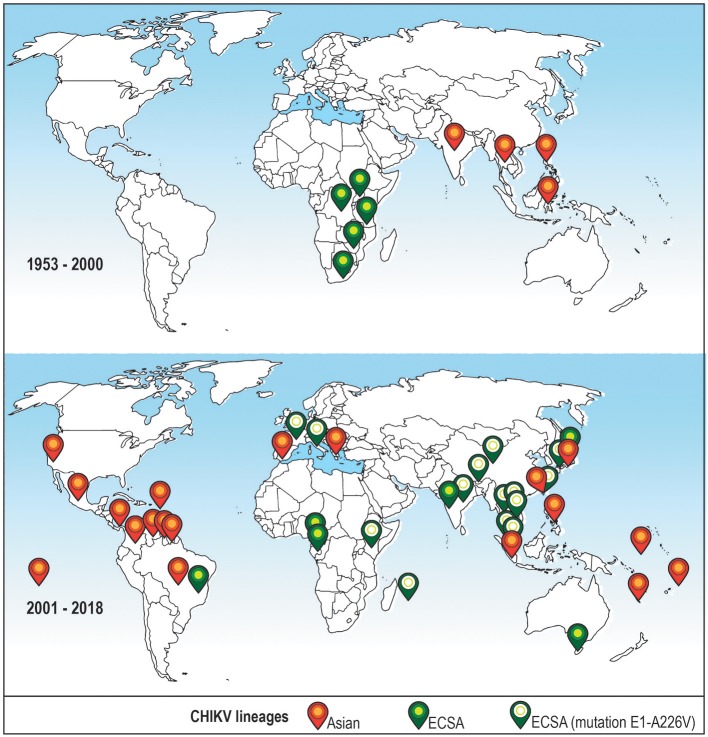
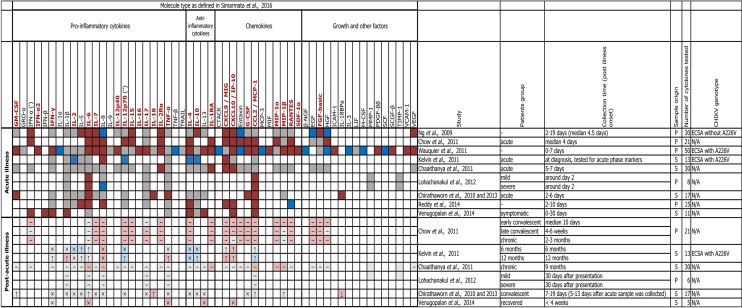
Chikungunya virus (CHIKV) is a re-emergent arthropod-borne virus (arbovirus) that causes a disease characterized primarily by fever, rash and severe persistent polyarthralgia. In the last decade, CHIKV has become a serious public health problem causing several outbreaks around the world. Despite the fact that CHIKV has been around since 1952, our knowledge about immunopathology, innate and adaptive immune response involved in this infectious disease is incomplete. In this review, we provide an updated summary of the current knowledge about immune response to CHIKV and about soluble immunological markers associated with the morbidity, prognosis and chronicity of this arbovirus disease. In addition, we discuss the progress in the research of new vaccines for preventing CHIKV infection and the use of monoclonal antibodies as a promising therapeutic strategy.
基孔肯雅热病毒(CHIKV)是一种重新出现的节肢动物传播病毒(arbovirus),会引起以发热、皮疹和严重持续性多发性关节炎为主要特征的疾病。在过去十年中,CHIKV 已成为一个严重的公共卫生问题,在全球范围内引发了多次疫情。尽管 CHIKV 自 1952 年以来就已经存在,但我们对其免疫病理学、固有和适应性免疫反应的了解并不完整。在这篇综述中,我们提供了关于对 CHIKV 的免疫反应以及与这种虫媒病毒病的发病率、预后和慢性化相关的可溶性免疫标志物的最新知识总结。此外,我们还讨论了预防 CHIKV 感染的新型疫苗研究进展以及使用单克隆抗体作为一种有前途的治疗策略的进展。