Scatena Cristian, Roncella Manuela, Di Paolo Antonello, Aretini Paolo, Menicagli Michele, Fanelli Giovanni, Marini Carolina, Mazzanti Chiara Maria, Ghilli Matteo, Sotgia Federica, Lisanti Michael P, Naccarato Antonio Giuseppe
Department of Translational Research and New Technologies in Medicine and Surgery, University of Pisa, Pisa, Italy.
Breast Surgery Unit, Azienda Ospedaliero-Universitaria Pisana, Pisa, Italy.
Front Oncol. 2018 Oct 12;8:452. doi: 10.3389/fonc.2018.00452. eCollection 2018.
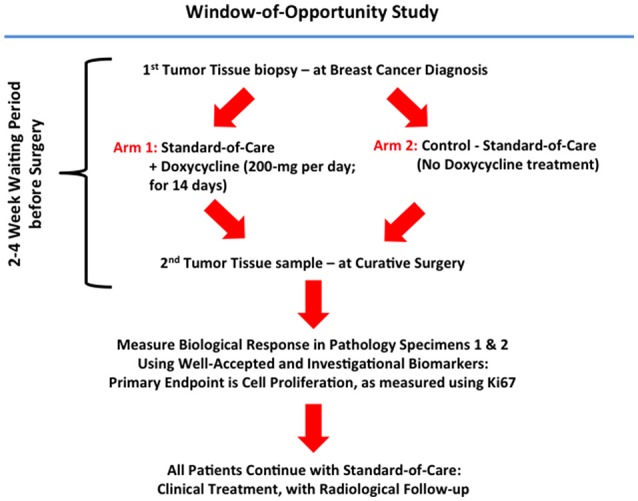
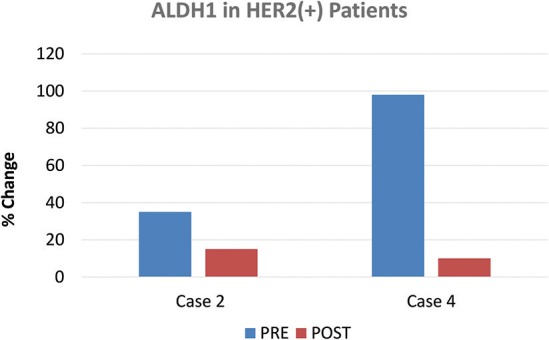
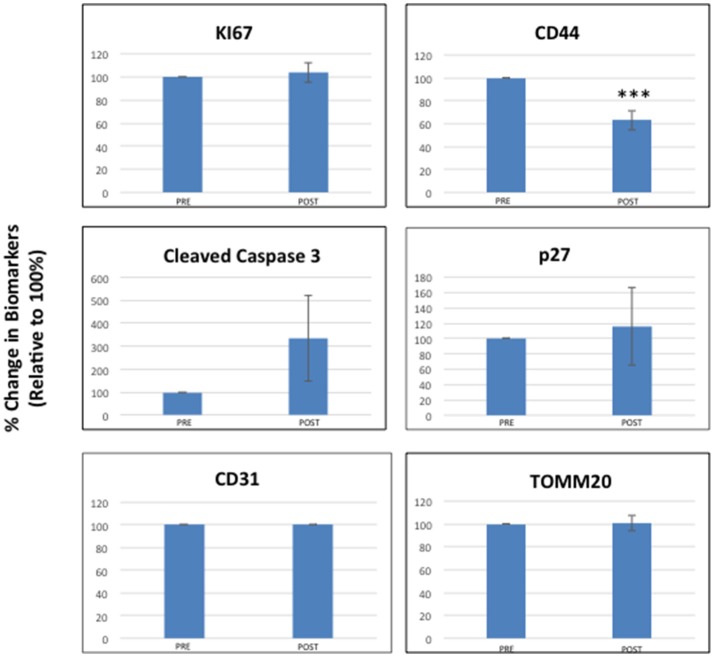
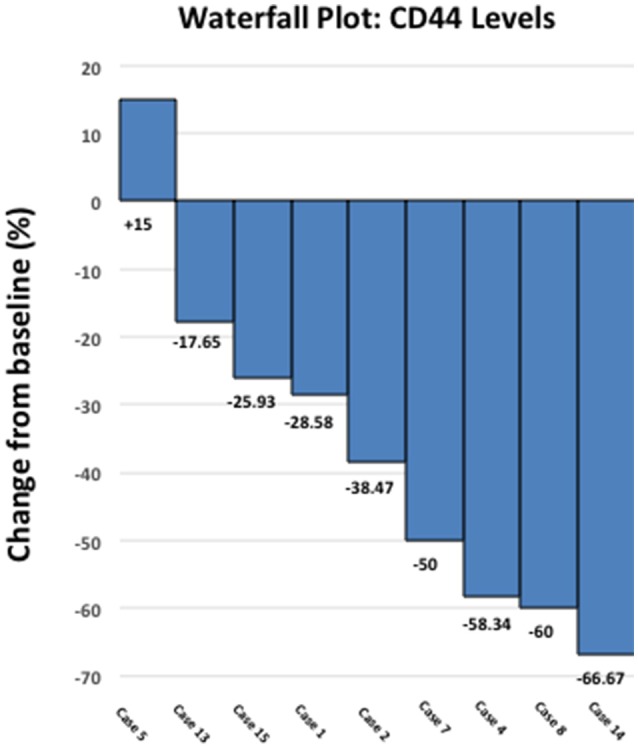
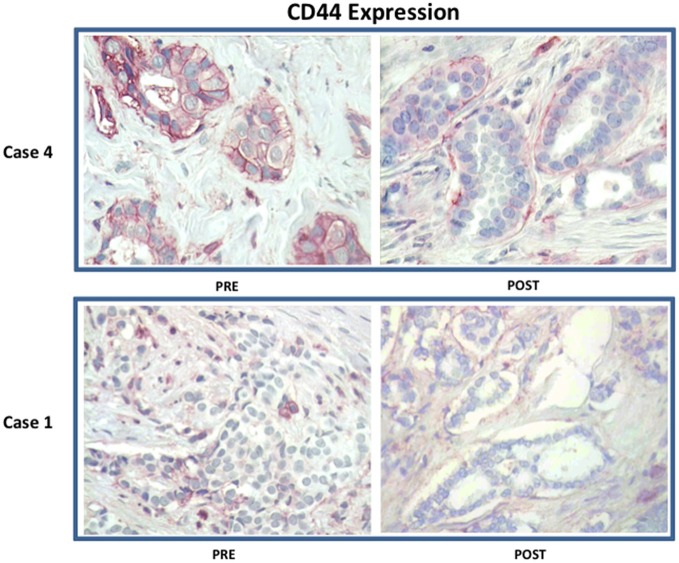
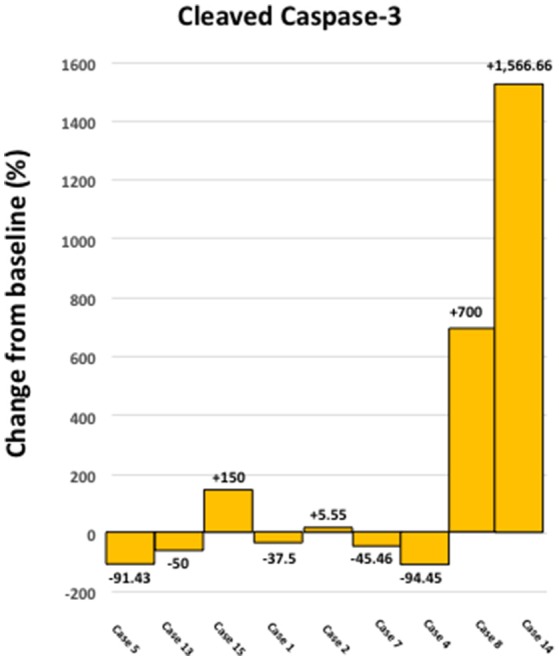
Cancer stem cells (CSCs) have been implicated in tumor initiation, recurrence, metastatic spread and poor survival in multiple tumor types, breast cancers included. CSCs selectively overexpress key mitochondrial-related proteins and inhibition of mitochondrial function may represent a new potential approach for the eradication of CSCs. Because mitochondria evolved from bacteria, many classes of FDA-approved antibiotics, including doxycycline, actually target mitochondria. Our clinical pilot study aimed to determine whether short-term pre-operative treatment with oral doxycycline results in reduction of CSCs in early breast cancer patients. Doxycycline was administered orally for 14 days before surgery for a daily dose of 200 mg. Immuno-histochemical analysis of formalin-fixed paraffin-embedded (FFPE) samples from 15 patients, of which 9 were treated with doxycycline and 6 were controls (no treatment), was performed with known biomarkers of "stemness" (CD44, ALDH1), mitochondria (TOMM20), cell proliferation (Ki67, p27), apoptosis (cleaved caspase-3), and neo-angiogenesis (CD31). For each patient, the analysis was performed both on pre-operative specimens (core-biopsies) and surgical specimens. Changes from baseline to post-treatment were assessed with MedCalc 12 (unpaired test) and ANOVA. Post-doxycycline tumor samples demonstrated a statistically significant decrease in the stemness marker CD44 (-value < 0.005), when compared to pre-doxycycline tumor samples. More specifically, CD44 levels were reduced between 17.65 and 66.67%, in 8 out of 9 patients treated with doxycycline. In contrast, only one patient showed a rise in CD44, by 15%. Overall, this represents a positive response rate of nearly 90%. Similar results were also obtained with ALDH1, another marker of stemness. In contrast, markers of mitochondria, proliferation, apoptosis, and neo-angiogenesis, were all similar between the two groups. Quantitative decreases in CD44 and ALDH1 expression are consistent with pre-clinical experiments and suggest that doxycycline can selectively eradicate CSCs in breast cancer patients . Future studies (with larger numbers of patients) will be conducted to validate these promising pilot studies.
癌症干细胞(CSCs)与多种肿瘤类型(包括乳腺癌)的肿瘤起始、复发、转移扩散及低生存率有关。CSCs选择性地过表达关键的线粒体相关蛋白,抑制线粒体功能可能是根除CSCs的一种新的潜在方法。由于线粒体是由细菌进化而来,许多类FDA批准的抗生素,包括强力霉素,实际上靶向线粒体。我们的临床初步研究旨在确定早期乳腺癌患者术前短期口服强力霉素治疗是否会使CSCs减少。在手术前口服强力霉素14天,每日剂量为200毫克。对15例患者的福尔马林固定石蜡包埋(FFPE)样本进行免疫组织化学分析,其中9例接受强力霉素治疗,6例为对照(未治疗),分析采用已知的“干性”(CD44、醛脱氢酶1)、线粒体(转运蛋白20)、细胞增殖(Ki67、p27)、细胞凋亡(裂解的半胱天冬酶-3)和新生血管生成(CD31)生物标志物。对每位患者,均在术前标本(芯针活检)和手术标本上进行分析。使用MedCalc 12(非配对检验)和方差分析评估从基线到治疗后的变化。与强力霉素治疗前的肿瘤样本相比,强力霉素治疗后的肿瘤样本显示干性标志物CD44有统计学显著下降(P值<0.005)。更具体地说,在9例接受强力霉素治疗的患者中,有8例患者的CD44水平降低了17.65%至66.67%。相比之下,只有1例患者的CD44升高了15%。总体而言,这代表了近90%的阳性反应率。另一个干性标志物醛脱氢酶1也得到了类似结果。相比之下,两组之间线粒体、增殖、细胞凋亡和新生血管生成的标志物均相似。CD44和醛脱氢酶1表达的定量下降与临床前实验一致,表明强力霉素可选择性地根除乳腺癌患者中的CSCs。未来将开展更多患者的研究以验证这些有前景的初步研究。