Sandford Fiona M, Sanders Thomas A, Wilson Hannah, Lewis Jeremy S
Guys and St Thomas' NHS Foundation Trust, Hand Therapy Department, London, UK.
King's College London, Department of Nutritional Sciences, London, UK.
BMJ Open Sport Exerc Med. 2018 Oct 19;4(1):e000414. doi: 10.1136/bmjsem-2018-000414. eCollection 2018.
Multicentre, double-blind, placebo-controlled randomised clinical trial.
To compare the effectiveness of long chain omega-3 polyunsaturated fatty acids (PUFAs) as part of the management for people diagnosed with rotator cuff related shoulder pain (RCRSP).
Although there is no robust evidence to support their use, omega-3 PUFAs have been recommended for those with tendinopathy due to their potential to moderate inflammation.
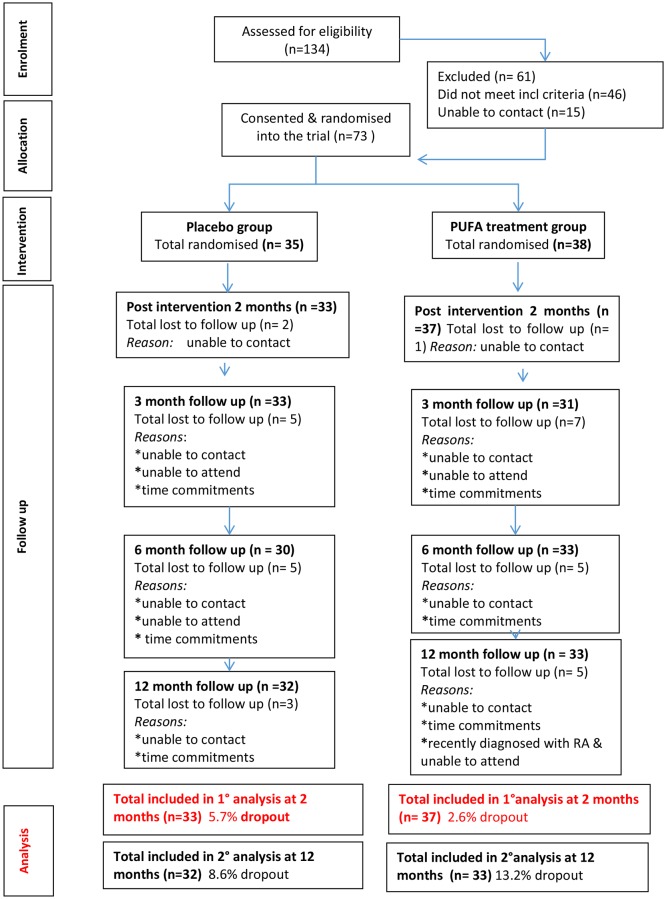
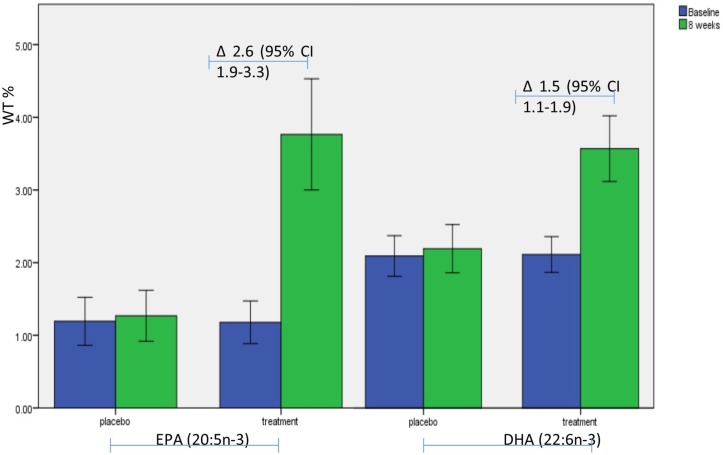
Participants with RCRSP (n=73) were randomised to take either nine MaxEPA capsules providing 1.53 g eicosapentaenoic acid, 1.04 g docosahexaenoic acid or nine matching placebo capsules containing oleic acid per day for 8 weeks. In addition, participants attended an exercise/education programme for 8 weeks. Participants were assessed at prerandomisation, 8 weeks (primary outcome point), 3 months, 6 months and 12 months (secondary outcome point). Primary outcome was the Oxford Shoulder Score (OSS). Secondary outcomes included the Shoulder Pain and Disability Index (SPADI), Patient Specific Functional Score, Euro Qol 5D-3L, Short Form 36, global rating of change and impairment measurements. Analysis was by intention to treat.
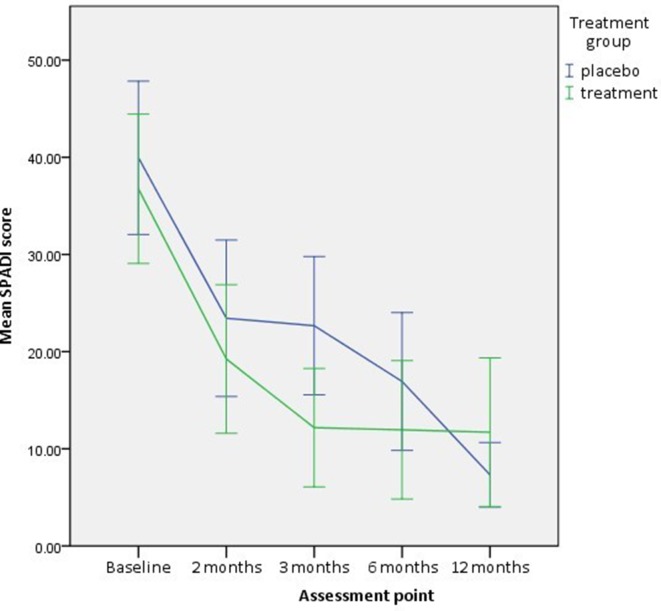
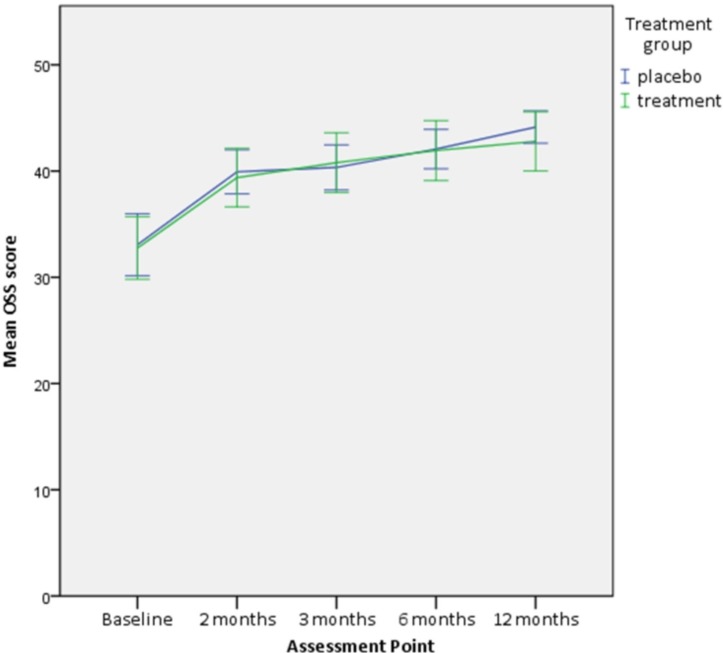
Difference in the change in the OSS between the two groups at 2 months was -0.1 (95% CI -2.6 to 2.5, p=0.95). The change in SPADI scores was -8.3 (95% CI -15.6 to -0.94, p=0.03, analysed by analysis of covariance adjusted for baseline) at 3 months.
Omega-3 PUFA supplementation may have a modest effect on disability and pain outcomes in RCRSP.
多中心、双盲、安慰剂对照随机临床试验。
比较长链ω-3多不饱和脂肪酸(PUFAs)作为诊断为肩袖相关肩部疼痛(RCRSP)患者治疗一部分的有效性。
尽管没有有力证据支持其使用,但ω-3 PUFAs因其具有减轻炎症的潜力,已被推荐用于患有肌腱病的患者。
RCRSP患者(n = 73)被随机分为两组,一组每天服用9粒MaxEPA胶囊,提供1.53克二十碳五烯酸、1.04克二十二碳六烯酸,另一组每天服用9粒含油酸的匹配安慰剂胶囊,持续8周。此外,参与者参加为期8周的运动/教育计划。在随机分组前、8周(主要结局点)、3个月、6个月和12个月(次要结局点)对参与者进行评估。主要结局是牛津肩部评分(OSS)。次要结局包括肩部疼痛和功能障碍指数(SPADI)、患者特定功能评分、欧洲五维健康量表5D-3L、简明健康调查问卷36项、整体变化评分和损伤测量。分析采用意向性分析。
两组在2个月时OSS变化的差异为-0.1(95%CI -2.6至2.5,p = 0.95)。在3个月时,SPADI评分的变化为-8.3(95%CI -15.6至-0.94,p = 0.03,通过对基线进行协方差分析)。
补充ω-3多不饱和脂肪酸可能对RCRSP患者的功能障碍和疼痛结局有适度影响。