Visual Research Project, Tokyo Metropolitan Institute of Medical Science, Tokyo 156-8506, Japan.
Visual Research Project, Tokyo Metropolitan Institute of Medical Science, Tokyo 156-8506, Japan
Br J Ophthalmol. 2019 Feb;103(2):161-166. doi: 10.1136/bjophthalmol-2018-312724. Epub 2018 Oct 26.
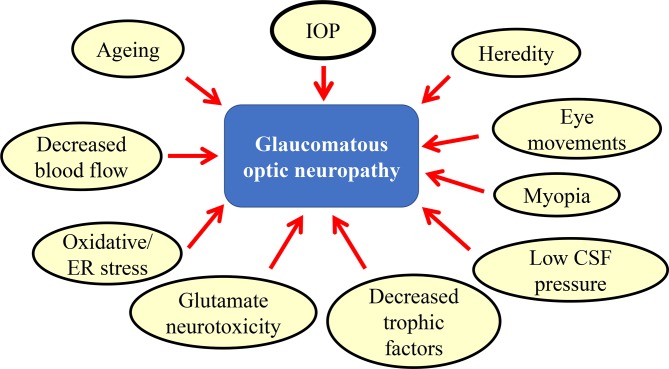
Glaucoma is one of the leading causes of vision loss in the world. Currently, pharmacological intervention for glaucoma therapy is limited to eye drops that reduce intraocular pressure (IOP). Recent studies have shown that various factors as well as IOP are involved in the pathogenesis of glaucoma, especially in the subtype of normal tension glaucoma. To date, various animal models of glaucoma have been established, including glutamate/aspartate transporter knockout (KO) mice, excitatory amino acid carrier 1 KO mice, optineurin E50K knock-in mice, DBA/2J mice and experimentally induced models. These animal models are very useful for elucidating the pathogenesis of glaucoma and for identifying potential therapeutic targets. However, each model represents only some aspects of glaucoma, never the whole disease. This review will summarise the benefits and limitations of using disease models of glaucoma and recent basic research in retinal protection using existing drugs.
青光眼是世界上导致视力丧失的主要原因之一。目前,青光眼的药物治疗仅限于降低眼内压 (IOP) 的眼药水。最近的研究表明,各种因素以及 IOP 都参与了青光眼的发病机制,尤其是在正常眼压型青光眼的亚型中。迄今为止,已经建立了各种青光眼动物模型,包括谷氨酸/天冬氨酸转运体敲除 (KO) 小鼠、兴奋性氨基酸载体 1 KO 小鼠、视神经丝蛋白 E50K 基因敲入小鼠、DBA/2J 小鼠和实验诱导模型。这些动物模型对于阐明青光眼的发病机制和确定潜在的治疗靶点非常有用。然而,每种模型仅代表青光眼的某些方面,而不是整个疾病。本综述将总结使用青光眼疾病模型的益处和局限性,以及使用现有药物进行视网膜保护的最新基础研究。