Ludwig Sonja, Sharma Priyanka, Theodoraki Marie-Nicole, Pietrowska Monika, Yerneni Saigopalakrishna S, Lang Stephan, Ferrone Soldano, Whiteside Theresa L
Department of Otorhinolaryngology, Head and Neck Surgery, University of Duisburg-Essen, Essen, Germany.
UPMC Hillman Cancer Center, Pittsburgh, PA, United States.
Front Oncol. 2018 Oct 12;8:445. doi: 10.3389/fonc.2018.00445. eCollection 2018.
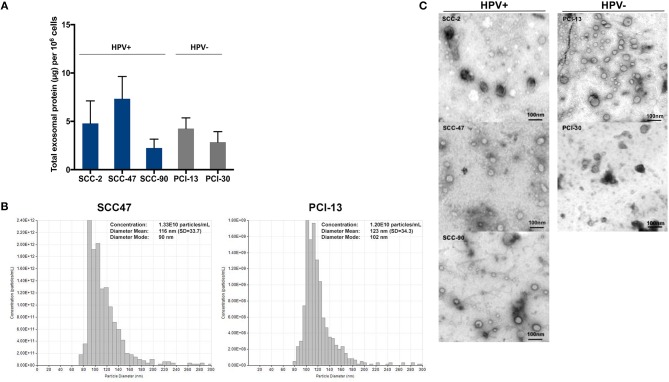
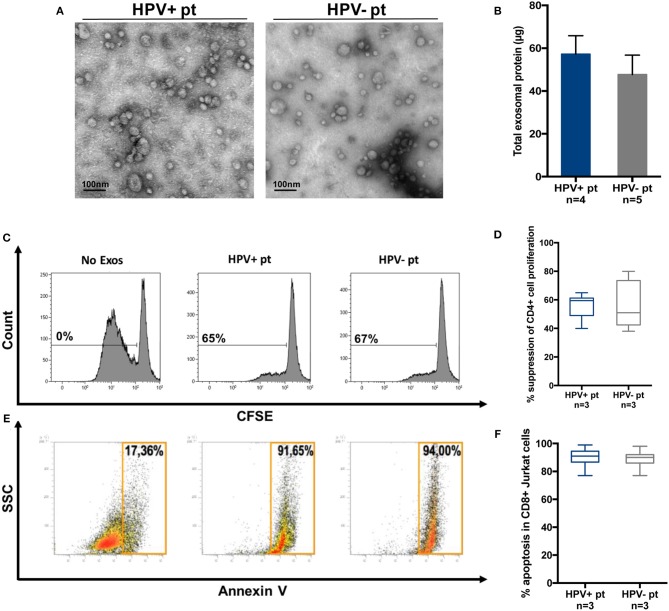
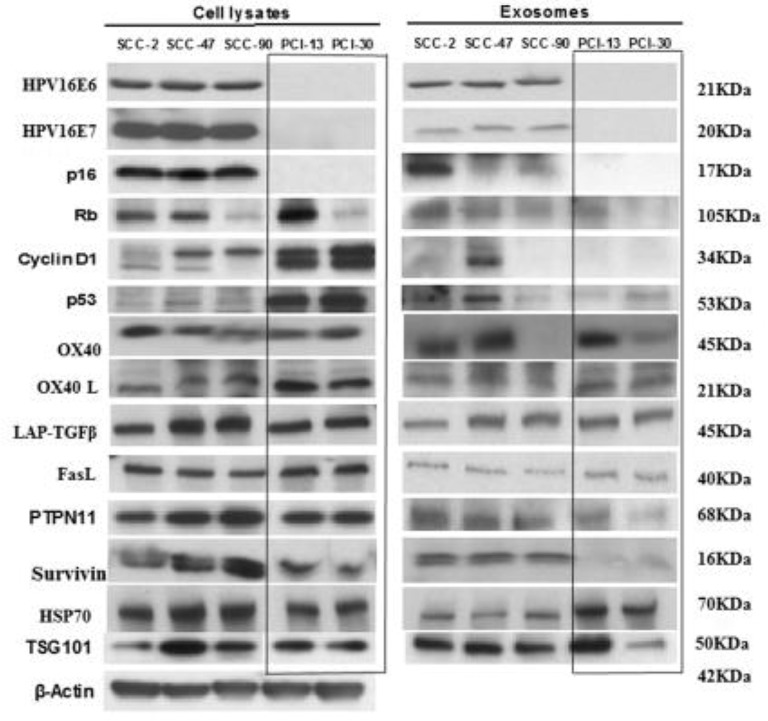
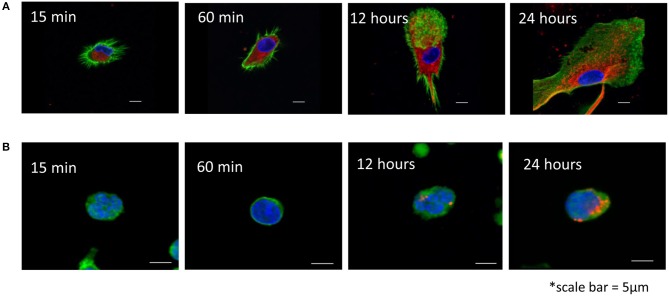
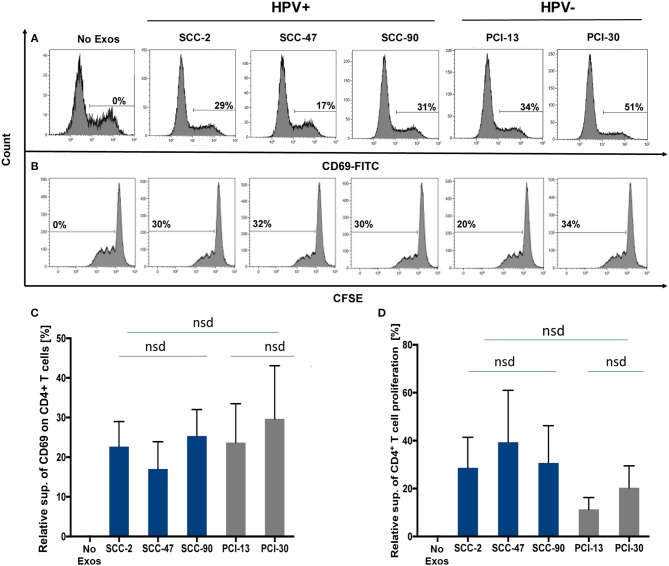
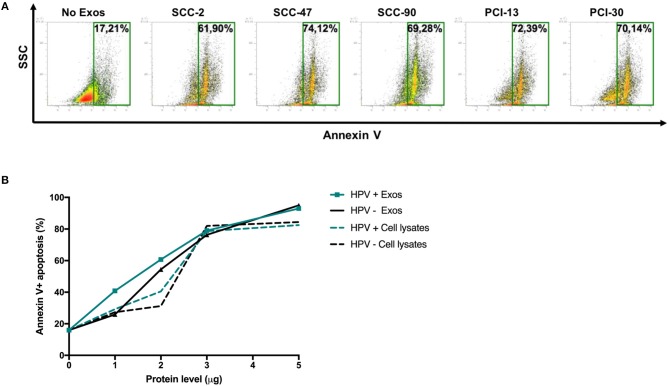
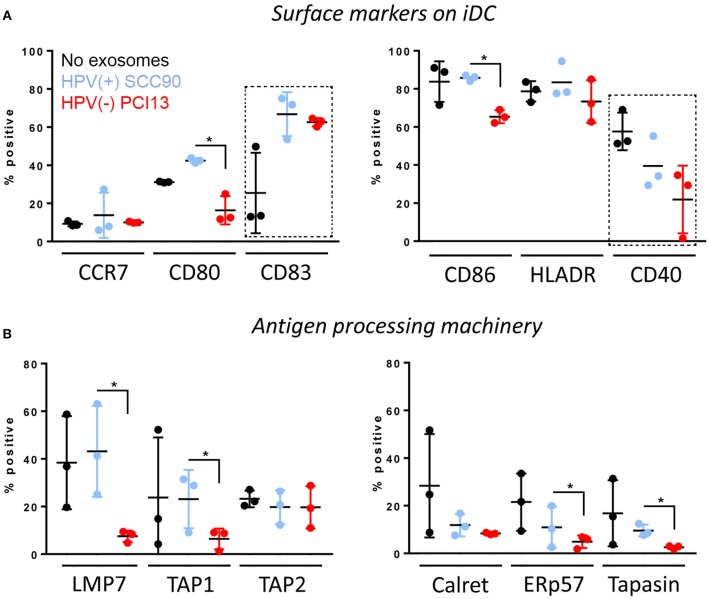
Exosomes produced by tumor cells have been shown to reprogram functions of human immune cells. Molecular cargos of exosomes isolated from supernatants of HPV(+) and HPV(-) head and neck cancer (HNC) cell lines or from HNC patients' plasma were compared. The exosome protein profiles resembled those of respective parent tumor cells. Only HPV(+) exosomes carried E6/E7, p16, and survivin. HPV(-) exosomes were negative for cyclin D1 and carried low p53 levels. Immunomodulatory molecules (TGF-β, FasL, OX40, OX40L, and HSP70) were carried by HPV(+) and HPV(-) exosomes. These exosomes co-incubated with human T cells induced apoptosis and suppressed T cell activation and proliferation. HPV(-) exosomes suppressed DC maturation and expression of antigen processing machinery (APM) components. In contrast, HPV(+) exosomes promoted DC maturation and did not suppress expression of APM components in mature DCs. While DCs readily internalized exosomes, T lymphocytes resisted their uptake during the initial 12 h co-culture. Thus, HPV(+) exosomes capable of sustaining DC functions may play a key role in promoting anti-tumor immune responses thereby improving outcome in patients with HPV(+) cancers.
肿瘤细胞产生的外泌体已被证明可重编程人类免疫细胞的功能。对从HPV(+)和HPV(-)头颈癌(HNC)细胞系的上清液或HNC患者血浆中分离出的外泌体的分子货物进行了比较。外泌体的蛋白质谱与各自的亲本肿瘤细胞相似。只有HPV(+)外泌体携带E6/E7、p16和生存素。HPV(-)外泌体的细胞周期蛋白D1呈阴性,p53水平较低。HPV(+)和HPV(-)外泌体均携带免疫调节分子(TGF-β、FasL、OX40、OX40L和HSP70)。这些外泌体与人T细胞共孵育可诱导细胞凋亡,并抑制T细胞活化和增殖。HPV(-)外泌体抑制DC成熟和抗原加工机制(APM)成分的表达。相比之下,HPV(+)外泌体促进DC成熟,且不抑制成熟DC中APM成分的表达。虽然DC很容易内化外泌体,但在最初12小时的共培养中,T淋巴细胞抵抗外泌体的摄取。因此,能够维持DC功能的HPV(+)外泌体可能在促进抗肿瘤免疫反应中起关键作用,从而改善HPV(+)癌症患者的预后。