Jin Ki-Su, Lee Ho, Sohn Jun-Bae, Han Yoon-Sic, Jung Da-Un, Sim Hye-Young, Kim Hee-Sun
1Department of Oral and Maxillofacial Surgery, Seoul Metropolitan Government-Seoul National University Boramae Medical Center, 20 Boramae-ro 5 Gil, Dongjak-gu, Seoul, 07061 Republic of Korea.
2Section of Dentistry, Seoul Metropolitan Government-Seoul National University Boramae Medical Center, Seoul, Republic of Korea.
Maxillofac Plast Reconstr Surg. 2018 Oct 15;40(1):29. doi: 10.1186/s40902-018-0168-y. eCollection 2018 Dec.
For proper recovery from craniofacial fracture, it is necessary to establish guidelines based on trends. This study aimed to analyze the patterns and causes of craniofacial fractures.
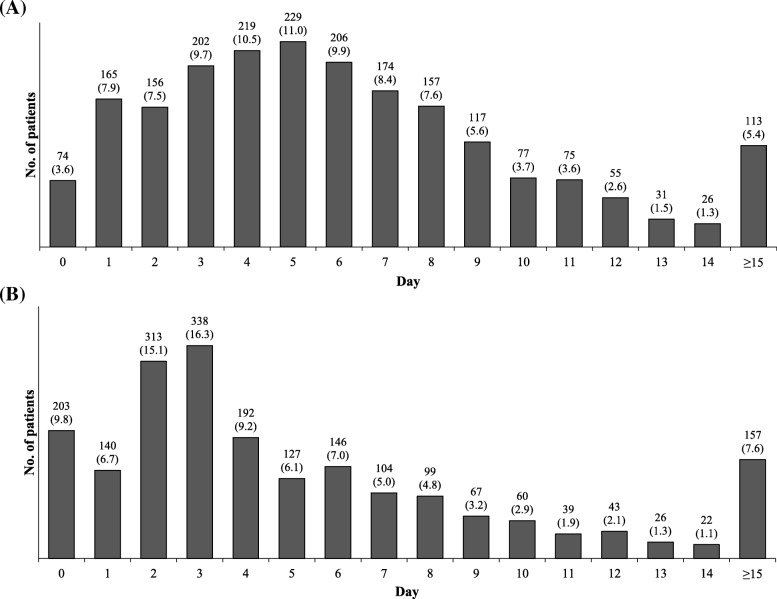
This retrospective study analyzed patients who underwent surgery for craniofacial fractures between 2010 and 2017 at a single center. Several parameters, including time of injury, region and cause of fracture, alcohol intoxication, time from injury to surgery, hospitalization period, and postoperative complications, were evaluated.
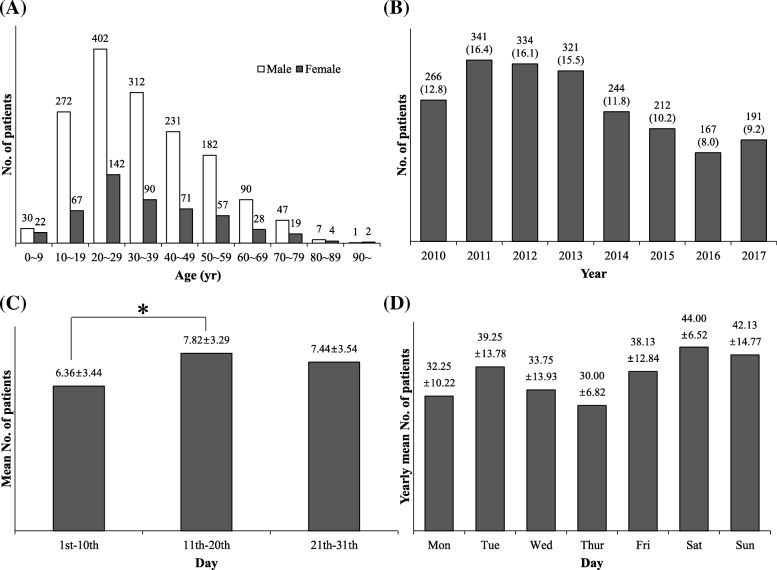
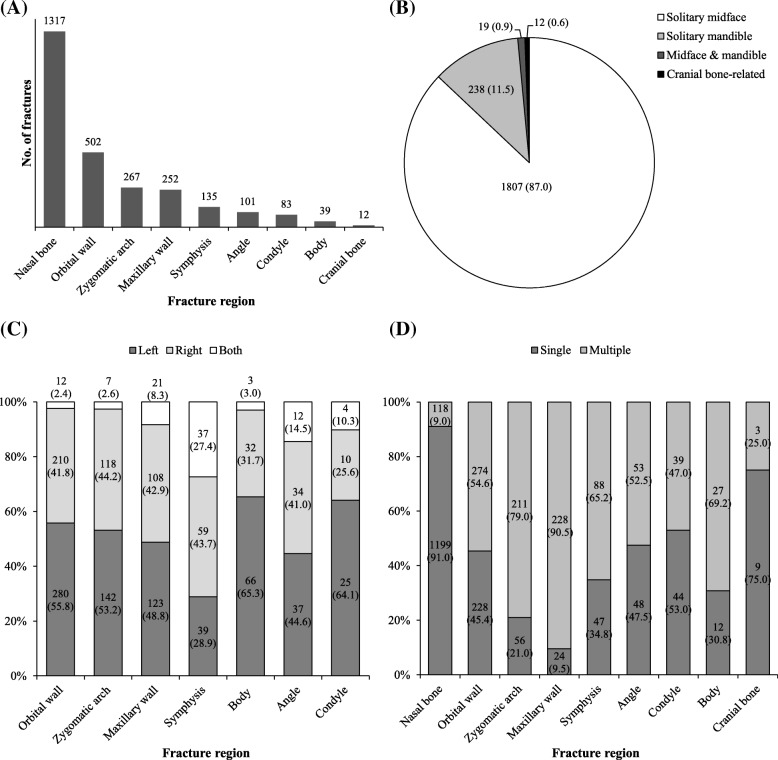
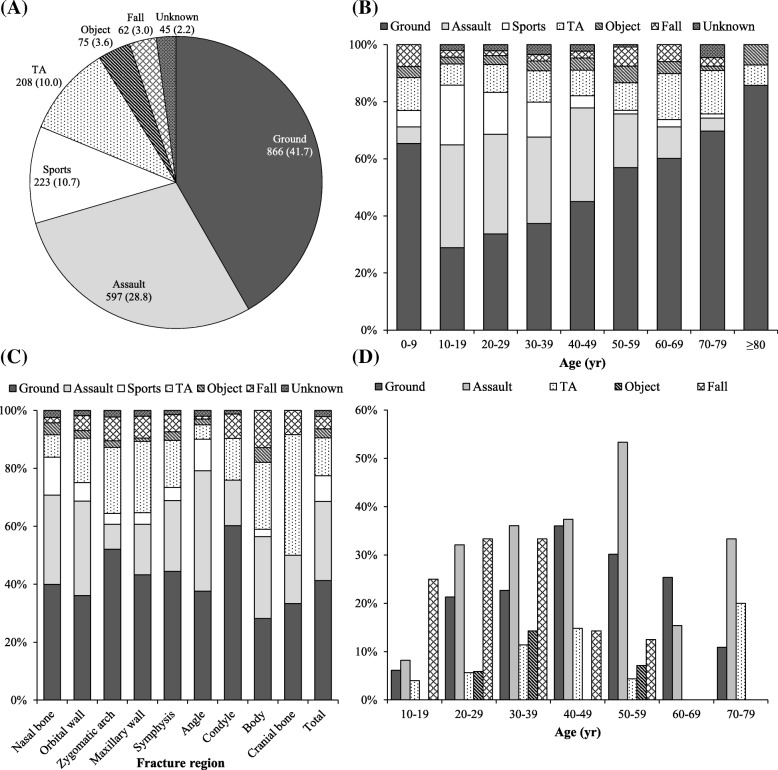
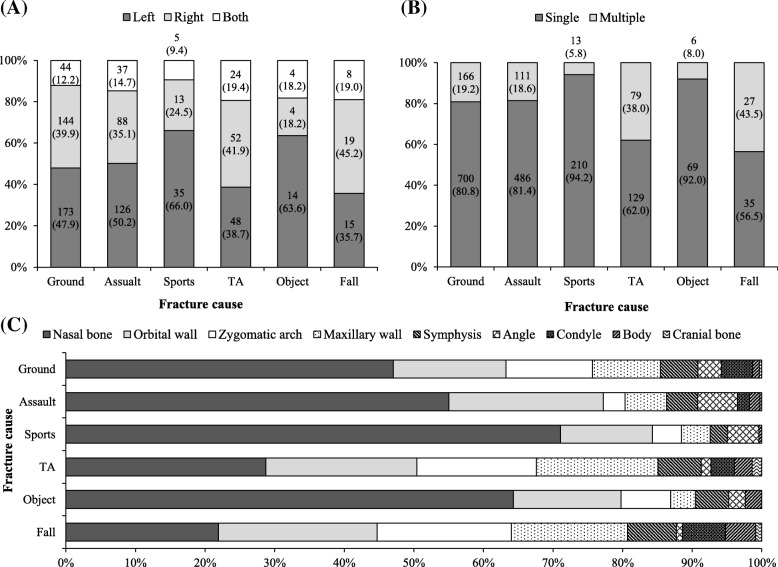
This study analyzed 2708 fracture lesions of 2076 patients, among whom males aged 10 to 39 years were the most numerous. The number of patients was significantly higher in the middle of a month. The most common fractures were a nasal bone fracture. The most common causes of fracture were ground accidents and personal assault, which tended to frequently cause more nasal bone fracture than other fractures. Traffic accidents and high falls tended to cause zygomatic arch and maxillary wall fractures more frequently. Postoperative complications-observed in 126 patients-had a significant relationship with the end of a month, mandible or panfacial fracture, and traffic accidents.
The present findings on long-term craniofacial fracture trends should be considered by clinicians dealing with fractures and could be useful for policy decisions.
为了从颅面骨折中实现恰当恢复,有必要根据趋势制定指导方针。本研究旨在分析颅面骨折的模式和原因。
这项回顾性研究分析了2010年至2017年在单一中心接受颅面骨折手术的患者。评估了几个参数,包括受伤时间、骨折部位和原因、酒精中毒、受伤至手术的时间、住院时间以及术后并发症。
本研究分析了2076例患者的2708处骨折损伤,其中10至39岁男性患者数量最多。每月中旬患者数量显著更高。最常见的骨折是鼻骨骨折。最常见的骨折原因是地面事故和人身攻击,相较于其他骨折,这两者往往更常导致鼻骨骨折。交通事故和高处坠落往往更常导致颧弓和上颌壁骨折。126例患者出现术后并发症,这与月末、下颌骨或全面部骨折以及交通事故存在显著关联。
处理骨折的临床医生应考虑目前关于长期颅面骨折趋势的研究结果,这些结果可能有助于政策决策。