Department of Biological Chemistry & Molecular Pharmacology, Harvard Medical School, Boston, MA, 02115, USA.
Department of Cancer Biology, Dana-Farber Cancer Institute, Boston, MA, 02215, USA.
Nat Commun. 2018 Oct 30;9(1):4508. doi: 10.1038/s41467-018-06823-9.
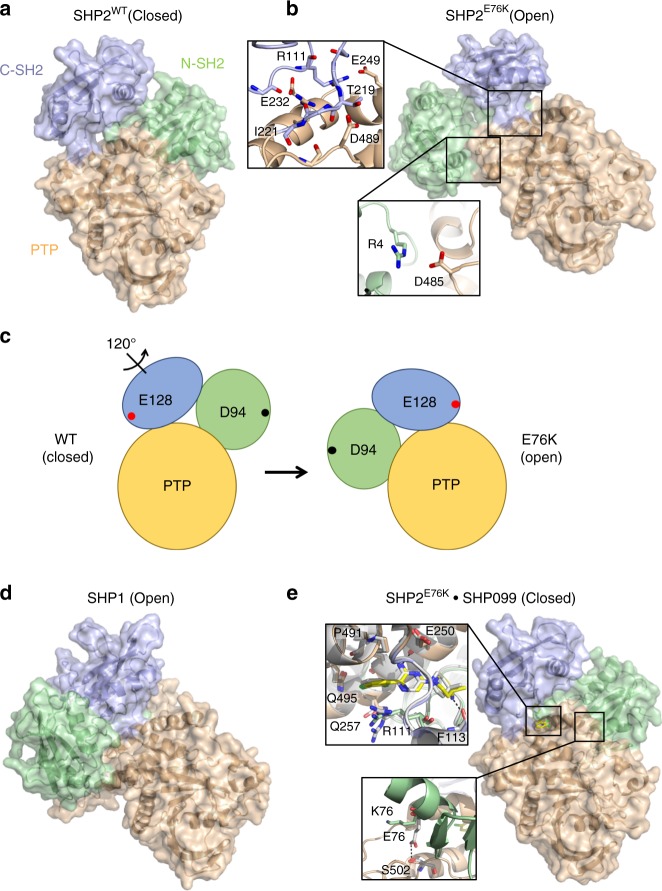
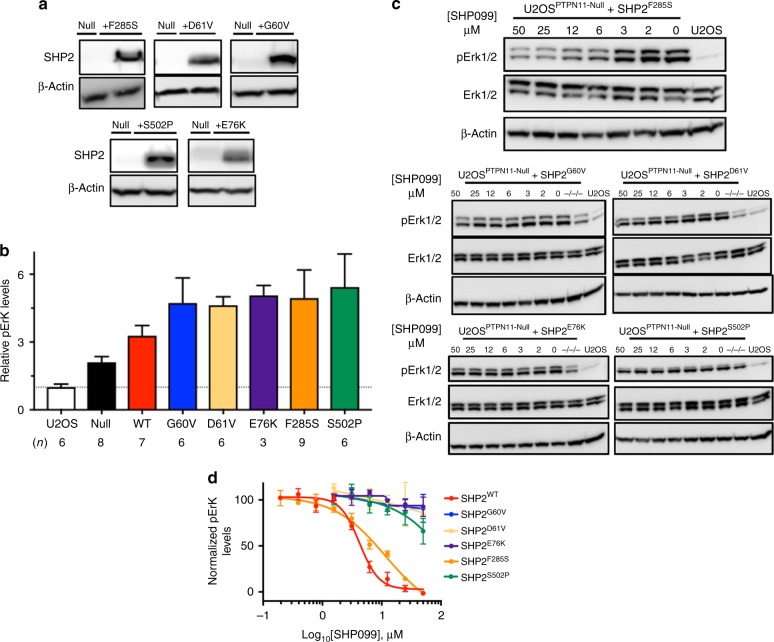
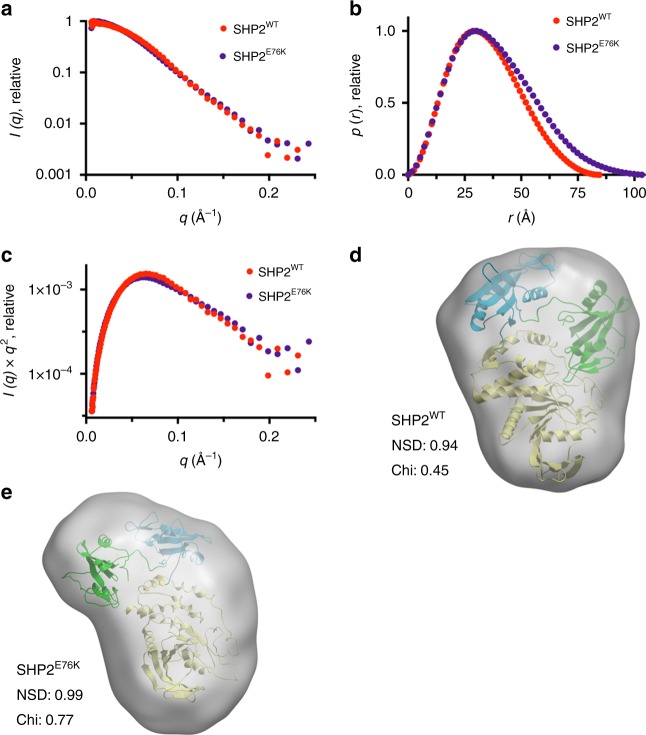
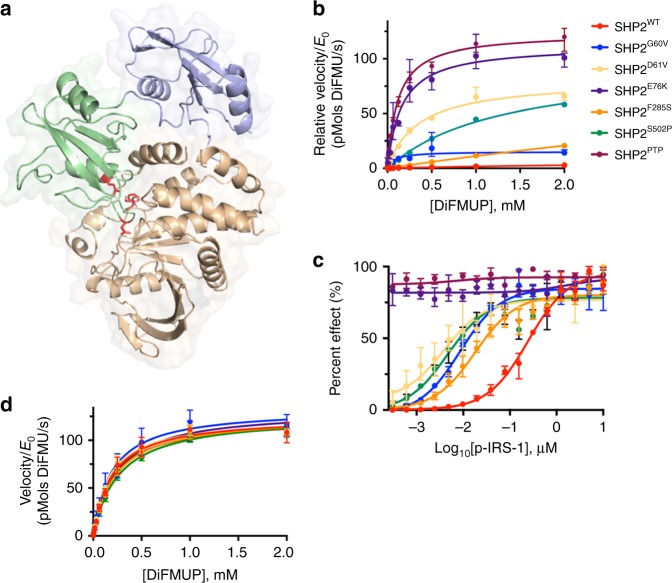
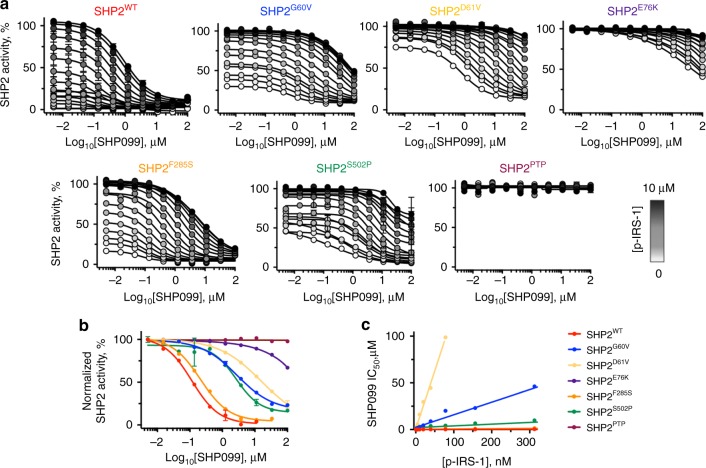
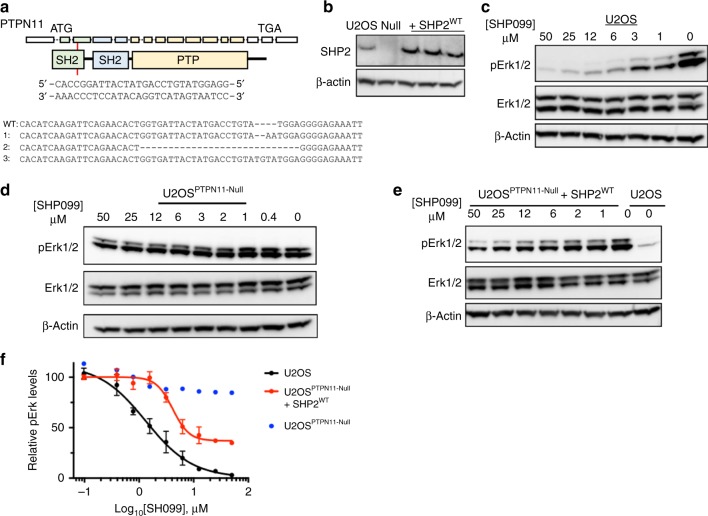
Activating mutations in PTPN11, encoding the cytosolic protein tyrosine phosphatase SHP2, result in developmental disorders and act as oncogenic drivers in patients with hematologic cancers. The allosteric inhibitor SHP099 stabilizes the wild-type SHP2 enzyme in an autoinhibited conformation that is itself destabilized by oncogenic mutations. Here, we report the impact of the highly activated and most frequently observed mutation, E76K, on the structure of SHP2, and investigate the effect of E76K and other oncogenic mutations on allosteric inhibition by SHP099. SHP2 adopts an open conformation but can be restored to the closed, autoinhibited conformation, near-identical to the unoccupied wild-type enzyme, when complexed with SHP099. SHP099 inhibitory activity against oncogenic SHP2 variants in vitro and in cells scales inversely with the activating strength of the mutation, indicating that either oncoselective or vastly more potent inhibitors will be necessary to suppress oncogenic signaling by the most strongly activating SHP2 mutations in cancer.
PTPN11 基因(编码细胞质蛋白酪氨酸磷酸酶 SHP2)的激活突变导致发育障碍,并作为血液系统癌症患者的致癌驱动因素。变构抑制剂 SHP099 稳定野生型 SHP2 酶处于自身抑制构象,而自身抑制构象又被致癌突变所破坏。在这里,我们报告了高度激活和最常观察到的突变 E76K 对 SHP2 结构的影响,并研究了 E76K 和其他致癌突变对 SHP099 的变构抑制的影响。SHP2 采用开放构象,但当与 SHP099 结合时,它可以恢复到与未占据的野生型酶几乎相同的封闭、自身抑制构象。SHP099 对体外和细胞中致癌 SHP2 变体的抑制活性与突变的激活强度呈反比,表明为了抑制癌症中最强烈激活的 SHP2 突变的致癌信号,要么需要针对致癌的选择性抑制剂,要么需要更强效的抑制剂。