
亚苄基抗坏血酸盐和丁香酚对人口腔细胞代谢谱的影响
Changes in Metabolic Profiles of Human Oral Cells by Benzylidene Ascorbates and Eugenol.
作者信息
Sakagami Hiroshi, Sugimoto Masahiro, Kanda Yumiko, Murakami Yukio, Amano Osamu, Saitoh Junko, Kochi Atsuko
机构信息
Meikai University Research Institute of Odontology (M-RIO), 1-1 Keyakidai, Sakado, Saitama 350-0283, Japan.
Institute for Advanced Biosciences, Keio University, Tsuruoka 997-0052, Japan.
出版信息
Medicines (Basel). 2018 Oct 31;5(4):116. doi: 10.3390/medicines5040116.
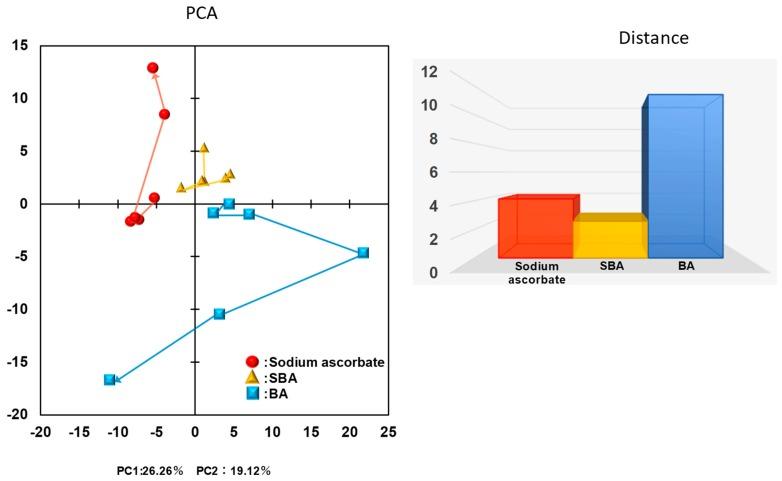
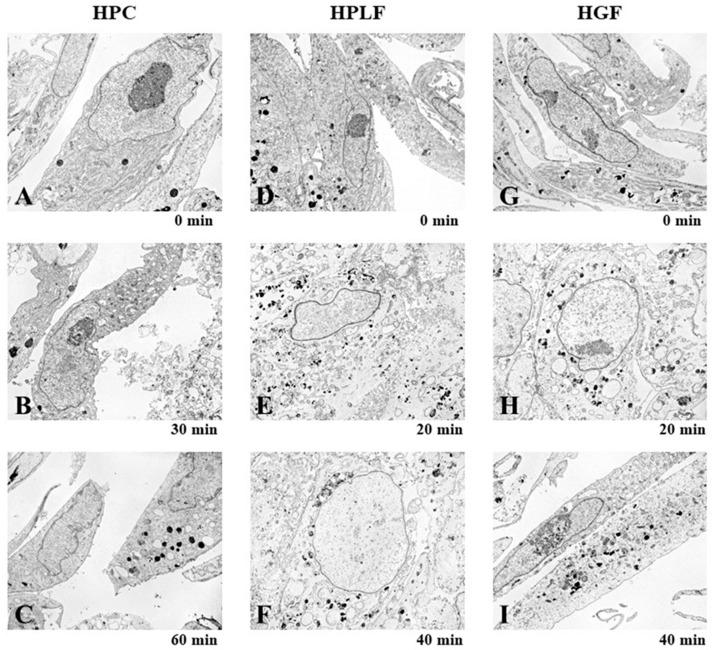
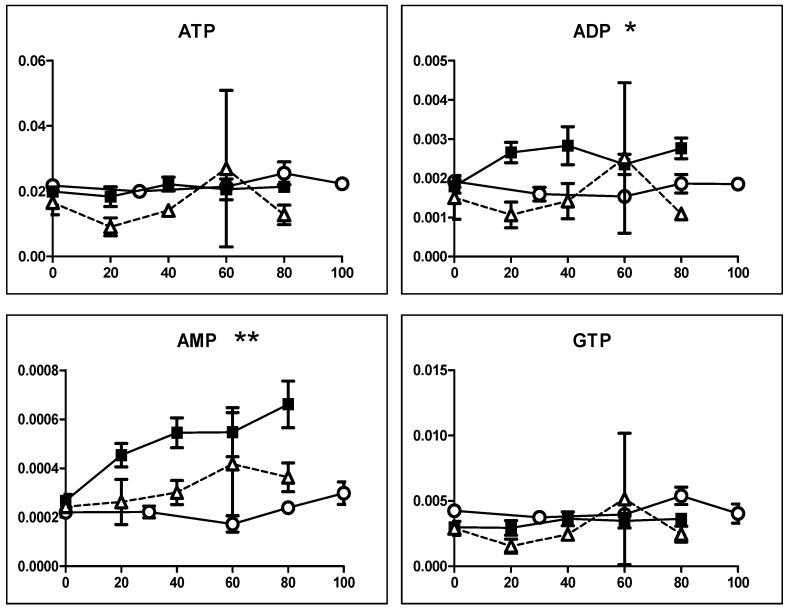
Sodium-5,6-benzylidene-L-ascorbate (SBA), and its component units, benzaldehyde (BA) and sodium ascorbate (SA), are known to exert antitumor activity, while eugenol exerts anti-inflammatory activity. To narrow down their intracellular targets, metabolomic analysis was performed. Viable cell number was determined by the 3-(4,5-dimethylthiazol-2-yl)-2,5-diphenyltetrazolium bromide (MTT) method. Fine cell structures were observed under transmission electron microscope. Cellular metabolites were extracted with methanol and subjected to capillary electrophoresis-mass spectrometry (CE-MS) for quantification of intracellular metabolites. Results showed that SBA was cleaved into BA and SA under acidic condition. Among these three compounds, BA showed the highest-tumor specificity in vitro against human oral squamous cell carcinoma (OSCC) cell line. BA did not induce the vacuolization in HSC-2 OSCC cells, and its cytotoxicity was not inhibited by catalase, in contrast to SBA and SA. Only BA suppressed the tricarboxylic acid (TCA) cycle at early stage of cytotoxicity induction. Eugenol more rapidly induced the vacuolization and suppressed the TCA cycle in three human normal oral cells (gingival fibroblast, periodontal ligament fibroblast, pulp cell). Neither BA nor eugenol affected the ATP utilization, further supporting that they do not induce apoptosis. The present study demonstrated for the first time that both BA and eugenol suppressed the TCA cycle in tumor cells and normal cells, respectively. It is crucial to design methodology that enhances the antitumor potential of BA and reduces the cytotoxicity of eugenol to allow for safe clinical application.
5,6-亚苄基-L-抗坏血酸钠(SBA)及其组成单元苯甲醛(BA)和抗坏血酸钠(SA)具有抗肿瘤活性,而丁香酚具有抗炎活性。为了明确它们的细胞内靶点,进行了代谢组学分析。采用3-(4,5-二甲基噻唑-2-基)-2,5-二苯基四氮唑溴盐(MTT)法测定活细胞数量。在透射电子显微镜下观察细胞精细结构。用甲醇提取细胞代谢物,并进行毛细管电泳-质谱联用(CE-MS)以定量细胞内代谢物。结果表明,SBA在酸性条件下可裂解为BA和SA。在这三种化合物中,BA在体外对人口腔鳞状细胞癌(OSCC)细胞系表现出最高的肿瘤特异性。与SBA和SA不同,BA不会诱导HSC-2 OSCC细胞空泡化,其细胞毒性也不受过氧化氢酶抑制。只有BA在细胞毒性诱导早期抑制三羧酸(TCA)循环。丁香酚能更快地诱导三种人正常口腔细胞(牙龈成纤维细胞、牙周膜成纤维细胞、牙髓细胞)空泡化并抑制TCA循环。BA和丁香酚均不影响ATP利用,进一步证明它们不会诱导细胞凋亡。本研究首次表明,BA和丁香酚分别抑制肿瘤细胞和正常细胞中的TCA循环。设计提高BA抗肿瘤潜力并降低丁香酚细胞毒性的方法,以实现安全的临床应用至关重要。



 Zotero 插件