Division of Ecology and Evolution, Research School of Biology, Australian National University, Acton, ACT, 2601, Australia.
Comparative Genomics Centre, Department of Molecular and Cell Biology, James Cook University, Townsville, QLD, 4811, Australia.
Genome Biol. 2018 Nov 2;19(1):175. doi: 10.1186/s13059-018-1552-8.
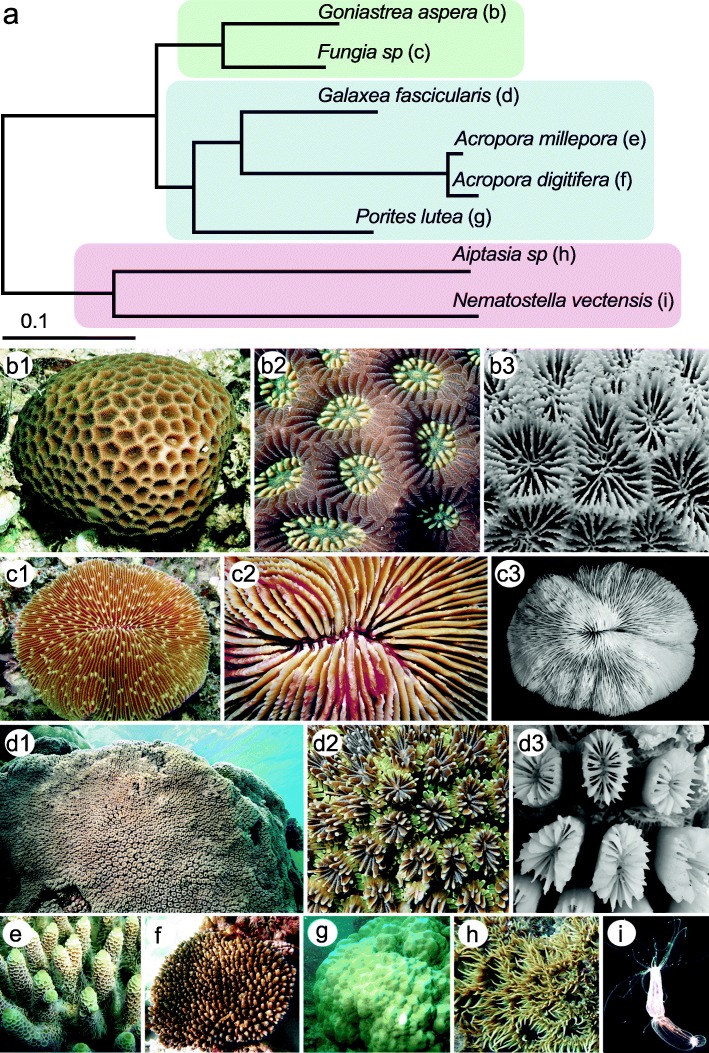
Despite the biological and economic significance of scleractinian reef-building corals, the lack of large molecular datasets for a representative range of species limits understanding of many aspects of their biology. Within the Scleractinia, based on molecular evidence, it is generally recognised that there are two major clades, Complexa and Robusta, but the genomic bases of significant differences between them remain unclear.
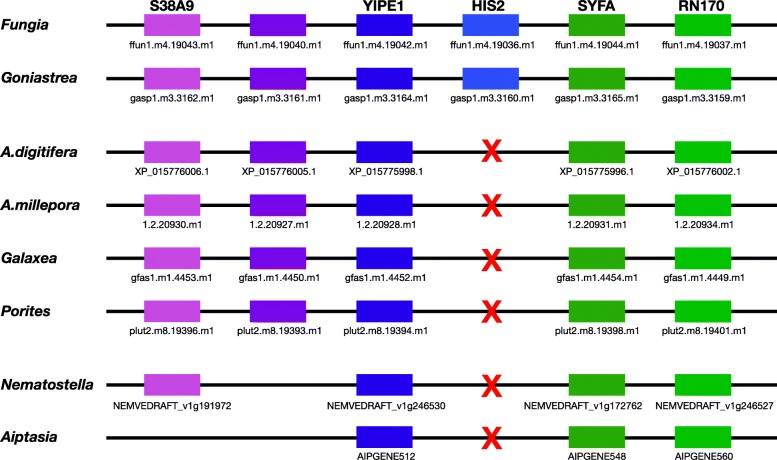
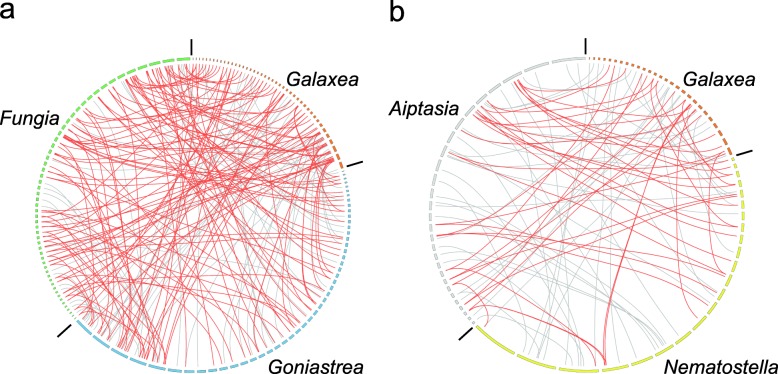
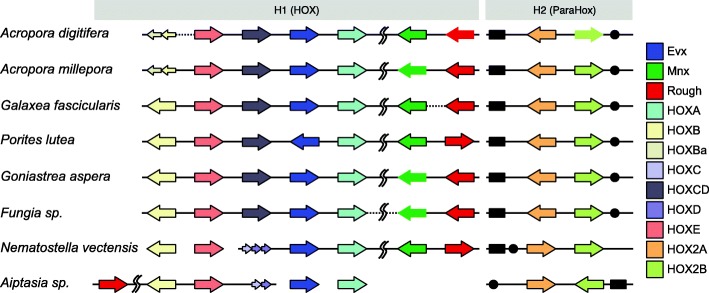
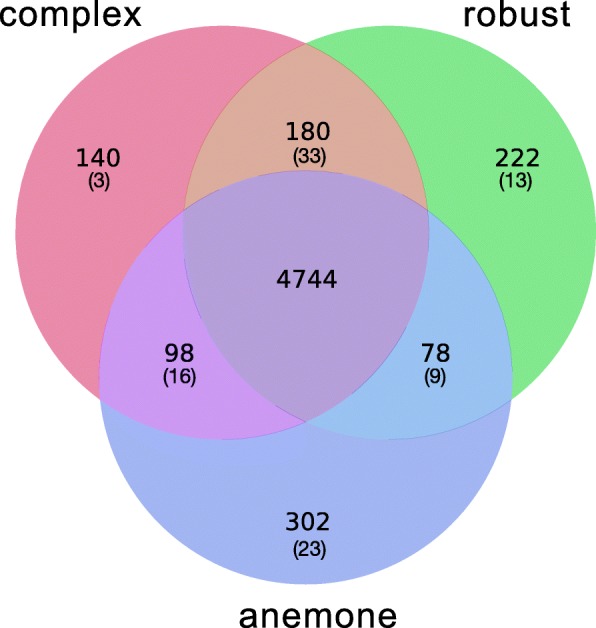
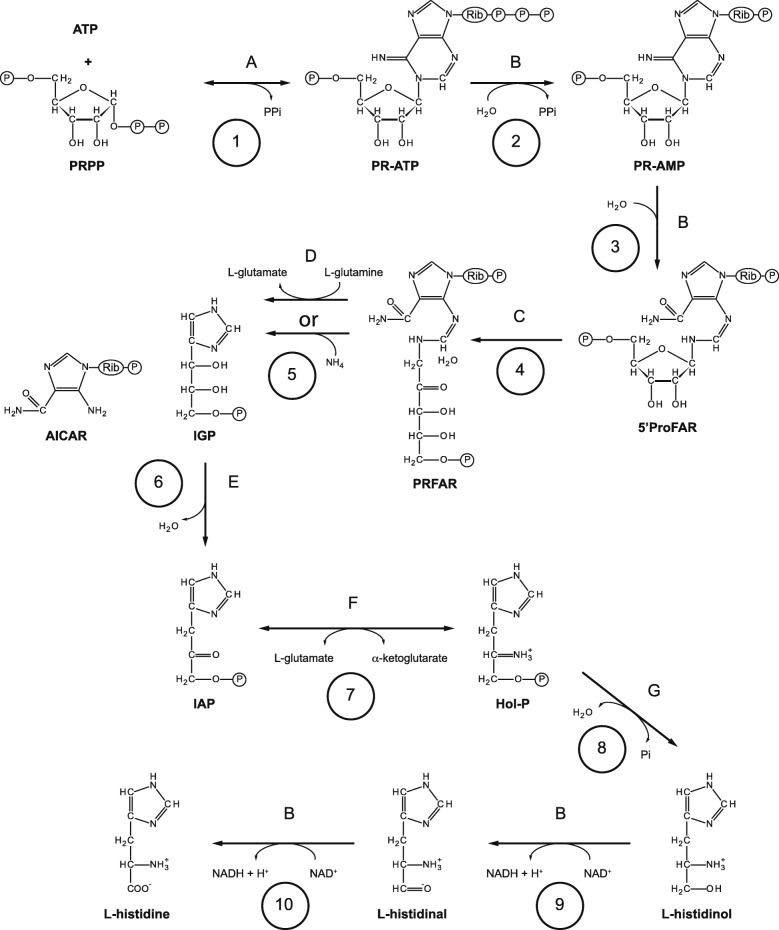
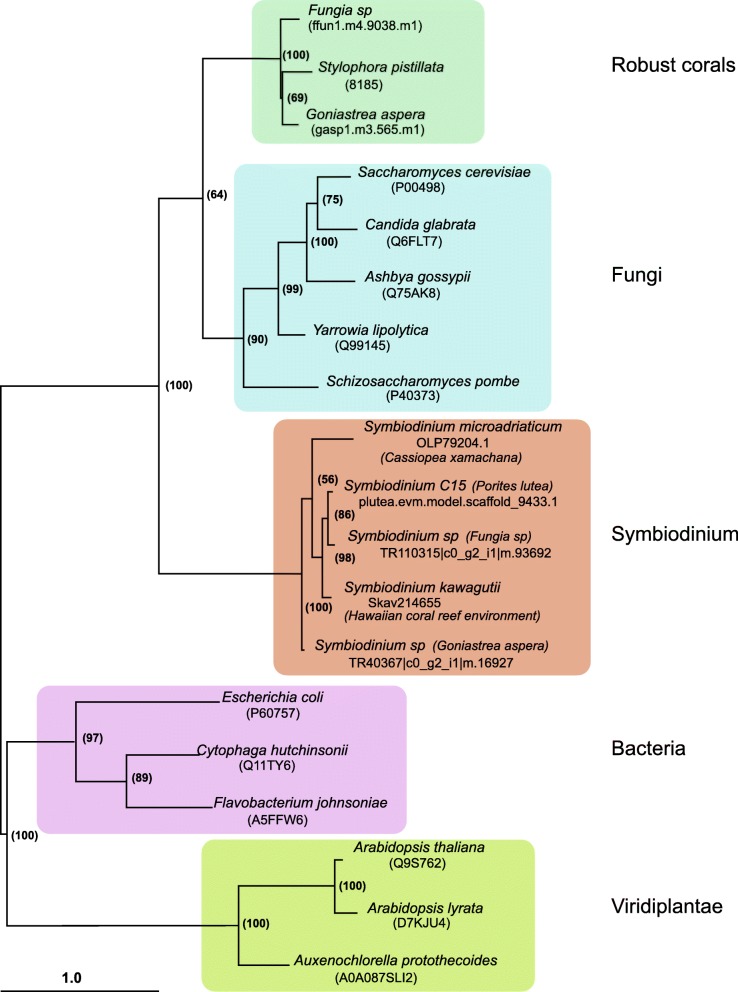
Draft genome assemblies and annotations were generated for three coral species: Galaxea fascicularis (Complexa), Fungia sp., and Goniastrea aspera (Robusta). Whilst phylogenetic analyses strongly support a deep split between Complexa and Robusta, synteny analyses reveal a high level of gene order conservation between all corals, but not between corals and sea anemones or between sea anemones. HOX-related gene clusters are, however, well preserved across all of these combinations. Differences between species are apparent in the distribution and numbers of protein domains and an apparent correlation between number of HSP20 proteins and stress tolerance. Uniquely amongst animals, a complete histidine biosynthesis pathway is present in robust corals but not in complex corals or sea anemones. This pathway appears to be ancestral, and its retention in the robust coral lineage has important implications for coral nutrition and symbiosis.
The availability of three new coral genomes enabled recognition of a de novo histidine biosynthesis pathway in robust corals which is only the second identified biosynthetic difference between corals. These datasets provide a platform for understanding many aspects of coral biology, particularly the interactions of corals with their endosymbionts.
尽管造礁石珊瑚在生物学和经济学上具有重要意义,但由于缺乏具有代表性的大型分子数据集,许多生物学方面的理解受到限制。在石珊瑚类中,基于分子证据,通常认为存在两个主要分支,即复杂珊瑚和坚固珊瑚,但它们之间显著差异的基因组基础仍不清楚。
为三种珊瑚物种生成了草图基因组组装和注释:华丽鹿角珊瑚(复杂珊瑚)、 Fungia sp. 和粗野鹿角珊瑚(坚固珊瑚)。尽管系统发育分析强烈支持复杂珊瑚和坚固珊瑚之间的深度分裂,但基因排列分析显示所有珊瑚之间具有高度的基因排列保守性,但珊瑚与海葵之间以及海葵与海葵之间没有。然而,HOX 相关基因簇在所有这些组合中都得到了很好的保存。物种之间的差异表现在蛋白结构域的分布和数量上,并且 HSP20 蛋白的数量与应激耐受性之间似乎存在相关性。在动物中独一无二的是,完整的组氨酸生物合成途径存在于坚固珊瑚中,但不存在于复杂珊瑚或海葵中。这条途径似乎是原始的,它在坚固珊瑚谱系中的保留对珊瑚的营养和共生关系具有重要意义。
三种新珊瑚基因组的可用性使人们能够识别出坚固珊瑚中的组氨酸生物合成途径,这是珊瑚之间仅有的第二个已确定的生物合成差异。这些数据集为理解珊瑚生物学的许多方面提供了一个平台,特别是珊瑚与其内共生体的相互作用。