Gao Jing, Bi Weishuai, Li Huanpeng, Wu Jiaojiao, Yu Xiumei, Liu Daqun, Wang Xiaodong
College of Plant Protection, Biological Control Center for Plant Diseases and Plant Pests of Hebei, Hebei Agricultural University, Baoding, China.
College of Life Sciences, Hebei Agricultural University, Baoding, China.
Front Plant Sci. 2018 Oct 17;9:1486. doi: 10.3389/fpls.2018.01486. eCollection 2018.
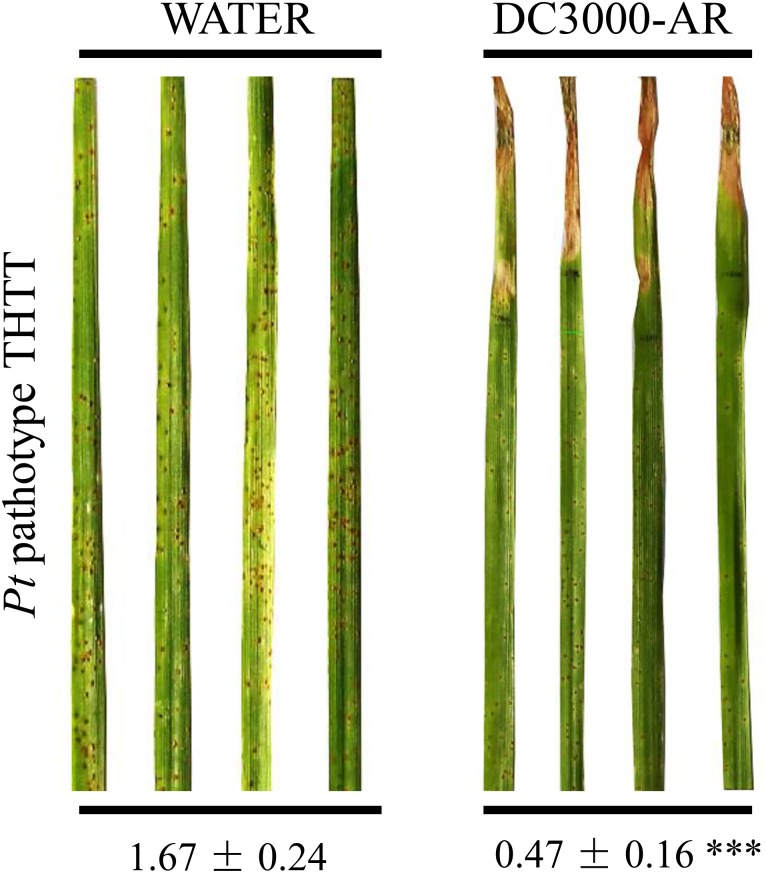
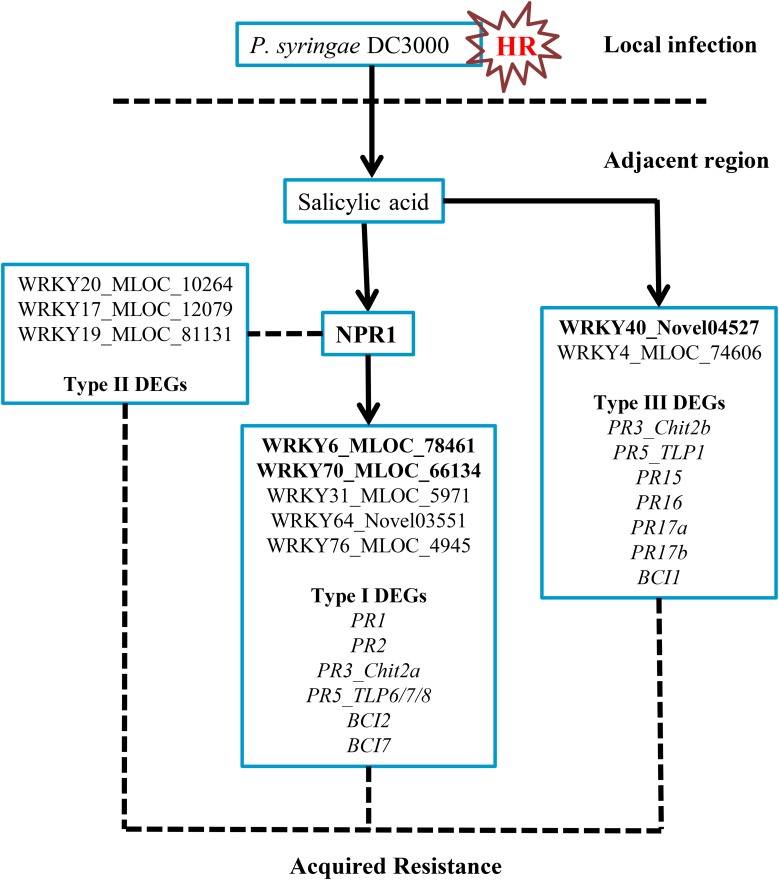
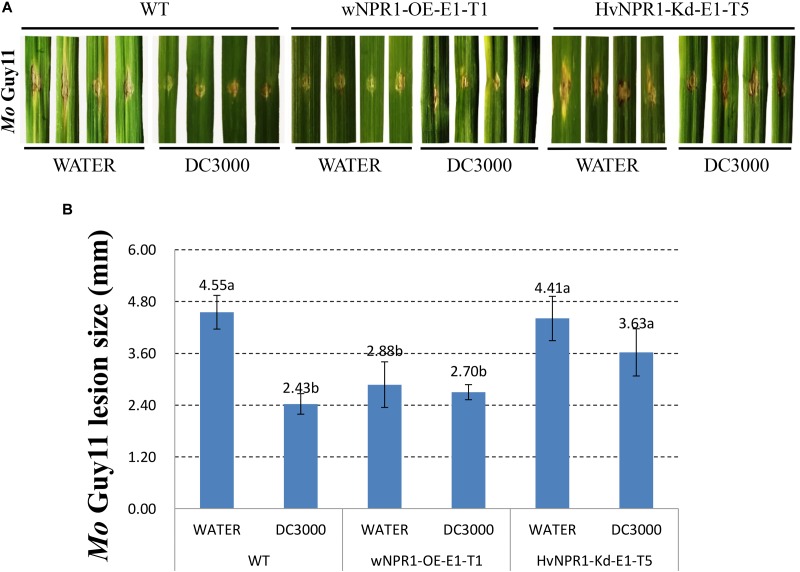
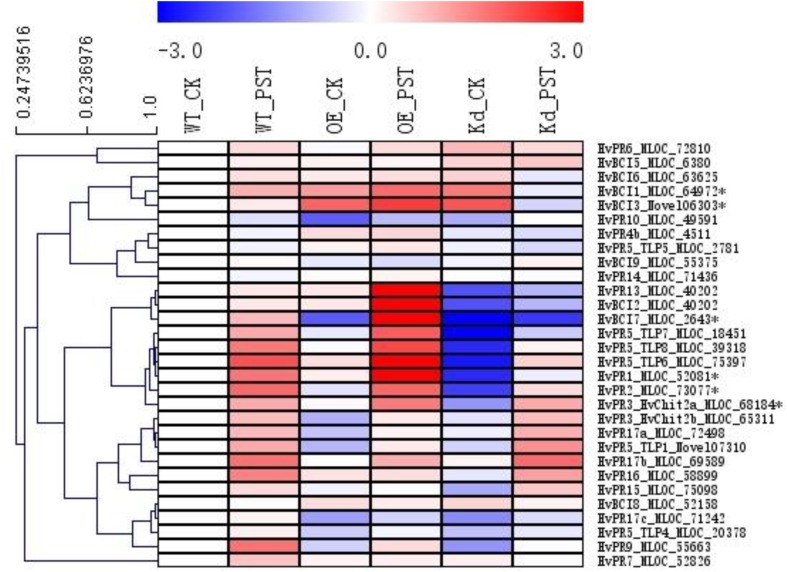
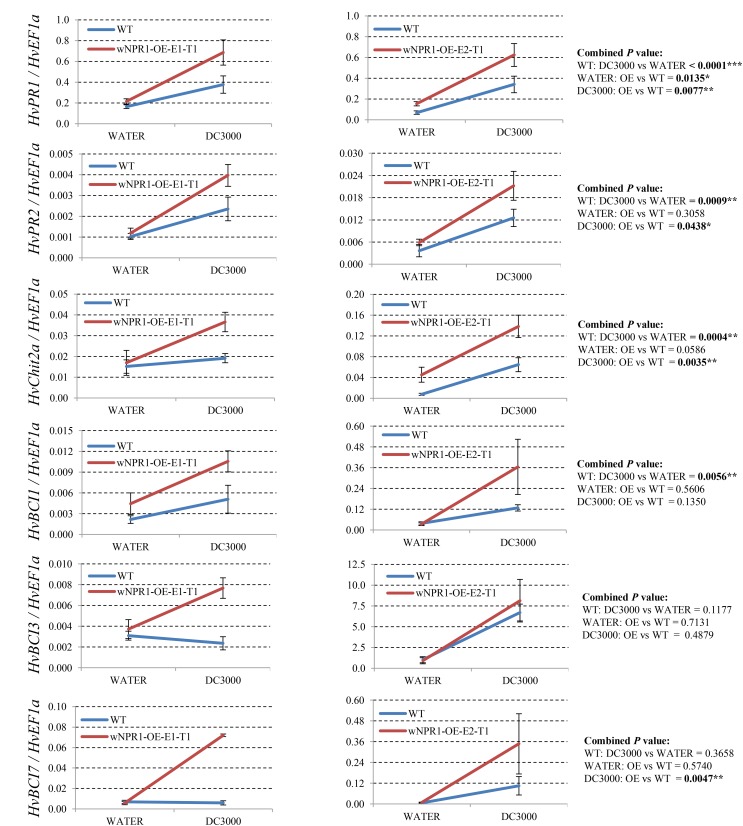
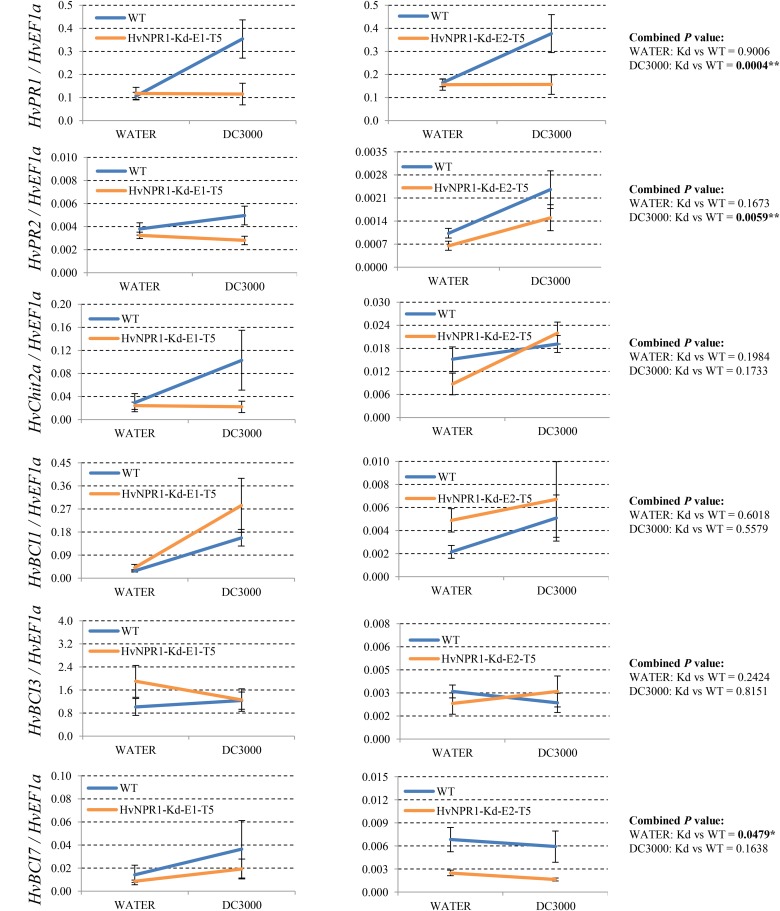
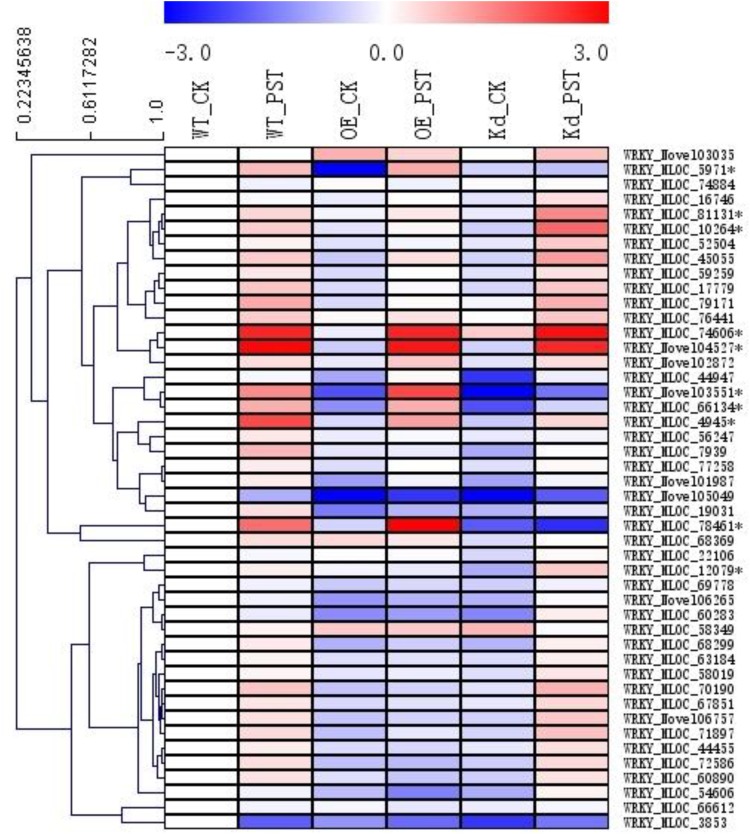
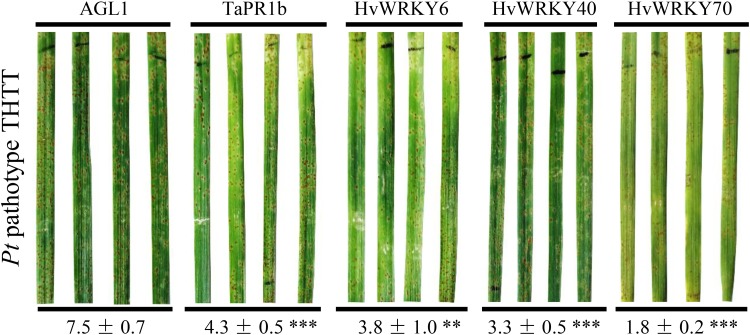
Systemic acquired resistance (SAR) in is established beyond the initial pathogenic infection or is directly induced by treatment with salicylic acid or its functional analogs (SA/INA/BTH). NPR1 protein and WRKY transcription factors are considered the master regulators of SAR. Our previous study showed that homologs in wheat ( L.) and barley ( L.) regulated the expression of genes encoding pathogenesis-related (PR) proteins during acquired resistance (AR) triggered by pv. DC3000. In the present examination, AR induced by DC3000 was also found to effectively improve wheat resistance to (). However, with more complex genomes, genes associated with this SAR-like response in wheat and barley are largely unknown and no specific has been reported to be involved in this biological process. In our subsequent analysis, barley transgenic line overexpressing wheat (wNPR1-OE) showed enhanced resistance to isolate Guy11, whereas AR to Guy11 was suppressed in a barley transgenic line with knocked-down barley (HvNPR1-Kd). We performed RNA-seq to reveal the genes that were differentially expressed among these transgenic lines and the wild-type barley plants during the AR. Several and BTH-induced () genes were designated as downstream genes of . The expression of few was significantly associated with expression during the AR events. The transient expression of three genes, including , , and , in wheat leaves by -mediated infiltration enhanced the resistance to . In conclusion, a profile of genes associated with -mediated AR in barley was drafted and discovered in the current study showed a substantial potential for improving wheat resistance to .
植物中的系统获得性抗性(SAR)在初始病原体感染之外建立,或由水杨酸及其功能类似物(SA/INA/BTH)处理直接诱导。NPR1蛋白和WRKY转录因子被认为是SAR的主要调节因子。我们之前的研究表明,小麦(L.)和大麦(L.)中的同源物在由pv. DC3000触发的获得性抗性(AR)过程中调节编码病程相关(PR)蛋白的基因表达。在本研究中,还发现由DC3000诱导的AR能有效提高小麦对()的抗性。然而,由于基因组更为复杂,小麦和大麦中与这种类似SAR反应相关的基因在很大程度上尚不清楚,且尚未有特定的被报道参与这一生物学过程。在我们后续的分析中,过表达小麦(wNPR1-OE)的大麦转基因系对分离株Guy11表现出增强的抗性,而在敲低大麦(HvNPR1-Kd)的大麦转基因系中,对Guy11的AR受到抑制。我们进行了RNA测序,以揭示这些转基因系和野生型大麦植株在AR过程中差异表达的基因。几个和BTH诱导的()基因被指定为的下游基因。在AR事件中,很少有基因的表达与的表达显著相关。通过介导的浸润在小麦叶片中瞬时表达三个基因,包括、和,增强了对的抗性。总之,本研究绘制了与大麦介导的AR相关的基因图谱,并且发现的在提高小麦对的抗性方面具有巨大潜力。