Filley Anna C, Henriquez Mario, Dey Mahua
Department of Neurosurgery, IU Simon Cancer Center, IU School of Medicine, Indiana University Purdue University Indianapolis, Indianapolis, IN, United States.
Front Oncol. 2018 Oct 17;8:453. doi: 10.3389/fonc.2018.00453. eCollection 2018.
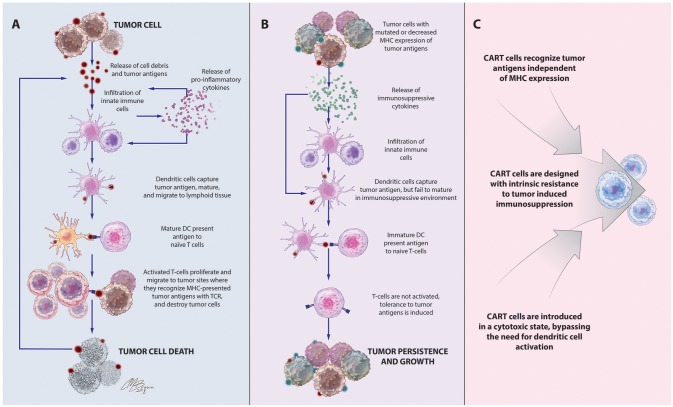
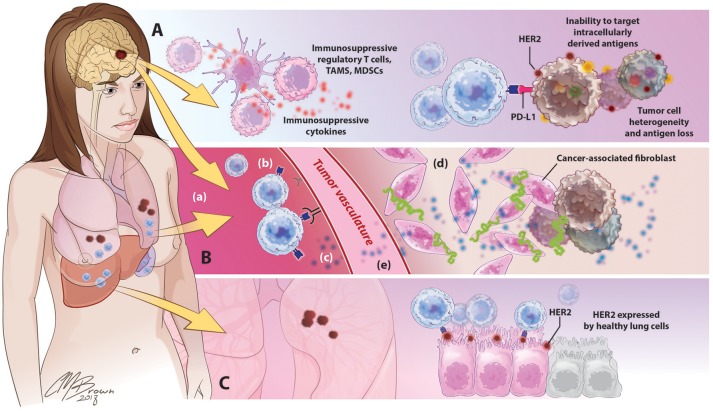
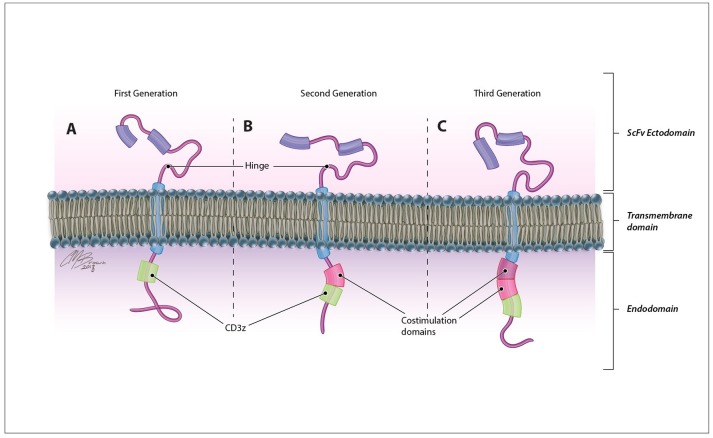
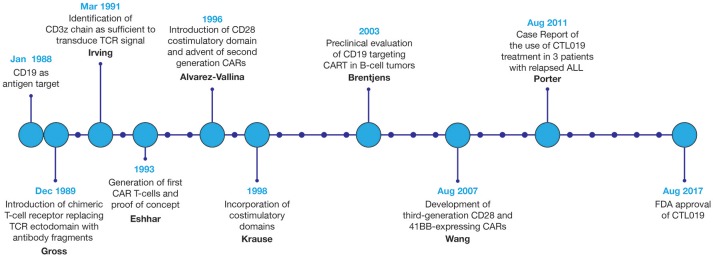
T cell chimeric antigen receptor (CAR) technology has allowed for the introduction of a high degree of tumor selectivity into adoptive cell transfer therapies. Evolution of this technology has produced a robust antitumor immunotherapeutic strategy that has resulted in dramatic outcomes in liquid cancers. CAR-expressing T-cells (CARTs) targeting CD19 and CD20 have been successfully used in the treatment of hematologic malignancies, producing sustained tumor regressions in a majority of treated patients. These encouraging results have led to a historic and unprecedented FDA approval of CTL019, Novartis' CAR T-cell therapy for the treatment of children and young adults with relapsed or refractory B-cell acute lymphoblastic leukemia (ALL). However, the translation of this technology to solid tumors, like malignant gliomas (MG), has thus far been unsuccessful. This review provides a timely analysis of the factors leading to the success of CART immunotherapy in the setting of hematologic malignancies, barriers limiting its success in the treatment of solid tumors, and approaches to overcome these challenges and allow the application of CART immunotherapy as a treatment modality for refractory tumors, like malignant gliomas, that are in desperate need of effective therapies.
T细胞嵌合抗原受体(CAR)技术已使过继性细胞转移疗法具备了高度的肿瘤选择性。该技术的发展产生了一种强大的抗肿瘤免疫治疗策略,在血液系统癌症中取得了显著疗效。靶向CD19和CD20的CAR表达T细胞(CAR-T细胞)已成功用于治疗血液系统恶性肿瘤,使大多数接受治疗的患者实现了肿瘤持续消退。这些令人鼓舞的结果促使美国食品药品监督管理局(FDA)历史性地、史无前例地批准了诺华公司的CAR-T细胞疗法CTL019,用于治疗复发或难治性B细胞急性淋巴细胞白血病(ALL)的儿童和年轻成人。然而,迄今为止,将该技术应用于实体瘤,如恶性胶质瘤(MG),尚未取得成功。本综述及时分析了CAR-T免疫疗法在血液系统恶性肿瘤治疗中取得成功的因素、限制其在实体瘤治疗中取得成功的障碍,以及克服这些挑战并使CAR-T免疫疗法能够应用于迫切需要有效治疗的难治性肿瘤(如恶性胶质瘤)的方法。