Department of Gastroenterology, The First Affiliated Hospital of Xi'an Jiaotong University, Xi'an, Shaanxi, China.
Front Immunol. 2023 May 15;14:1180001. doi: 10.3389/fimmu.2023.1180001. eCollection 2023.
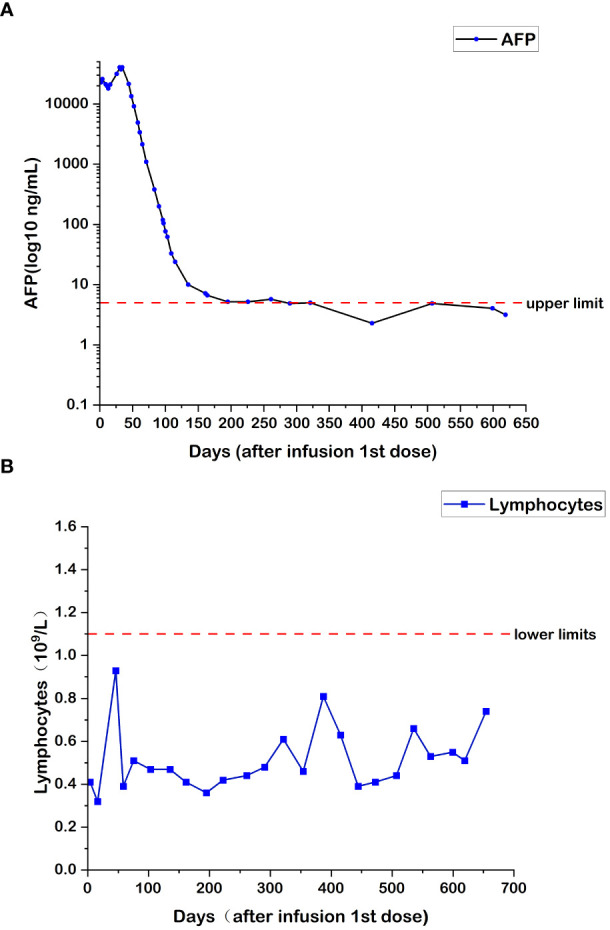
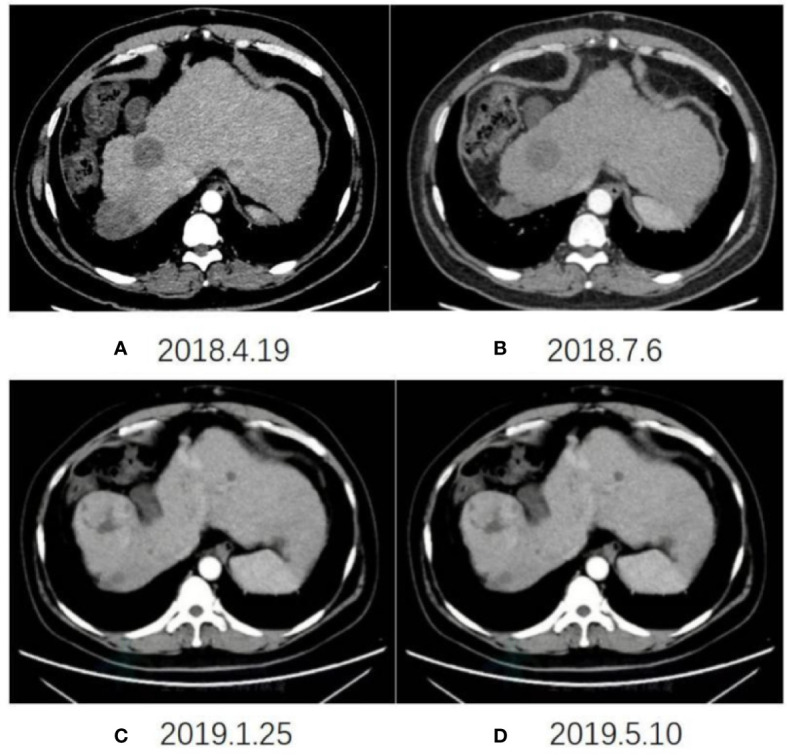
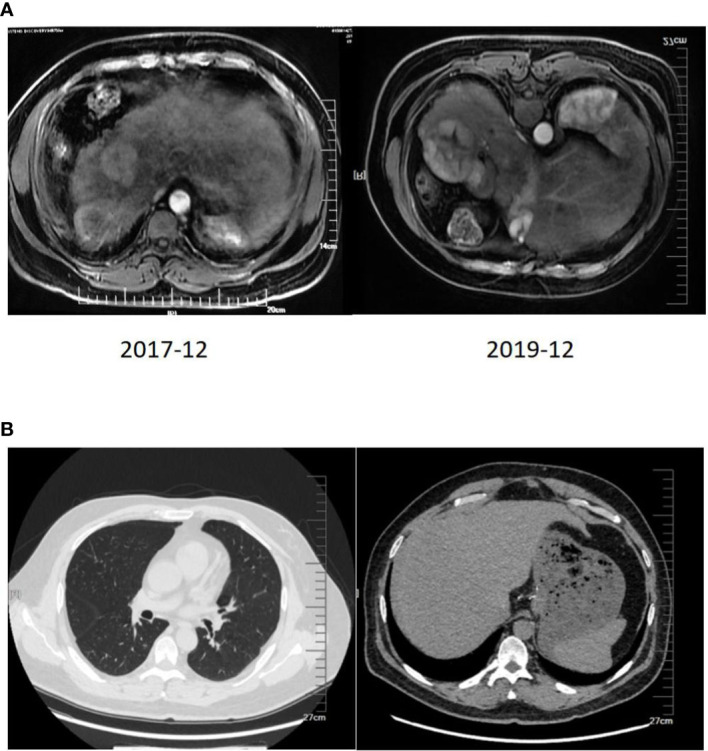
Primary liver cancer (PLC) that originates in the liver is a malignant tumor with the worst prognosis. Hepatocellular carcinoma (HCC) is the most common type of PLC. Most PLC cases are diagnosed at advanced stages mainly due to their insidious onset and rapid progression. Patients with PLC undergo surgical intervention or localized treatment, but their survival is often affected by its high relapse rate. Medical treatment is the primary option for patients with liver cancer, especially with advanced extrahepatic metastases. Molecular targeted therapy exerts an anti-tumor effect by acting on various signaling pathways involved in molecular pathogenesis; however, high drug resistance and low therapeutic responsiveness of PLC to molecular targets challenge the treatment option. In recent years, after surgical intervention, radiotherapy, chemotherapy, and/or molecular targeted therapy, autologous cell immunotherapy has been adopted for PLC. As a typical autologous cell immunotherapy, CAR T-cell therapy uses genetically modified T cells to express tumor-specific chimeric antigen receptors (CARs). Its targeting ability, persistent nature, and tumor-killing function result in a significant impact on the treatment of hematological tumors. However, no breakthrough has happened in the research specific to the curation of lung cancer, liver cancer, breast cancer, and other common solid tumors. In this context, a combination of molecular targeted therapy and CAR T-cell therapy was used to treat a patient with advanced HCC to achieve a partial remission(PR) and facilitate further liver transplantation.
原发性肝癌(PLC)起源于肝脏,是一种预后最差的恶性肿瘤。肝细胞癌(HCC)是最常见的 PLC 类型。大多数 PLC 病例在晚期被诊断出来,主要是因为其隐匿性发病和快速进展。PLC 患者接受手术干预或局部治疗,但由于其高复发率,生存往往受到影响。对于肝癌患者,尤其是有肝外转移的晚期患者,药物治疗是主要选择。分子靶向治疗通过作用于涉及分子发病机制的各种信号通路发挥抗肿瘤作用;然而,PLC 对分子靶点的高耐药性和低治疗反应性对治疗选择提出了挑战。近年来,在手术干预、放疗、化疗和/或分子靶向治疗后,PLC 采用了自体细胞免疫治疗。作为一种典型的自体细胞免疫疗法,CAR T 细胞疗法使用基因修饰的 T 细胞表达肿瘤特异性嵌合抗原受体(CARs)。其靶向能力、持久性和杀伤肿瘤功能对血液肿瘤的治疗产生了重大影响。然而,在针对肺癌、肝癌、乳腺癌等常见实体瘤的治疗研究方面,尚未取得突破。在这种情况下,采用分子靶向治疗和 CAR T 细胞疗法联合治疗一名晚期 HCC 患者,达到部分缓解(PR),并为进一步肝移植创造了条件。