Humanitas Clinical and Research Center - IRCCS, Rozzano, Milano, Italy.
Department of Biomedical Sciences Humanitas University, Milan, Italy.
EMBO J. 2019 Jan 3;38(1). doi: 10.15252/embj.201899529. Epub 2018 Nov 5.
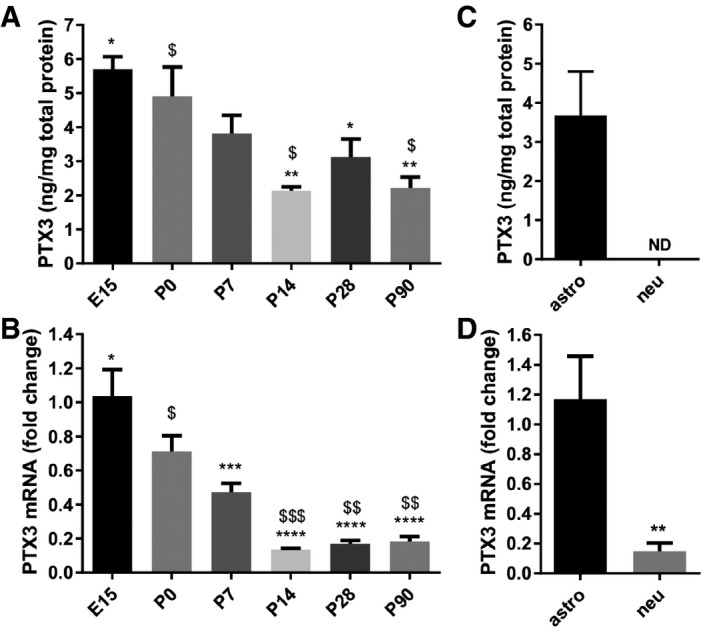
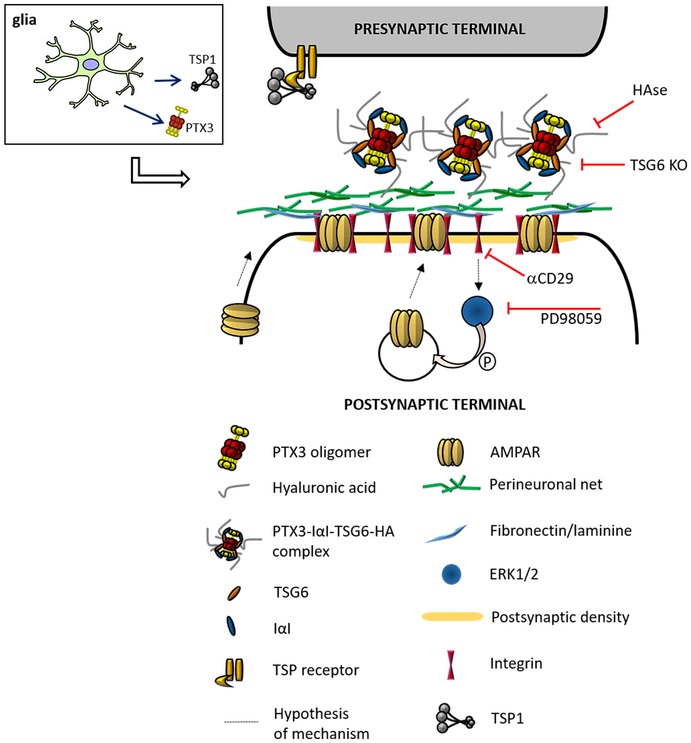
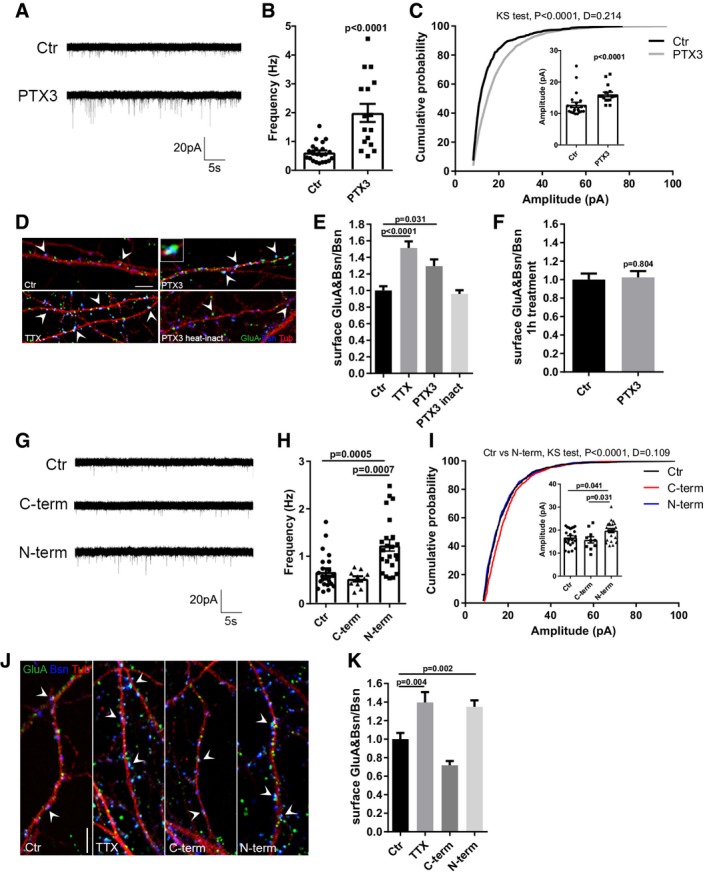
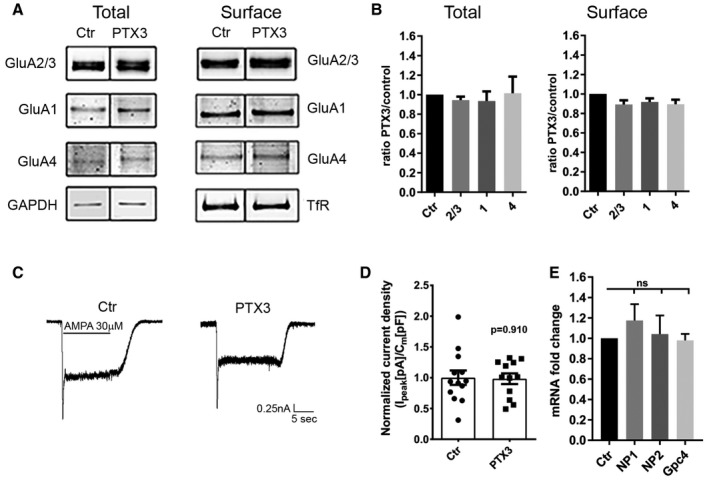
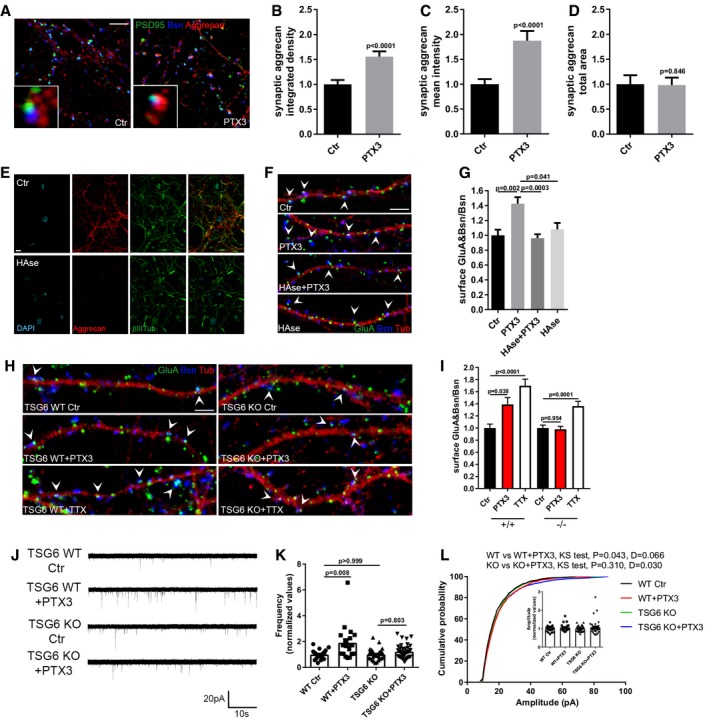
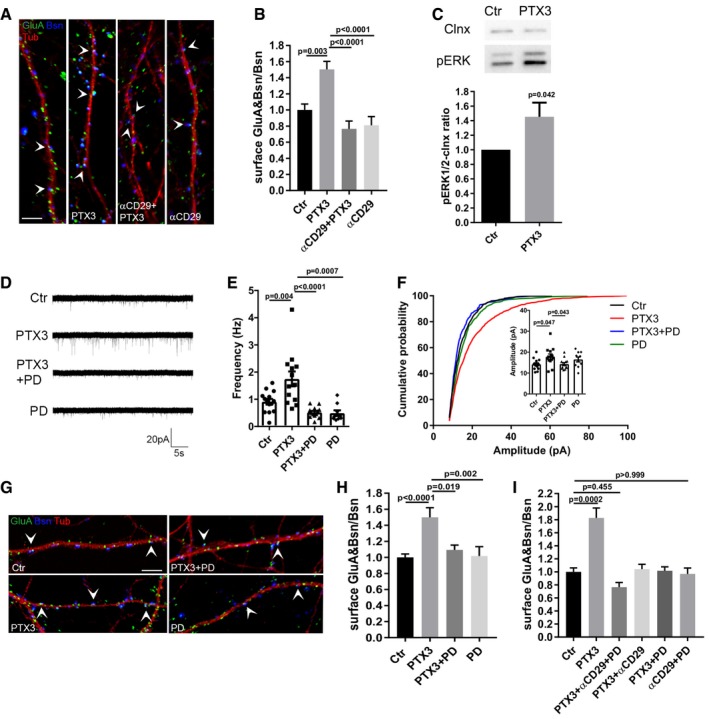
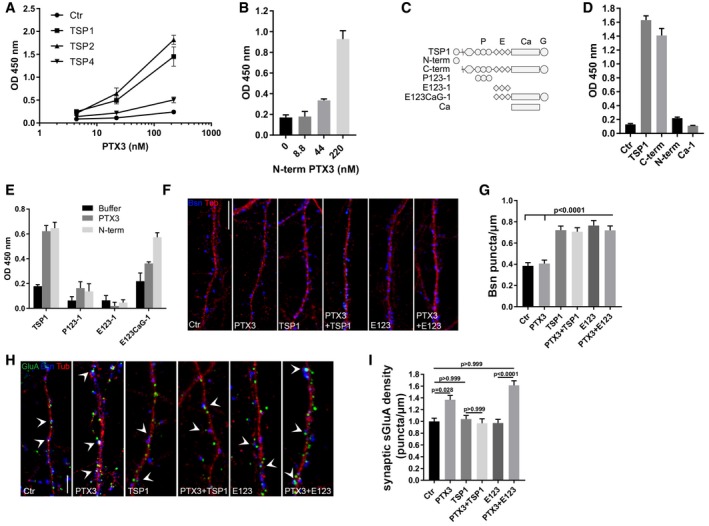
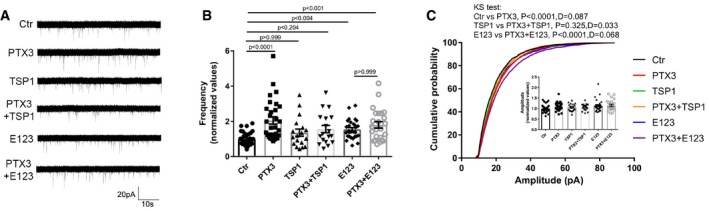
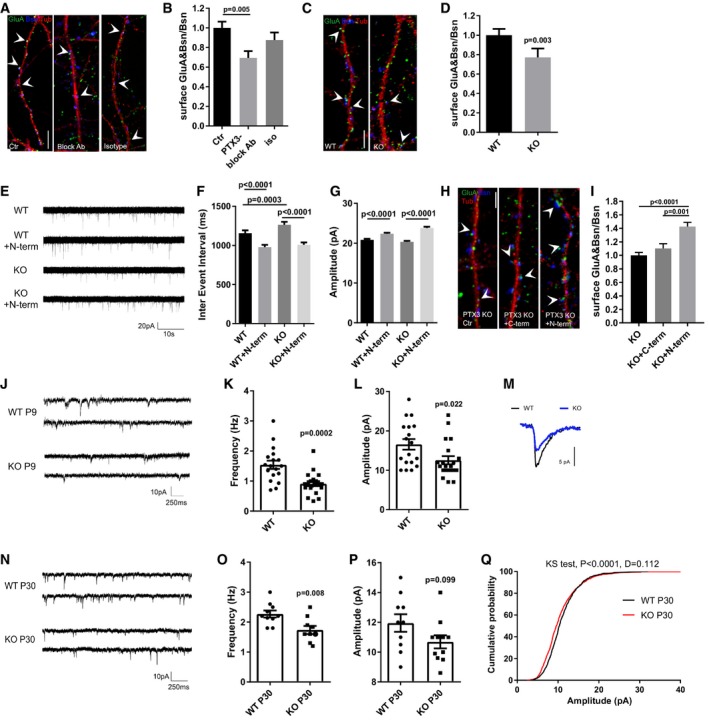
Control of synapse number and function in the developing central nervous system is critical to the formation of neural circuits. Astrocytes play a key role in this process by releasing factors that promote the formation of excitatory synapses. Astrocyte-secreted thrombospondins (TSPs) induce the formation of structural synapses, which however remain post-synaptically silent, suggesting that completion of early synaptogenesis may require a two-step mechanism. Here, we show that the humoral innate immune molecule Pentraxin 3 (PTX3) is expressed in the developing rodent brain. PTX3 plays a key role in promoting functionally-active CNS synapses, by increasing the surface levels and synaptic clustering of AMPA glutamate receptors. This process involves tumor necrosis factor-induced protein 6 (TSG6), remodeling of the perineuronal network, and a β1-integrin/ERK pathway. Furthermore, PTX3 activity is regulated by TSP1, which directly interacts with the N-terminal region of PTX3. These data unveil a fundamental role of PTX3 in promoting the first wave of synaptogenesis, and show that interplay of TSP1 and PTX3 sets the proper balance between synaptic growth and synapse function in the developing brain.
控制发育中中枢神经系统内的突触数量和功能对于神经回路的形成至关重要。星形胶质细胞通过释放促进兴奋性突触形成的因子在这个过程中发挥关键作用。星形胶质细胞分泌的血小板反应蛋白 (TSPs) 诱导结构突触的形成,但这些突触仍然处于突触后沉默状态,这表明早期突触发生的完成可能需要两步机制。在这里,我们表明体液先天免疫分子 Pentraxin 3 (PTX3) 在发育中的啮齿动物大脑中表达。PTX3 通过增加 AMPA 谷氨酸受体的表面水平和突触聚集,在促进功能性中枢神经系统突触中发挥关键作用。这个过程涉及肿瘤坏死因子诱导蛋白 6 (TSG6)、周围神经网重塑以及β1 整合素/ERK 途径。此外,PTX3 活性受 TSP1 调节,TSP1 可直接与 PTX3 的 N 端区域相互作用。这些数据揭示了 PTX3 在促进第一次突触发生中的基本作用,并表明 TSP1 和 PTX3 的相互作用在发育中的大脑中为突触生长和功能之间设定了适当的平衡。